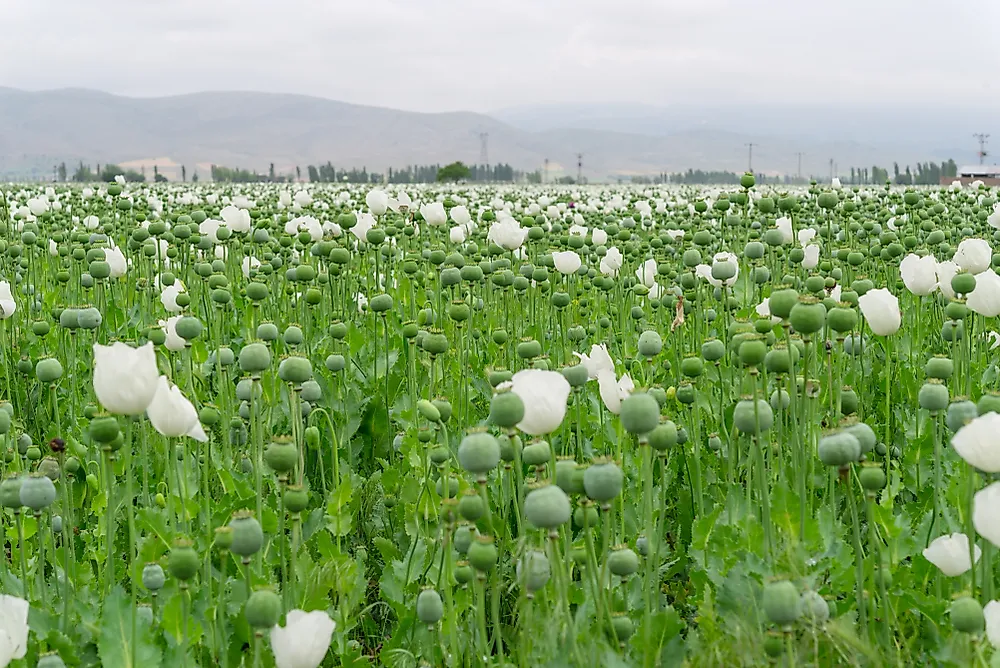
The UNODC's 2025 Afghanistan Opium Survey found cultivation down to just 10,200 hectares — 20% lower than 2024 and 96% below the 232,000 hectares grown before the Taliban's April 2022 nationwide ban. Opium production fell to 296 tonnes, down 32% year-on-year, and farmers' income halved to $134 million.
Source: UNODC 2025 Afghanistan Opium Survey, via OCCRP, KUNA and OneWorld SouthAsia (Nov 2025)
Availability, paradoxically, held up. Trafficking networks adapted: Afghan labs improved extraction efficiency, with cooks specialising in single products — morphine base, heroin base, heroin hydrochloride — using activated charcoal, hydrochloric acid and acetone in repeated extraction cycles to maximise yields from expensive opium. Precursors, chiefly acetic anhydride (none of it made in Afghanistan), keep flowing in from China, India, Pakistan and Central Asia.
Source: ALCIS analysis (Sep 2026); UNODC regional expert via compiled reporting
The bigger shift is geographic. ALCIS reports a growing number of drug laboratories inside Pakistan's Balochistan drawing on Afghan expertise, with satellite imagery showing ephedrine production facilities expanding in number and size since 2023 — proliferating after the Taliban curtailed Afghan production in September 2022. UNODC separately warned that seizures of synthetic drugs like methamphetamine in and around Afghanistan rose 50% by end-2024. For Punjab, the meaning is simple: the factory is now closer, and the product mix is shifting from plant to laboratory.