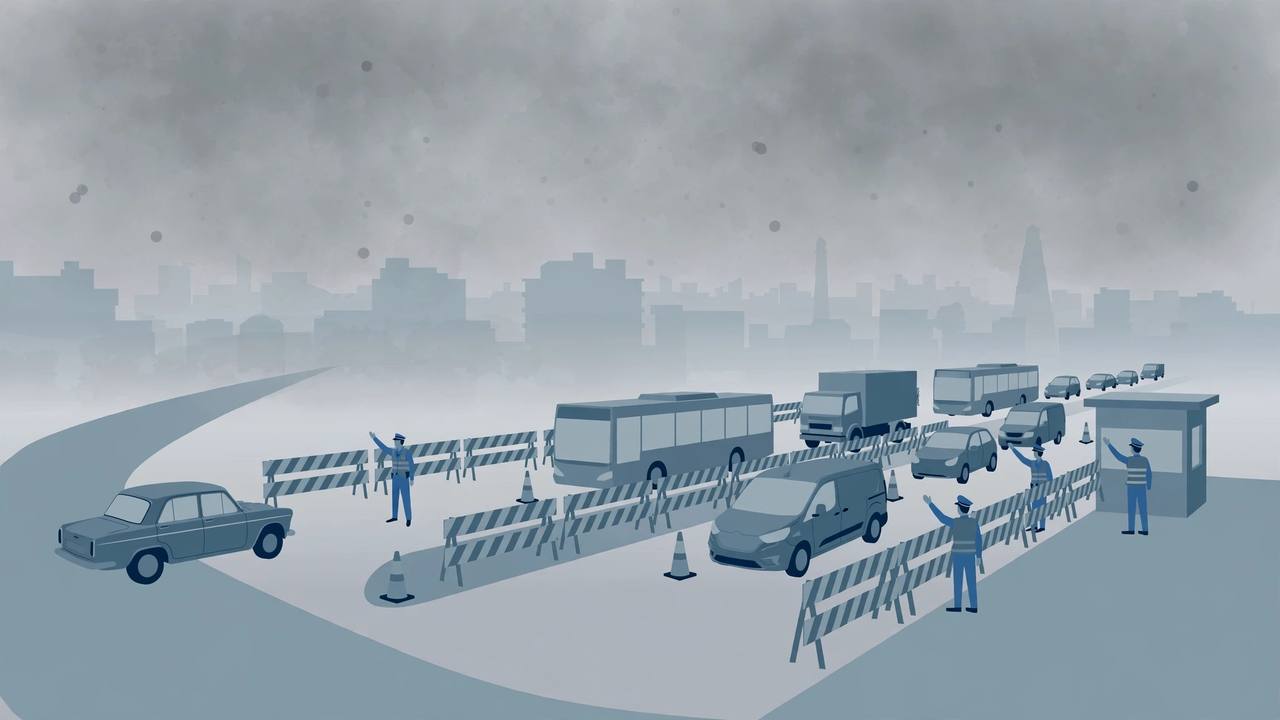
Delhi's Winter Action Plan against air pollution produced penalties and environmental compensation totalling Rs 68.4 lakh on its first day, Sunday, November 1, according to official data available till 5 pm that day and reported by PTI on Monday, November 2. The figures are the first enforcement results since the ban on vehicles registered outside Delhi and below BS-VI emission standards took effect for the winter season.
Source: PTI via People Matters
Under the entry restrictions, the Delhi Traffic Police and the Transport Department together checked 14,930 vehicles at border points and turned back 1,539 of them — about 10.31 per cent. Enforcement teams issued 127 challans for entry violations, impounded 62 vehicles and imposed Rs 2 lakh in fines on that count. The vehicles turned back included 140 light motor vehicles, 54 light commercial vehicles, 95 heavy goods vehicles and 34 buses, while 740 CNG, electric and essential-service vehicles were verified and allowed in as exempt categories.
Source: The CSR Journal (PTI data)
The largest share of the money came from the parallel drive against vehicles running without a valid Pollution Under Control Certificate (PUCC): 566 challans brought in Rs 56.6 lakh in penalties, of which the Traffic Police issued 493 challans worth Rs 49.3 lakh and the Transport Department 73 challans worth Rs 7.3 lakh. A further Rs 9.8 lakh was levied as environmental compensation for dust-control violations at construction and demolition sites.
Source: PTI via People Matters
Delhi Environment Minister Manjinder Singh Sirsa said in a post on X that enforcement teams were checking compliance with the vehicle entry restrictions, PUCC norms and construction dust regulations across the capital.
Source: UrbanAcres
The entry ban on non-Delhi pre-BS-VI vehicles remains in force until January 31, 2027, while the wider Winter Action Plan measures run for varying periods between November 1 and February 28. Fuel stations in the capital have also been directed not to dispense fuel to vehicles without a valid PUCC. What happens next depends on whether the border enforcement holds at this intensity through the winter — and on the air-quality readings that decide whether tighter GRAP stages follow.