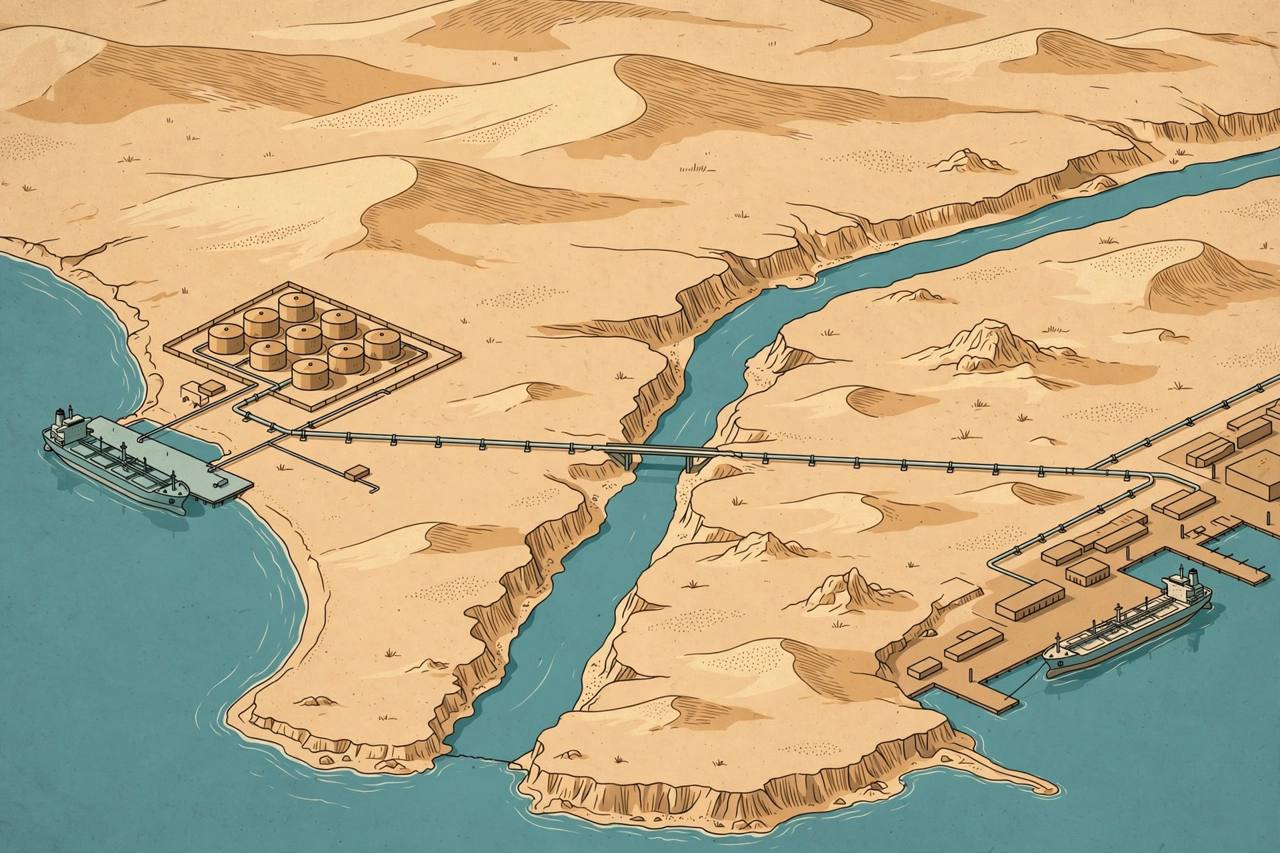
DUBAI, November 3 — Saudi Aramco, the world's biggest oil company, is expanding the East-West crude pipeline that carries Saudi oil across the kingdom to Red Sea ports without passing through the Strait of Hormuz, and work on the expansion has already started, chief executive Amin Nasser told analysts on Tuesday, as the US-Iran war's effective blockade of the strait redraws the world's energy map.
Source: Reuters via Marine Link
Nasser made the remarks on an analyst call following Aramco's third-quarter results on Tuesday, in which the company reported a surge of more than one-third in quarterly profit. In a separate statement to Reuters, he said the world is experiencing what he called the biggest energy supply shock in history, and that its impact extends far beyond the energy market.
Source: Reuters via BusinessWorld
"With regard to the expansion to our East-West pipeline and the additional networks that we are building, this work has already started," Nasser told analysts, Reuters reported. He said Aramco is also doing engineering work on export routes in addition to its three current options, but will not disclose details of the new routes until final investment decisions are made.
The three routes Aramco has today
Aramco currently has three export route options, Nasser said: shipments through the Gulf via the Strait of Hormuz, shipments south through the Bab el-Mandeb Strait at the mouth of the Red Sea, and shipments north through the Suez Canal. The East-West pipeline feeds the Red Sea terminals, which is why it has become the kingdom's critical lifeline while Hormuz traffic remains sharply reduced.
Last month, Saudi Energy Minister Prince Abdulaziz bin Salman said the kingdom was looking to expand its capacity to export crude by pipeline to as much as 10 million barrels a day (yaani 1 crore barrels a day) by repurposing a domestic gas pipeline and investing in its existing East-West network, Reuters reported. Aramco is also exploring additional storage capacity abroad, Nasser said.
Why Hormuz matters so much
The Strait of Hormuz, the narrow waterway between Iran and Oman at the mouth of the Gulf, previously carried about 20 percent of the world's oil supplies — roughly 20 million barrels a day (yaani 2 crore barrels a day) before the war. The US-Israeli war on Iran began on February 28, 2026, and fighting since then has sharply reduced shipping through the strait. The East-West pipeline itself has been attacked several times during the war, Reuters reported, and Houthi attacks from Yemen have also threatened the Bab el-Mandeb route on the other side of the Arabian Peninsula.
The danger to shipping is not theoretical. More than 130 attacks on tankers have been reported so far during the Iran conflict, mainly against very large crude carriers that can each carry 2 million barrels of oil, and freight rates have surged more than 15 times from a year ago, Nasser said. On Monday, US forces carried out limited defensive strikes on Iran's Qeshm Island in the strait after Iran fired at a US aircraft, US officials said — even as President Donald Trump said he was not considering new strikes after Tuesday's US midterm elections and that a deal with Tehran could happen.
The Qeshm Island strikes and Trump's remarks are covered in full here: US strikes Iran's Qeshm Island near the Strait of Hormuz
Nasser warned that the shock is feeding inflation worldwide. "Higher transportation costs, fertiliser shortages, and impacts on food and consumer goods are feeding into inflationary pressures across the global economy," he said in his statement to Reuters. Oil prices reflected the tension again on Tuesday: Brent crude rose 0.5 percent to $105.25 a barrel in early Asian trade after the Qeshm strike reports, a day after settling $8.66, or 7.63 percent, lower at $104.77 on hopes of a diplomatic breakthrough.
Lakhs of Punjabi and Indian workers live and work across Saudi Arabia and the Gulf, including in the energy sector, and India buys much of its crude from the Gulf. Every route that keeps Gulf oil moving without Hormuz protects those jobs and remittances — and every freight surge lands in Punjab and India as costlier fuel, fertiliser and food transport.
"Demand fundamentals remain strong and the world cannot afford to plan its energy future around short-term market conditions. We remain ready to rapidly ramp up production when the situation calls for it," Nasser said. What happens next depends on two tracks moving at once: whether the Qatar-mediated contacts between Washington and Tehran turn into a deal that reopens Hormuz, and how quickly Aramco's engineers can turn the pipeline expansion and the additional routes now being studied into working export capacity. Until one of those tracks delivers, Saudi Arabia is building its way around the strait.