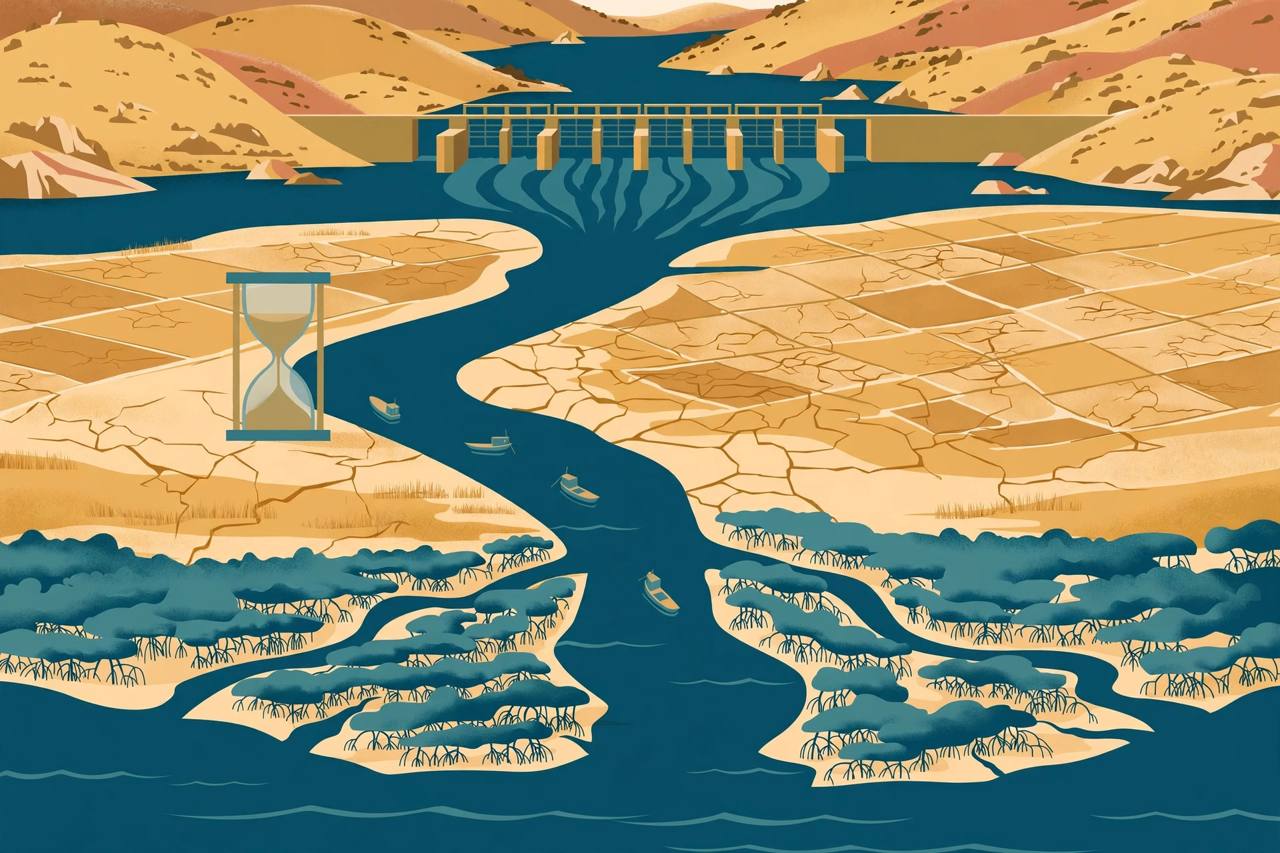
DHAKA — Bangladesh is scrambling to secure its water future as its long-term water-sharing treaty with India expires in just a few weeks, on December 12, threatening the livelihoods of tens of millions of people downstream, AFP reported. The 1996 treaty governs dry-season water sharing at India's Farakka Barrage, 20 kilometres (12 miles) upstream of Bangladesh, and it has no automatic extension clause.
Source: AFP
Bangladesh says India has not responded to its request to negotiate a treaty renewal. Dhaka needs a new deal based on "mutual benefit and respect", Rashed Al Mahmud Titumir, a prime ministerial adviser who heads a technical committee on water-sharing, told AFP. Malik Fida A. Khan, a former Bangladeshi member of the Joint Rivers Commission (JRC), said India had built additional dams upstream and argued: "This time, the agreement must include provisions on climate change — and take the entire river basin into account."
New Delhi's foreign ministry said "discussions regarding river-related matters" are a matter for the JRC, which held its last technical talks back in May. The last officially confirmed ministerial-level JRC meeting was in 2022 — after a 12-year gap — and a proposed water-sharing deal for the cross-border Teesta river has been stalled since 2011.
Source: Asia Daily
The stakes are enormous. The 2,525-kilometre (1,569-mile) Ganges flows through the world's most populous river basin, home to 655 million people including more than 50 million in Bangladesh, according to the World Bank. In Bangladesh's parched Barind region, shrinking flows have cut fish catches in the river — known there as the Padma — and squeezed rice and wheat farming. "Where will we find fish now?" said Abu Bakar Siddique, 55, who has switched to fish farming in ponds.
Water arguments over the 54 cross-border rivers stretch back decades. India opened the 2.2-kilometre (1.3-mile) Farakka Barrage in 1975 — Bangladesh accuses Delhi of using it to divert most of the water — the United Nations intervened, and a sharing deal was agreed in 1977. That arrangement lapsed a decade later. "The Ganges suffered during the years without a treaty, and at least three rivers almost dried up," said Sheikh Rokon of the Dhaka-based environmental group Riverine People, pointing to the Gorai, which carries freshwater into the Sundarbans, the world's largest mangrove forest.
Dhaka is also building its own buffer: in May it approved the Padma Barrage, a US$2.8 billion project — yaani about 280 crore US dollars — intended to ease shortages and including a 113-megawatt hydropower plant. Even with the treaty in place, Bangladesh's Ganges-Kobadak irrigation project has shrunk to 550 square kilometres, according to the state news agency BSS.
Relations add to the difficulty: ties between New Delhi and Dhaka have soured since Bangladesh's former leader Sheikh Hasina fled to India after a 2024 uprising and remains there. A visit by Bangladesh's Prime Minister Tarique Rahman to India before the treaty expires has been reported but not confirmed. "If we fail to reach a deal, I fear the situation will be worse than what we experienced during the years without a treaty," Rokon said. "Demand for freshwater on both sides has increased significantly."