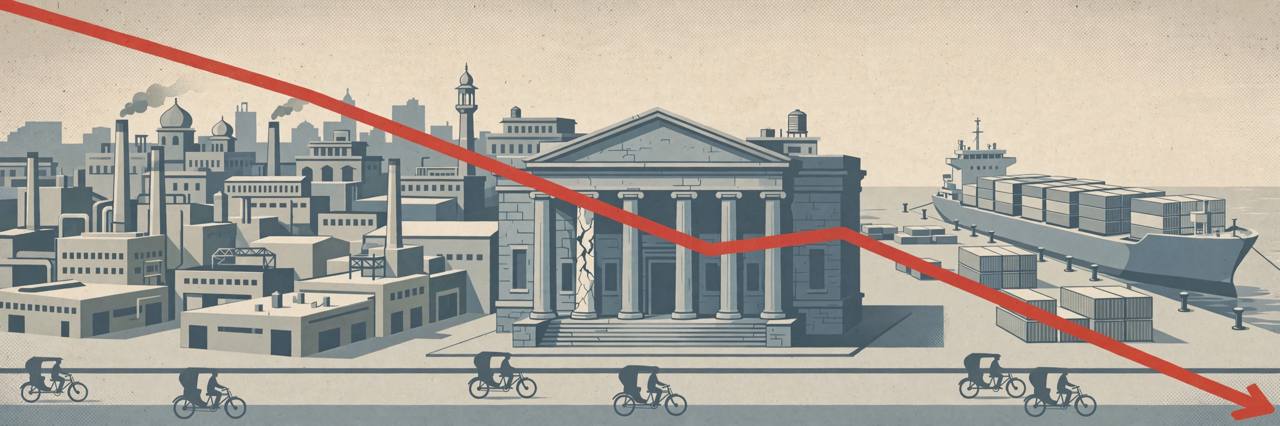
Bangladesh's economy is confronting three interconnected crises, namely slowing growth, a widening trade deficit and severe banking-sector weaknesses, a new report has said. These risks make economic stability difficult and create pressure for urgent reforms, the report from Bangladesh-based publication The Asian Age said, in reporting carried by IANS on Tuesday.
Source: IANS, Bangladesh suffers from intertwined growth, trade and banking crises, Oct 27 2026
Citing data from the World Bank, the report said Bangladesh's economic growth slowed to 3.4 per cent in fiscal year 2025-26 and is expected to remain flat in FY27, well below the government's 6.5 per cent target. The IMF projected growth of 3.2 per cent for FY27 and average inflation of 10.9 per cent, highlighting concern over weakening real incomes and rising poverty risks, the report noted. Independent coverage of this month's forecasts matches those headline numbers: BD Financial Review reported the World Bank's October Bangladesh Development Update at 3.4 per cent growth for FY2026-27 and the IMF's October World Economic Outlook at 3.2 per cent, cut from 4.3 per cent in April, while OneWorld South Asia described the IMF figure as the weakest expansion Bangladesh is expected to record in nearly four decades.
Source: BD Financial Review, Bangladesh's Growth Outlook Darkens to 3.2% at IMF, October 2026
Trade gap widens as imports outrun exports
Bangladesh Bank data showed imports rose 8.6 per cent year-on-year to $6.44 billion in July FY27, while exports reached $4.35 billion, widening the trade deficit to $2.09 billion, the report said. Though remittances so far helped prevent the country's external accounts from falling into crisis, the report said exports and foreign investment must increase to prevent an enormous trade deficit and an economic collapse.
The banking sector presents the most acute of the three crises, the report said. According to Bangladesh Bank's latest Financial Stability Report, the banking sector's capital adequacy ratio (CRAR) had turned negative by the end of 2025. The banking-sector restructure will require nearly 10 per cent of GDP, while the FY2026-27 budget reportedly allocated only Tk 40,000 crore to support weak banks and financial institutions, far less than the estimated requirement of Tk 6 lakh crore. "When banks weaken, credit flows contract. In January 2026, private-sector credit growth fell to 6.03 per cent, one of the lowest levels in the past decade. A contraction in credit restricts investment and employment, further undermining economic growth," the report explained.
Yaani: Tk 6 lakh crore means Tk 6 trillion (6,00,000 crore) needed to repair the banks — about fifteen times the Tk 40,000 crore actually set aside in the budget. And the single month's trade deficit of $2.09 billion is yaani $209 crore in just one month, which is why the report says remittances alone cannot carry the external account for long.