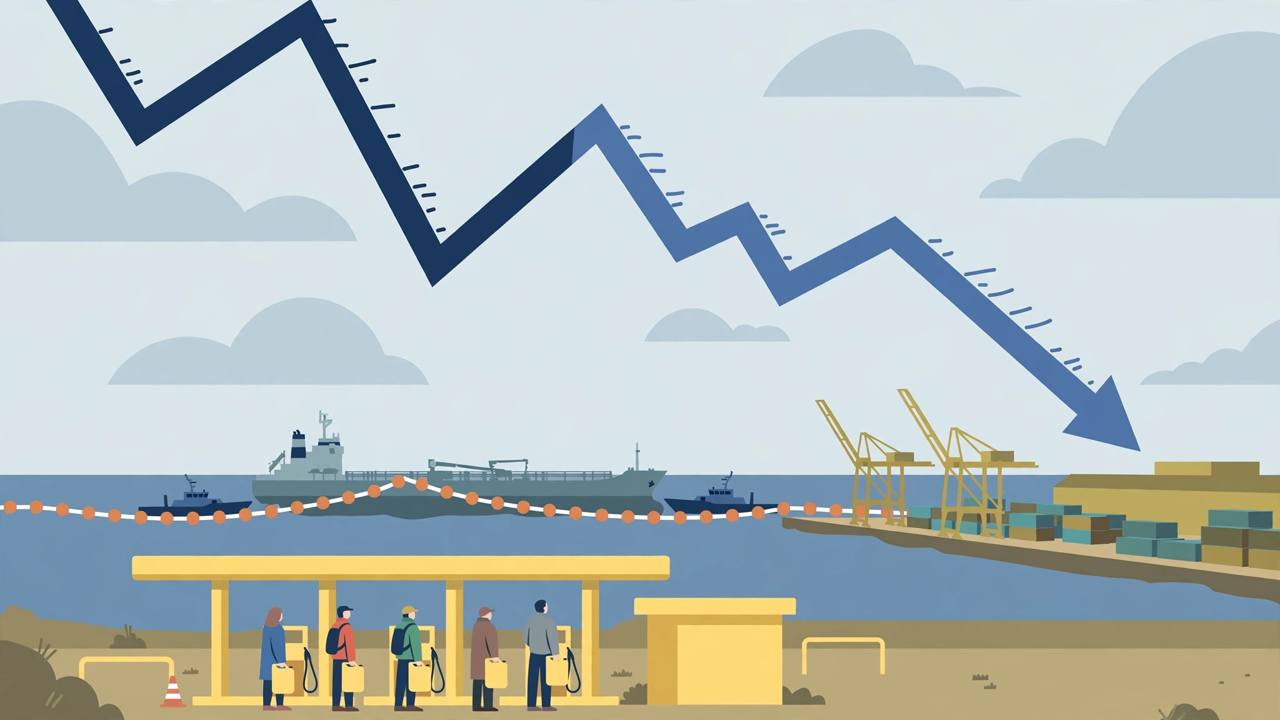
US Treasury Secretary Scott Bessent has urged Iranians to stop paying taxes and stockpile fuel, warning in an exclusive interview with Iran International published on Monday that Iran's economy could contract by more than 25% by March 2027 as Washington escalates its pressure campaign, Clash Report reported.
Source: Clash Report, reporting the Iran International interview
"My advice to the Iranian people would be: don't pay your taxes because you're not going to get anything back from the government," Bessent told interviewer Kambiz Tavana. "I would predict that from March of '26 until March of '27, the economy would contract more than 25 percent, which is more than the Soviet Union contracted after its collapse."
Source: Clash Report
Bessent also advised households to prepare for energy shortages: "You should start stocking up on heating fuel. There's going to be a big heating fuel shortage. In terms of gasoline, everyone should fill up their tanks now." He said the next stage of Operation Economic Outcast — the US campaign combining financial sanctions with a naval blockade of Iran's oil exports — would become "even more intense" over the coming eight weeks, and that humanitarian channels for food and medicine remained open.
Source: Clash Report
The Treasury secretary claimed Iran had no oil shipments currently at sea and that loading at Kharg Island, a key export terminal, had stopped, and said Tehran's government was increasingly dependent on printing money while struggling to meet salary obligations and cutting public benefits. Those are Bessent's claims about the campaign's effect, presented as his assessment; they were not independently verified in the reports cited here. JFeed, reporting the same interview, added his estimate that the rial has passed three million to the dollar and that this is why, he said, Iranian authorities no longer publish the rate; in late August, then-central bank governor Abdolnaser Hemmati had acknowledged that Iran's oil exports had "effectively stopped", JFeed noted.
Source: Clash Report; JFeed
Bessent also argued, in the interview, that Tehran was wrong to pin its hopes on the US midterm elections shifting Washington's position, Iran International's own summary of the interview said. The reports carried no response from the Iranian government to the interview.
Source: Iran International interview (video)
What is solid
- Bessent gave the interview to Iran International, published on Monday, Oct 26, and made the tax, fuel and contraction remarks in it (Clash Report; JFeed; Iran International)
- In late August the dollar traded at about 2.07 million rials and Iran's then-central bank governor acknowledged oil exports had effectively stopped (JFeed)
What is only claimed
- The 25%-plus contraction is Bessent's forecast, not an outcome; the rial passing three million to the dollar and the claim of no oil shipments at sea are his estimates and claims, not independently verified data
- No Iranian government response to the interview appeared in the reports cited