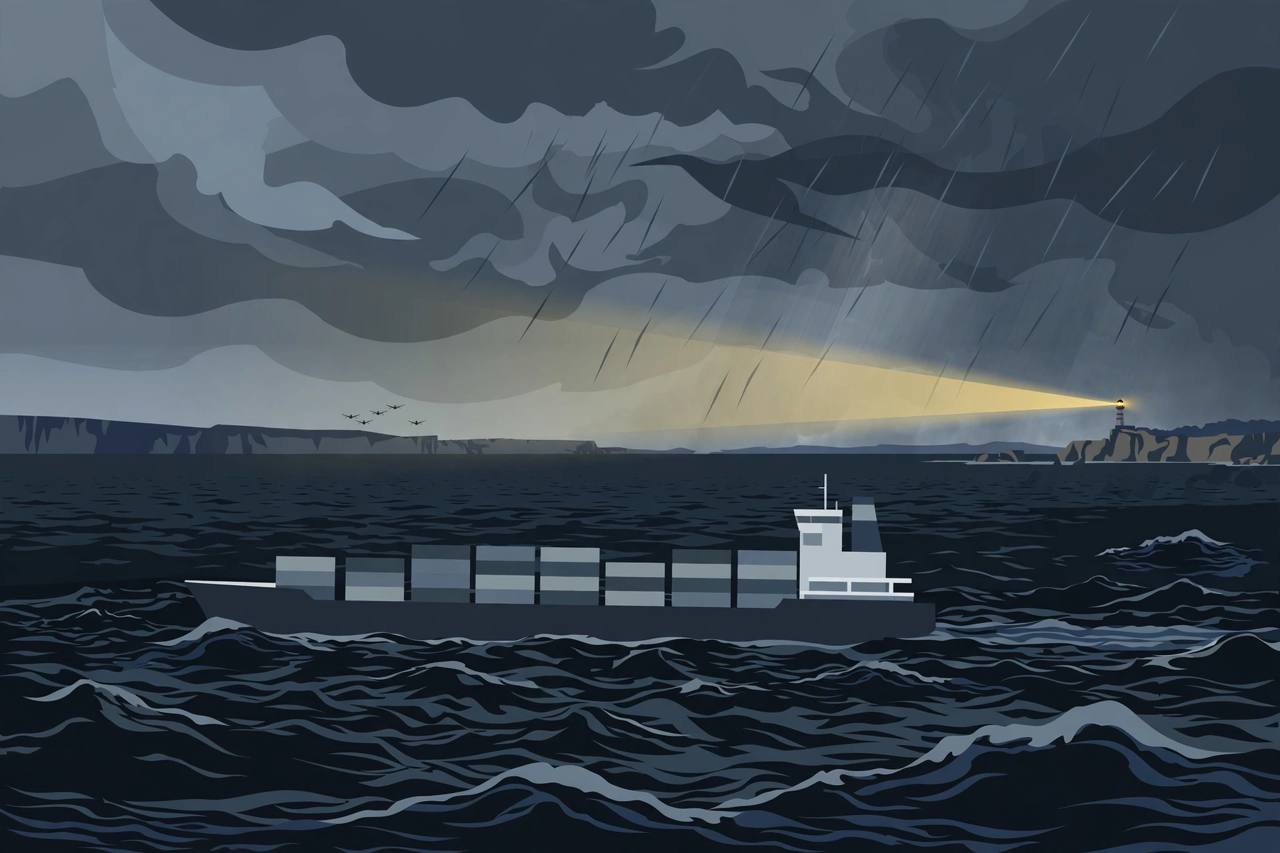
Fatalities among commercial sailors caught in the battle between Russia and Ukraine in the Black Sea are now outstripping deaths in the Gulf, the Financial Times wrote in a detailed analysis published on Sunday (October 25) under the headline “The Black Sea is now the world's deadliest shipping route”, Ports Europe reported. More than 570 vessels have been struck in the Black Sea this year, killing at least 40 sailors, according to maritime security company Ambrey and the International Maritime Organization (IMO). That compares with 24 confirmed fatalities in the Strait of Hormuz, and some estimates put the number of attacks in the Black Sea at more than six times the level in Hormuz.
Source: Financial Times via Ports Europe, Oct 25
“For me, the Black Sea and calling [at] Ukrainian ports is near suicidal,” Oleg Grygoriuk, chair of the Marine Transport Workers' Trade Union of Ukraine, told the FT. “The general feeling is that there is a life risk threat all the time.” SeaNews, reporting the same study, said 387 ships were attacked or affected during July–September — more than five times the previous quarter — and that the attacks were carried out not only with drones but also with sea mines and GPS interference, with strikes reported against crew areas such as living quarters and the bridge. Ambrey estimates that about 90% of attacks on shipping in the last 45 days were carried out by Russia, according to the study; that attribution is Ambrey's estimate, reported as such.
Source: SeaNews, Oct 25
Big lines pulled out, insurance zones expanded
During July and August, most major international container lines — such as MSC, Maersk and Hapag-Lloyd — withdrew from Ukrainian Black Sea ports following daily Russian missile and drone attacks, though they continued services to other Black Sea countries including Bulgaria, Romania, Turkey and Georgia, Ports Europe said. In August, after an attack on the vessel MSC Ulsan III, which was en route to the Russian port of Novorossiysk, MSC stopped accepting new bookings for that destination, and two Turkish carriers, Akkon Lines and Arkas Line, suspended services to both Ukrainian and Russian Black Sea ports. Russia's FESCO redirected cargo to St Petersburg and Vladivostok.
On September 16, the Joint War Committee of the London marine insurance market expanded its listed war-risk zones to cover nearly the entire Black Sea, Ports Europe reported, leaving traffic concentrated in coastal corridors along the western and southern shores. That detour adds roughly 90–100 nautical miles each way on routes such as Istanbul–Constanța and can raise a voyage's cost by about $20,000 (yaani about 20 lakh rupees in Indian terms at rough conversion, before other charges). War-risk insurance rates for some voyages have risen to 0.6–1% of a vessel's value, up from 0.2–0.5%: on a $1.5 million vessel (yaani 15 lakh dollars), the premium at 1% reaches $15,000, against $7,500 at 0.5% — costs that are passed on into freight rates, and ultimately into grain and goods prices far beyond the Black Sea.
Source: Ports Europe, Oct 25
Recent attacks have also reached waters off Romania and Bulgaria, NATO members on the Black Sea's western shore, underlining that the risk now extends well beyond Ukrainian and Russian ports, SeaNews reported. Reporting in both regions remains incomplete, Traders Union noted, so the full toll is difficult to verify — but on the figures shipping groups themselves are using, the corridor that carries Ukrainian grain and Russian oil to world markets is now the most dangerous water on earth for the sailors who work it.
Source: Traders Union, Oct 25