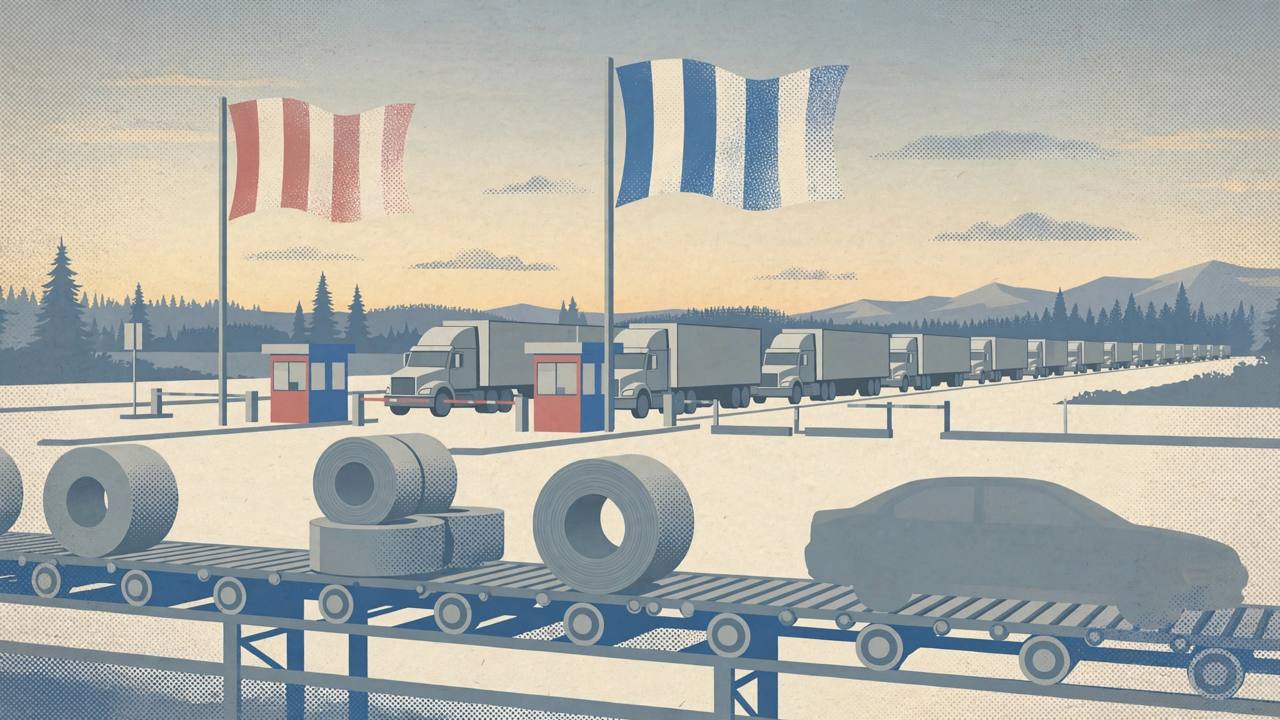
A Canadian government official said on Tuesday that recent trade talks with the United States have made only “limited progress”, tempering expectations raised a day earlier that a deal easing US tariffs on Canadian steel and autos could be reached before next week's US midterm elections, The Canadian Press reported.
Source: The Canadian Press
Prime Minister Mark Carney acknowledged on Tuesday that talks had intensified slightly in recent days. Reuters reported on Monday that negotiators were working on an agreement centred on duties imposed under Section 232 of US trade law — a tariff of up to 50 per cent on Canadian steel and 25 per cent on autos — with US Commerce Secretary Howard Lutnick and Dominic LeBlanc, the minister responsible for Canada–US trade, in regular contact. One Canadian source told Reuters a deal was possible before the November 3 midterms, while US sources said the Trump administration wanted Canada to make further concessions.
Honda warns January rise would be 'catastrophic'
Speaking at the Reuters Automotive USA conference in Detroit on Tuesday, Jennifer Thomas, senior vice president of corporate affairs for American Honda Motor Co, said a pending increase in US tariffs on steel and auto imports from Canada starting January 1 would be “catastrophic” for the industry, Reuters reported. President Donald Trump has previously announced he would raise tariffs on steel and auto imports from Canada to 50 per cent from January 1, 2027.
Source: Reuters via Duke FM
“We need that trilateral agreement to stay in place in order for the US industry to be competitive. It's integral to our success,” Thomas said, referring to the trade pact between the US, Mexico and Canada. “I am cautiously optimistic that cooler heads will prevail, and we will avoid that January 1 doubling of the tariffs, because that really would be catastrophic just for the entire industry.” Automakers are watching the talks closely because the three countries' auto industries are tightly intertwined, and higher tariffs could raise costs and affect where companies build new plants.
The talks have been difficult since they fell apart in August, when Carney's government walked away from formal negotiations and the prime minister accused the Americans of making unreasonable last-minute demands. Canada's chief trade negotiator Janice Charette said at the Toronto Global Forum last week that “pens are down, and the doors are open”, and Carney said on Monday his position had not changed: “We have very clear bottom lines, red lines, which meant that we were not willing to sign what was offered in August.” CBC News reported that sources familiar with the discussions see substantive conversations but key elements still unresolved, and no agreement on the verge of being reached.
Source: CBC News via bilaterals.org
Carney also said on Monday that, to the extent any progress had been made, “it's because the U.S. is coming closer to our position”, Reuters reported. For Canada's cross-border trucking, steel and auto-parts workers — including the large Punjabi workforce in Ontario's transport and manufacturing belt — the January 1 date is the one that matters most: if no relief deal is signed before then, the announced doubling would land on supply chains that cross the border several times before a finished vehicle reaches a showroom.
Negotiators are racing a political clock: a relief deal before the November 3 US midterms is still possible according to one Canadian source, but Ottawa's own official assessment on Tuesday was only “limited progress”. If talks stall, the announced January 1, 2027 rise to 50 per cent on Canadian steel and autos takes effect.