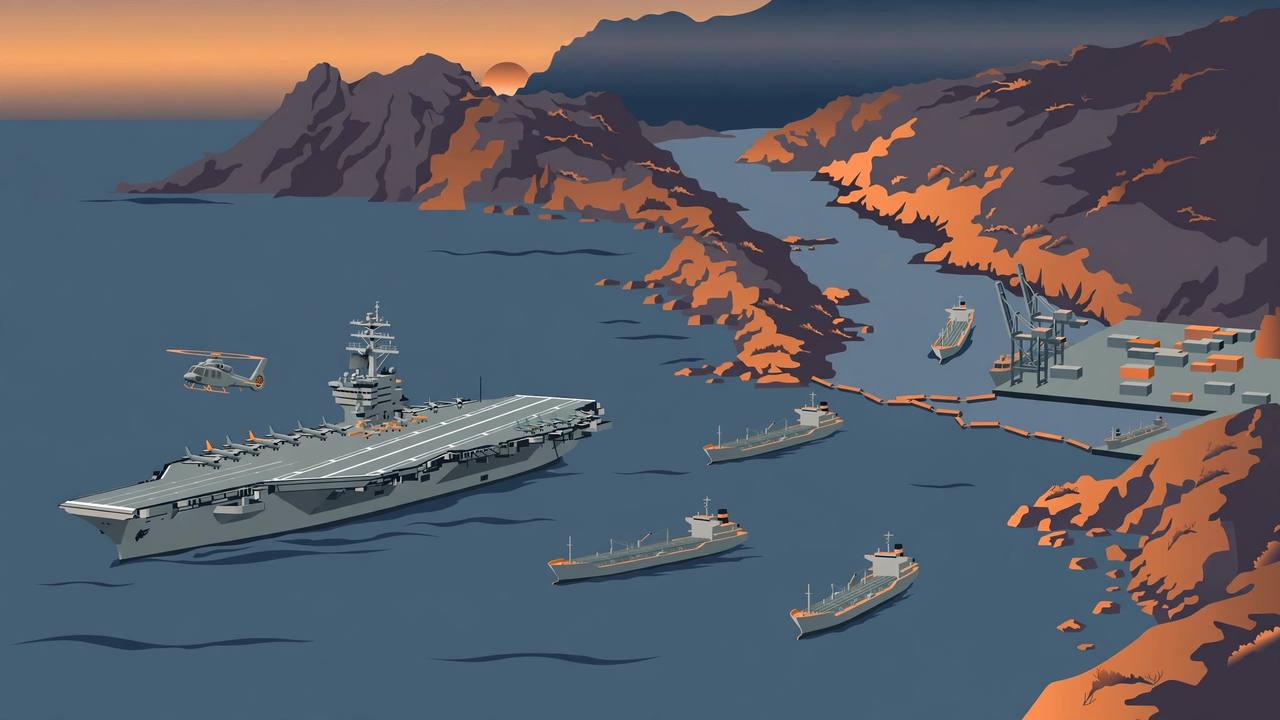
US Central Command said on Saturday that, as of 31 October, its forces have redirected 144 commercial vessels “to ensure compliance” while enforcing what it called America's “ironclad blockade” against Iran. The command published the running tally on its official X account with a photograph of a US Navy MH-60R Sea Hawk helicopter launching from the aircraft carrier USS George Washington, which it said is supporting the enforcement mission.
Source: US Central Command on X, Oct 31, via Middle East Eye / Hatha Alyoum
The figure marks a steady rise in the enforcement count. In CENTCOM's last detailed accounting, on 5 October, the command said its forces had redirected their 130th commercial vessel, had disabled three ships that refused to comply, and had destroyed 13 commercial vessels over the preceding 12 weeks that were violating the blockade or operating in the IRGC's shadow network, according to the command's public release. CENTCOM said it resumed the blockade of ships attempting to enter or depart Iranian ports on 14 July, at the direction of the president, and that the George Washington is deployed to the US 5th Fleet area of operations.
Source: JBizNews, Nov 1, reporting CENTCOM's releases
Washington's wider claim — and Tehran's answer
Treasury Secretary Scott Bessent made the administration's broader case in a post the same day: “The Strait of Hormuz transit levels are back to pre-conflict levels minus Iranian barrels. The world can live without Iranian oil. Iran cannot live without oil exports.” Axios reported that a new Treasury assessment credits the naval blockade, financial sanctions and blocked overland routes with sharply limiting Tehran's ability to generate revenue, and says Iran has not loaded oil onto tankers since 25 August. Those are Washington's claims and assessments; Iran disputes the US account of the strait, and Tehran's position — set out by Foreign Minister Abbas Araghchi in remarks this site reported on Saturday — is that Hormuz reopens fully only on Iran's conditions, under a proposal that would restore navigation within two days once the US implements its side.
Why the count matters beyond the Gulf
The Strait of Hormuz carries about one-fifth of the world's oil and liquefied natural gas in normal times, and the blockade-and-attacks cycle around it is the main reason crude ended October at a six-month high — Brent settled at $117.64 a barrel on Friday, Reuters reported. For lakhs of Punjabi and Indian workers in the Gulf states, the enforcement tally is not an abstract number: it is the pressure gauge on the sea lane their jobs, flights and remittances depend on. CENTCOM advises mariners in the Gulf of Oman and the Hormuz approaches to monitor Notice to Mariners broadcasts and to contact US naval forces on bridge-to-bridge channel 16. Indirect US-Iran talks mediated by Qatar continue without an agreement.
What is solid
- CENTCOM's own published tally stood at 144 redirected commercial vessels as of 31 October, up from the 130th vessel in its 5 October accounting
- The blockade of Iranian ports resumed on 14 July, according to CENTCOM, and the carrier USS George Washington is supporting enforcement
What is only claimed
- Washington's claim that Hormuz traffic is back to pre-conflict levels without Iranian oil — a US Treasury assessment that Tehran disputes
- Treasury's reported finding that Iran has loaded no oil onto tankers since 25 August — reported by Axios from a US assessment, not independently verified in this reporting