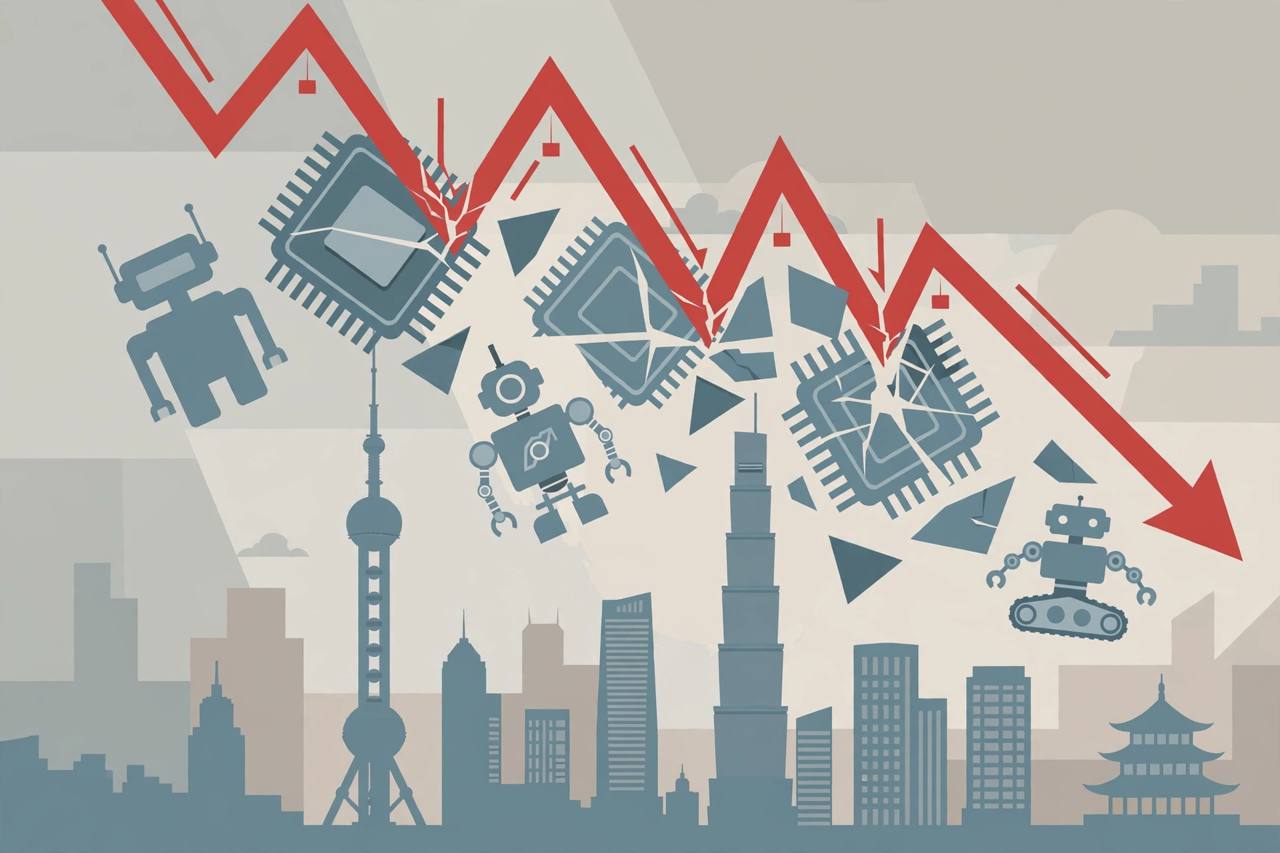
China's artificial intelligence stock bubble has already burst, according to a Reuters analysis published on October 26 and carried by Euronext and other outlets. The mainland STAR50 index of AI and semiconductor leaders has fallen 40 per cent in less than four months, vaporising some $480 billion in market value — yaani, roughly half a trillion dollars wiped out.
Source: Reuters via Euronext
The reversal compares with a much milder setback in the United States, where AI stocks have led a 6 per cent drawdown in the Nasdaq from a record high scaled three weeks ago, Reuters reported. China's broad blue-chip CSI300 index has dropped about 20 per cent from its highs in June, and the sell-off has slammed the brakes on a two-year rally that began when economic stimulus promises sent shares soaring.
Retail favourites have been hit hardest. Shares in robot maker Unitree, which Reuters said were 8,000 times oversubscribed by retail buyers at listing, have halved since they started trading in August, and memory chipmaker CXMT (ChangXin Memory Technologies) has lost more than a quarter of its value in the past month, the Seoul Economic Daily and BusinessToday reported, also citing Reuters figures. Optical component makers Zhongji Innolight and Eoptolink Technology are down about 60 per cent from their peaks.
There was no single selling trigger, traders told Reuters. High valuations, tax bills and the threat of the United States or other governments banning Chinese-made equipment from data centres all contributed. With AI stocks running to 42 per cent of China's market capitalisation and 57 per cent of turnover across mainland A-shares and Hong Kong H-shares, according to Goldman Sachs, few investors in a market dominated by small holders have escaped the pain.
"The stock market later evolved into a speculative crazy bull," Beijing-based fund manager Dong Baozhen told Reuters. "And now we see the bubble bursting." Another fund manager, Wang Zhuo of Shanghai Zhuozhu Investment Management, warned that Chinese chipmakers and AI suppliers could end up in a price war. The meltdown is also a dampener on Beijing's efforts to encourage savers into stocks to fund the AI boom and to build a steadier 'slow bull' market, Reuters said, and analysts quoted in the reporting said it could halt plans by many companies seeking new listings.