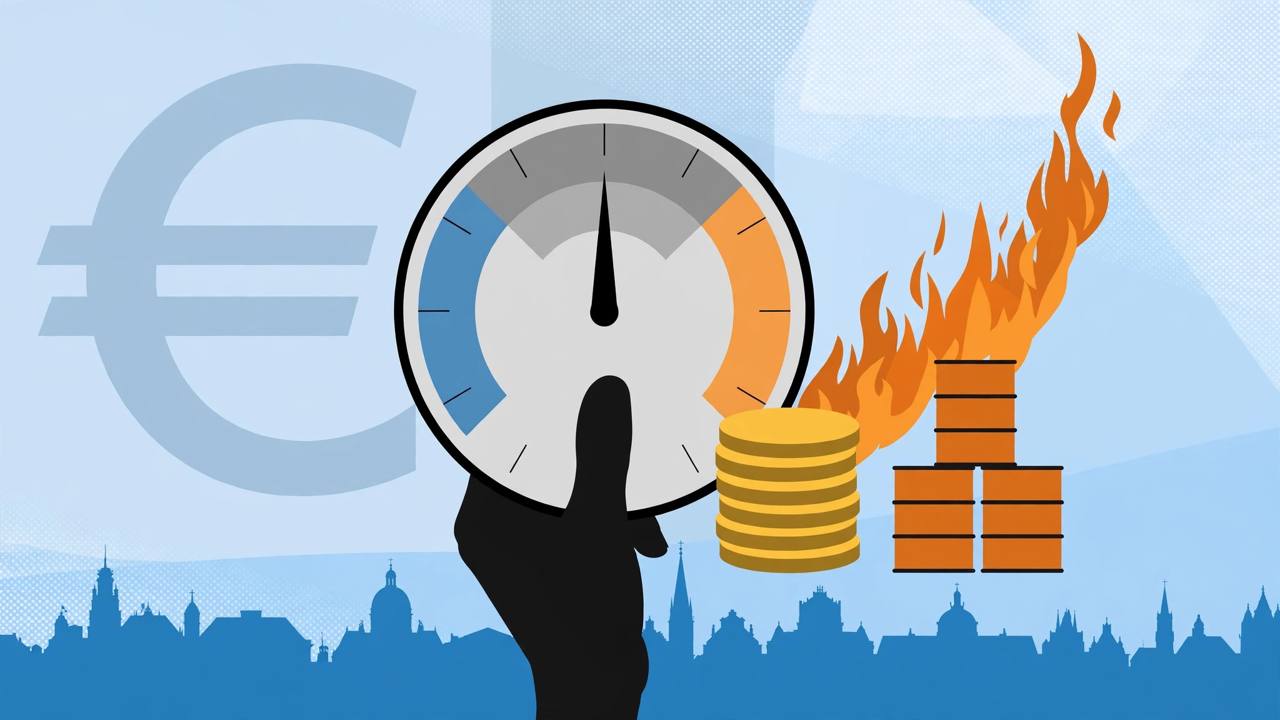
FRANKFURT — The European Central Bank kept its three key interest rates unchanged on Thursday, in a widely expected decision, and warned that surging energy prices are pushing inflation risks higher while weighing on growth across the euro area.
Source: European Central Bank — monetary policy statement, 29 October 2026
Euro area inflation rose to 3.8 per cent in September, up from 3.2 per cent in August, the ECB said. Energy price inflation jumped to 18.9 per cent from 14.3 per cent, with diesel and petrol prices reaching new peaks in September, while inflation excluding energy rose to 2.3 per cent and services inflation to 3.2 per cent.
The Governing Council said the increased magnitude and duration of the energy shock, and its indirect and second-round effects, are likely to drive up inflation and lower growth. Financing conditions have tightened since its last meeting. The bank repeated that it is committed to ensuring inflation stabilises at its two per cent target in the medium term, and that it will follow a data-dependent, meeting-by-meeting approach without pre-committing to a particular rate path.
Source: European Central Bank — monetary policy statement, 29 October 2026
Markets took the warning as a sign that a December rate hike has become more likely. Reuters reported that the euro fell to its lowest level since last May, trading about 0.2 per cent lower at around $1.113, while Europe's broad STOXX 600 index rose 0.95 per cent and rate-sensitive two-year government bond yields fell sharply. The ECB has already raised rates twice this year to stop an Iran war-induced energy price jump from becoming entrenched.
Source: Reuters — ECB keeps rates unchanged but points to mounting inflation risk, 29 October 2026
The ECB said risks to growth are tilted to the downside and risks to inflation to the upside, pointing in particular to the Middle East conflict and Russia's war against Ukraine. It warned that gas prices could rise further if supply is disrupted again or an unusually cold winter coincides with low storage levels, and noted that France now pays a decades-high premium of about 155 basis points over Germany to borrow for ten years, complicating the bank's next steps.
There were some supports for the economy in the statement: the euro area economy continued to expand in the third quarter, services have recovered, and manufacturing, digital services and exports are benefiting from AI-related business investment, while government spending on infrastructure and defence is also supporting activity. Unemployment remained at 6.4 per cent in August.
The decision came only hours after a leadership announcement that will shape the bank's next chapter: ECB President Christine Lagarde to step down on 7 February 2027
The ECB's next decision will turn on whether energy prices keep rising and whether higher energy costs start feeding into wages and other prices. The bank says it stands ready to adjust all of its instruments to bring inflation back to two per cent.