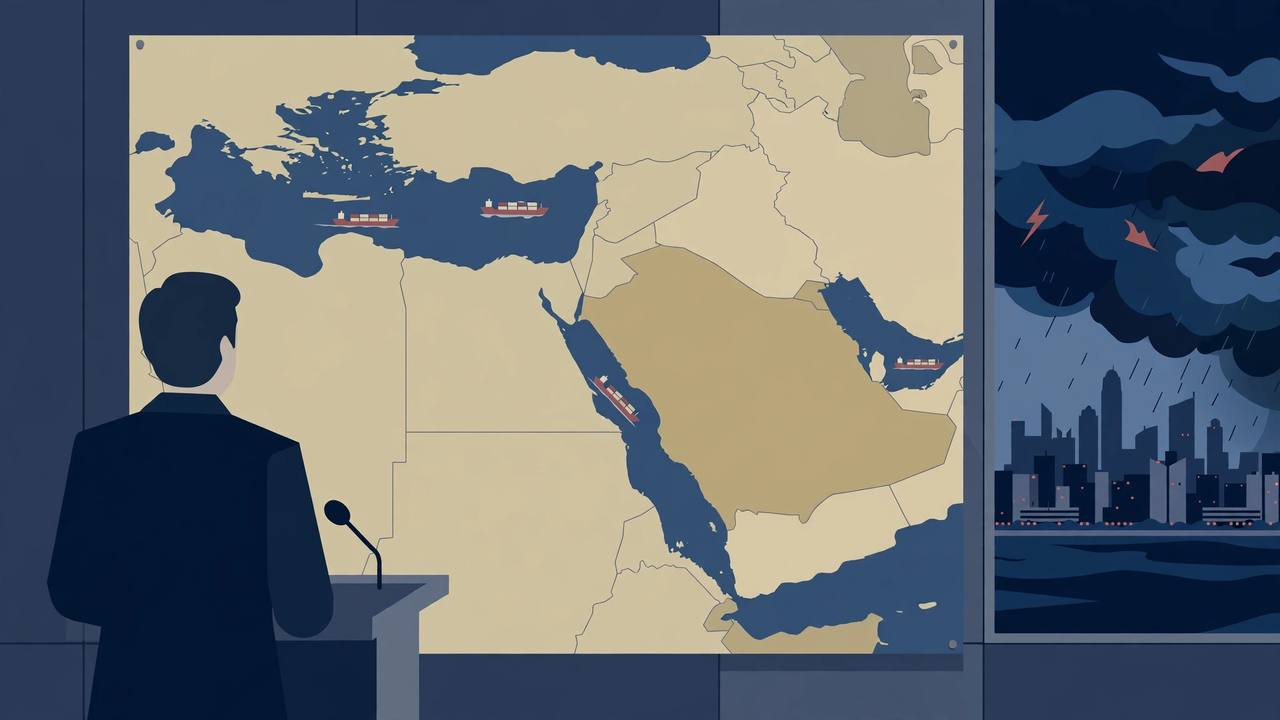
Egypt's Foreign Minister Badr Abdelatty said on Saturday that he was "extremely worried" that a new escalation in the war between the United States and Iran would be more destructive and have a major impact, Reuters reported. He was speaking at the IISS Manama Dialogue security summit in Bahrain.
Source: Reuters
"The second round will be more dangerous, more destructive, and it will lead to nowhere. We have to draw lessons from the past," Abdelatty said at the summit, the Middle East's main annual security gathering.
Al Jazeera Egypt, reporting his Manama remarks the same day, quoted Abdelatty as saying there are no military solutions to the region's problems and that political solutions are the only way to resolve them.
A war that never fully stopped
An interim agreement reached in June failed to secure a lasting ceasefire in the Iran war or restore normal shipping through the Strait of Hormuz, Reuters noted in its report. Iran has since proposed that Washington lift its blockade of Iranian ports in exchange for Tehran reopening the disrupted waterway within seven days.
Qatari mediators returned to Tehran on Friday in a renewed effort to broker a deal, but the two sides remain divided over whether nuclear negotiations, or relief from the blockade and oil sanctions, should come first, according to Reuters. No agreement has been announced by either Washington or Tehran.
Why the warning matters beyond the Gulf
The Manama Dialogue, now in its 22nd edition, runs from October 30 to November 1 at the Ritz-Carlton in Bahrain, with Saturday's sessions devoted to US and Middle Eastern security integration and the implications of the region's conflict, according to the IISS agenda. The institute also launched a strategic dossier, 'The Gulf at War', examining what the US-Israel war with Iran has meant for the Gulf states.
For the lakhs of Indian and Punjabi workers who live and work across the Gulf, any second round of fighting would not be a distant headline: the first round disrupted shipping through Hormuz, pushed oil prices sharply higher and unsettled flights and jobs across the region. Brent crude settled at a six-month high of $117.64 a barrel on October 30 amid fears of escalation, market reports said.
Abdelatty's warning lands while mediation is still moving and no side has announced a deal — which is why ministers gathering in Manama are treating the next days, not the next months, as the window in which a second, wider round of war either is prevented or begins.