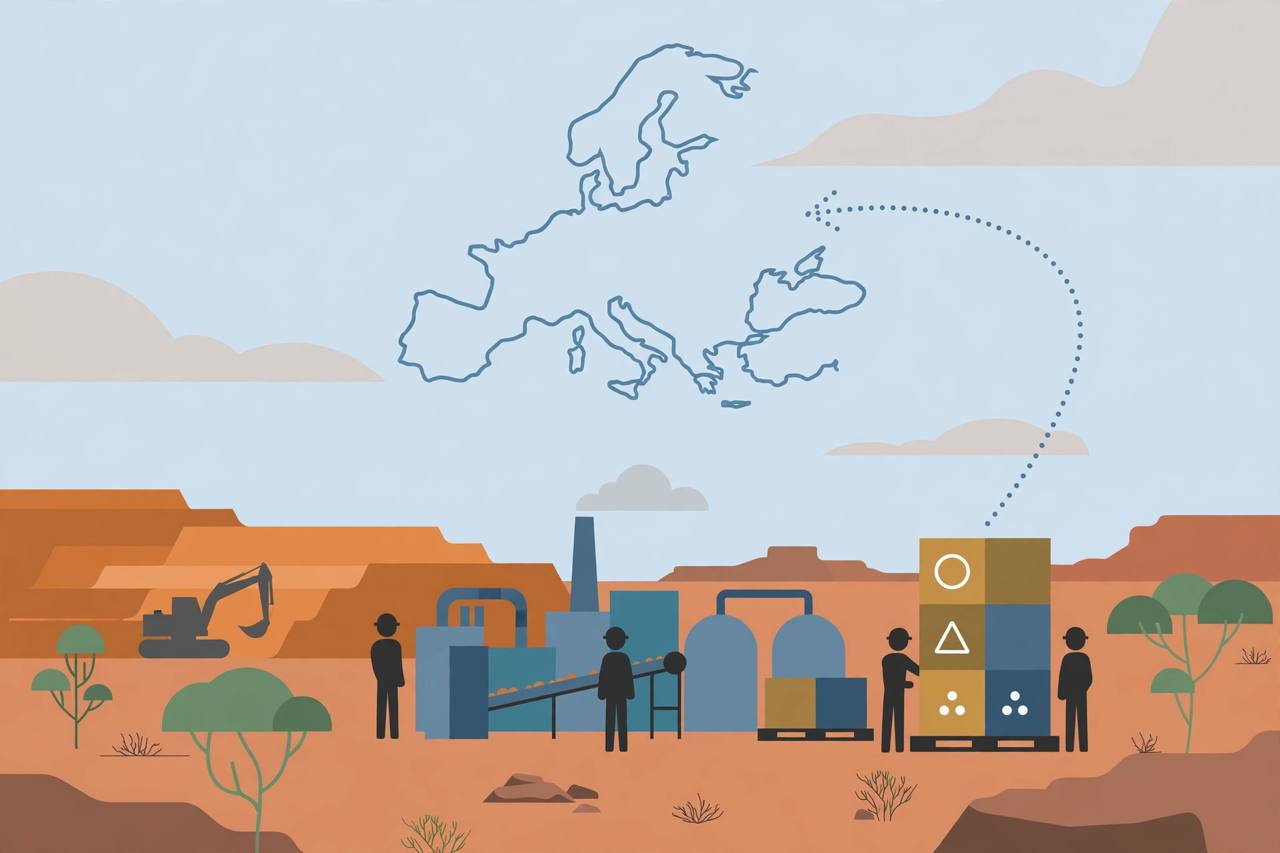
The European Union expects a wave of investment into Australia's critical minerals sector as it pushes to diversify its supply chain away from China, the bloc's ambassador to Australia, Lawrence Meredith, said on Tuesday in Sydney.
Australia and the European Union struck a free trade agreement in March after eight years of negotiations, removing tariffs on almost all goods and easing EU access to Australian critical minerals. Once both sides sign and ratify that agreement, expected early next year, a 5.5% EU tariff on critical minerals will be removed. Meredith called that change a game changer.
In parallel, talks are very close for Australia to sign a memorandum of understanding with the European Investment Bank, which would act as the bloc's funding vehicle, Meredith said. He added: The European Union will be massively investing in critical minerals. Since we wish to diversify away from China, then one of the most likely partners has to be Australia.
EU policy proposals have laid out as much as €10 billion ($11.2 billion) for critical raw materials within the larger €409 billion competitiveness fund, as the EU debates its budget from 2028 to 2034. Yaani, €10 billion means 1,000 crore euros (about 1,120 crore dollars), and €409 billion means 40,900 crore euros.
Australia said on Tuesday it would refresh its critical minerals strategy to place greater emphasis on refining and processing, as competition for investment intensifies. The bloc is looking initially at the minerals Australia will prioritise for its strategic reserve: gallium, antimony and rare earths.
Australia is one of several critical minerals superpowers in which the EU is looking to invest, including Brazil, South Africa and Canada, Meredith said. The EU also expects to invest along the supply chain, including in processing, and Meredith said Australian companies moving faster through early project development would speed the investment process.
What this does not change yet: the investment wave is an expectation tied to the trade deal's signing and ratification and to the funding memorandum, not money already spent. The timeline, the final budget figures and the individual projects are still to be settled.