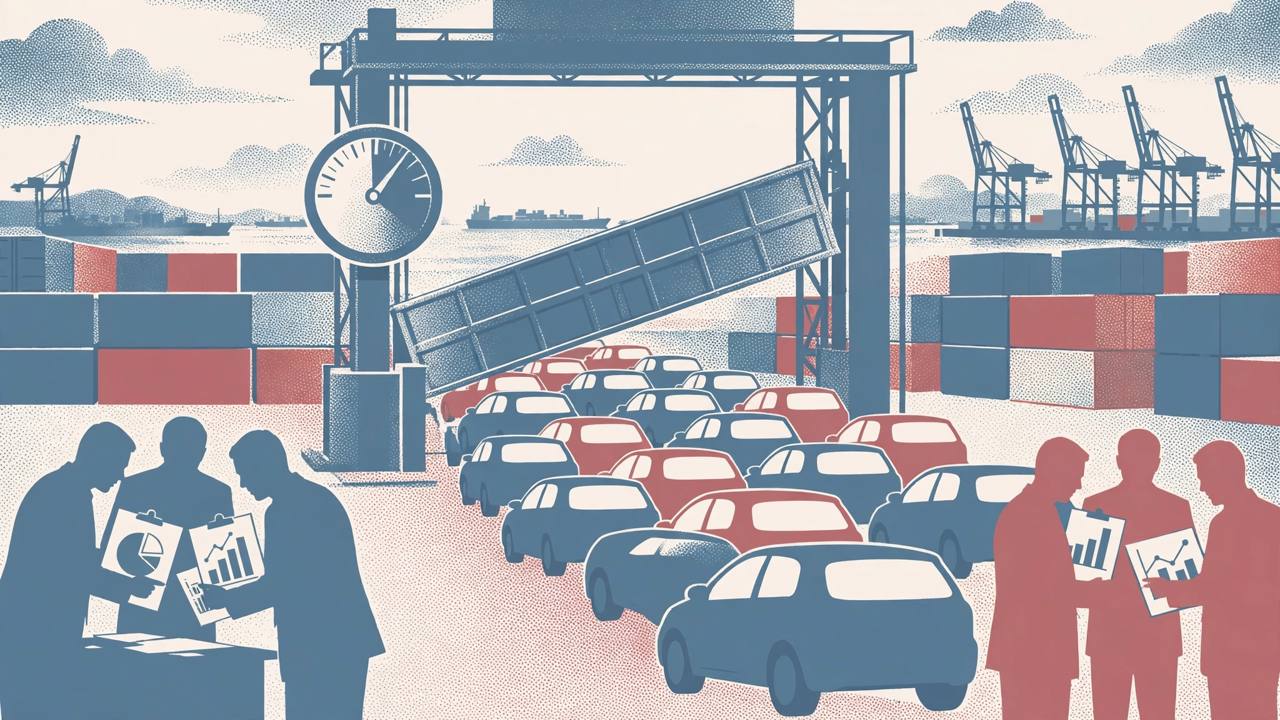
BEIJING — Several Chinese automakers have travelled to Beijing in recent days for talks with regulators on how to divide a limited export quota for hybrid vehicles bound for the European Union, the Chinese financial news outlet Cailian reported on Monday, citing multiple people familiar with the matter.
Source: Cailian via CnEVPost
"The total quota is limited, so each company will not receive a large export allocation. All the automakers are currently working to secure their share," the report quoted one person familiar with the matter as saying. The report did not name the automakers involved, the volumes each is seeking, or the criteria regulators will use to allocate the quota.
The deal behind the scramble
The allocation talks follow an understanding announced after Chinese Commerce Minister Wang Wentao met European Commissioner for Trade and Economic Security Maros Sefcovic in Beijing on October 8-9. China's Ministry of Commerce said on October 12 that the arrangement allows growth from the 302,000 hybrid vehicles the EU imported from China in 2025. Bloomberg, citing a proposal document it had seen, reported the quota would be set at 350,000 vehicles in the first year, rising 6% annually, in place for four years, and could take effect as early as December 1, covering both hybrid electric vehicles (HEVs) and plug-in hybrids (PHEVs).
Hybrids became the pressure point after the EU imposed countervailing duties on China-made battery electric vehicles in October 2024; hybrids were outside those duties, and Chinese brands' share of Europe's hybrid market climbed sharply. Sefcovic said last month the understanding would more than halve Chinese hybrid and plug-in hybrid exports to the EU compared with expected levels. Germany's economy ministry has defended the curbs, and Berlin and Paris were the main drivers of the initiative, according to reports from the Asia-Pacific Conference of German Business in South Korea.
For Europe's car industry, the quota is meant to buy time for makers such as Volkswagen and Renault. For Chinese makers, a capped but guaranteed market may be preferable to a prohibitive tariff — several are already shifting to European production, which would not count as Chinese-origin imports. How Beijing splits the quota between its champions will shape which brands can keep growing in Europe from December — and the allocation criteria have not yet been made public.