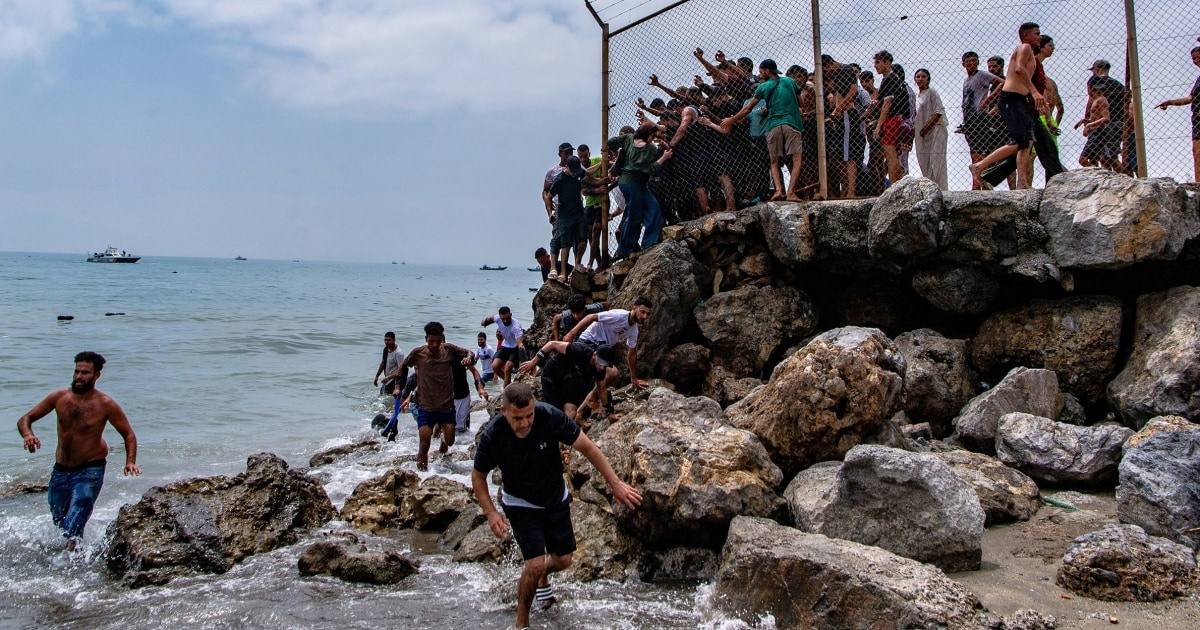
The EU Agency for Fundamental Rights (FRA) warned on Thursday that serious risks to fundamental rights persist at the European Union's external borders, and that the migration crisis in Ceuta, Spain, in July had put the balance between protecting fundamental rights and safeguarding the bloc's borders "to the test", Politico Europe and the agency's own bulletin reported.
Source: European Union Agency for Fundamental Rights
More than 72,000 people entered Ceuta irregularly from Morocco on 30 July, according to Spain's Minister of the Interior, and media reports cited by the agency indicated that at least 88 people died while attempting to cross by swimming. The agency flagged risks to the right to life, alleged unnecessary use of force against those arriving, inadequate reception conditions and child-protection issues.
Source: European Union Agency for Fundamental Rights
Deaths on migration routes remain high. Between 1 July and 30 September 2026, at least 852 people died or went missing in the Mediterranean and on the Atlantic route to the Canary Islands, according to the International Organization for Migration. The highest numbers were recorded on the West Africa-Atlantic route (283), followed by the Western Mediterranean (229), the Eastern Mediterranean (199) and the Central Mediterranean (141), the agency said, adding that effective search and rescue and safe disembarkation remain essential to preventing further loss of life.
The bulletin lands amid a live political fight over how the EU should respond. Commission President Ursula von der Leyen has promised a European emergency-response framework before the end of the year that she said should allow "time-limited and strictly defined flexibility in standard procedures" at borders under pressure. Greece has called for a measure suspending asylum applications in emergency situations — something that, Politico Europe reported, could amount to pushbacks, which are banned under international law. Several countries backed the idea, while others questioned whether such decisions should be taken at EU level rather than in national capitals.
The agency pushed back: any emergency measure must comply with EU and international law, both of which guarantee the right to seek asylum and the principle of non-refoulement — a "cornerstone of refugee protection," it said. It also reported that 12 EU countries opened 322 preliminary criminal investigations into alleged border-rights violations between 2020 and 2025, but only nine resulted in a conviction. Gaps in those investigations "lead to a perception of impunity, which risks undermining the rule of law, one of the fundamental values on which the Union is founded," the report stated.
Source: Politico Europe (via EuropeSays)
What is solid
- FRA published its third Migration and Fundamental Rights Bulletin for 2026 on Thursday.
- More than 72,000 people entered Ceuta irregularly from Morocco on 30 July, per Spain's Interior Minister; the agency cited media reports that at least 88 died attempting the swim crossing.
- IOM figures cited in the bulletin: at least 852 died or went missing on EU migration routes in Jul-Sep 2026.
- 12 EU countries opened 322 preliminary criminal investigations into alleged border-rights violations between 2020 and 2025; only nine resulted in a conviction.
What is only claimed
- Who bears blame for Ceuta: von der Leyen has denounced the 'deliberate' instrumentalisation of migration by 'state and non-state actors' — Russia and Belarus in her framing — while the FRA report focuses on rights risks regardless of how the crossings were engineered; accountability for the drownings is not yet established.