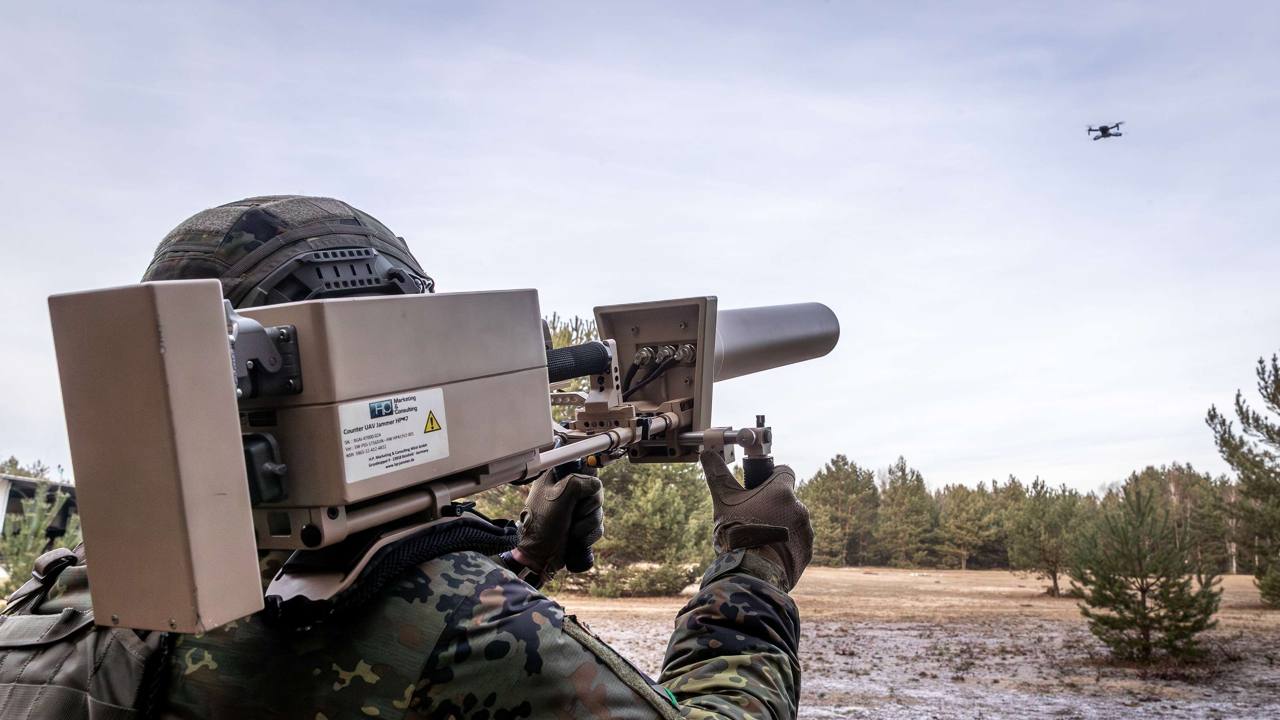
At a former flight-test base at Brétigny-sur-Orge, south of Paris, teams are testing electronic jammers and interceptor drones designed to stop hostile drones — and the customers are no longer only governments, police and armies. Private firms and state entities that run Europe's critical infrastructure want to strengthen their own defences, with some utilities asking for authorisation to shoot drones down themselves, Reuters reported on Wednesday after interviews with more than 30 company executives, officials and drone experts.
The fear driving the shift is that a hybrid attack could knock out power to millions of people, as Russian strikes have repeatedly done in Ukraine. "It is a theoretical, and increasingly a practical, possibility that there could be heating outages this winter due to hybrid attacks," Kristian Ruby, secretary general of the European energy body Eurelectric, told Reuters.
France has gone furthest. Its parliament passed a law in August allowing approved operators of critical infrastructure and their contractors to detect, jam and shoot down drones near designated facilities — a response to incursions that included flights over the Île Longue nuclear submarine base near Brest in December 2025. A senior French official told Reuters France wants an expanded list of vital sites equipped with counter-drone systems by 2027, and the testing programme run by Systematic Paris-Region has so far catalogued 17 counter-drone systems and three integrators. France's defence ministry said the law would help strengthen capabilities for the infrastructure under its authority; utility EDF and railway SNCF declined to comment, Reuters said.
Poland has authorised designated security units working for operators to destroy, disable or take control of drones entering restricted zones around critical energy infrastructure, and operators there have trained with military and police units. Austria announced plans in September to give similar powers to operators, with Defence Minister Klaudia Tanner saying the state could not protect every site on its own. In Germany, where counter-drone work remains a policing function, the interior ministry told Reuters it was reviewing how operators and third parties could legally be involved — a debate sharpened by the discovery of an explosives-laden drone near a Ukrainian cargo plane at Leipzig/Halle airport in August, an incident Germany blamed on Russia; Moscow denied responsibility and has repeatedly denied carrying out hybrid attacks in Europe. Reuters noted the technology to bring down drones is maturing faster than the rules on who may use it, leaving open questions about who can order a response and who bears liability if a downed drone injures people or damages property. Sources: Reuters investigation (Oct 21, 2026); official statements quoted therein from France's defence ministry, Germany's interior ministry, Austria's defence minister and Eurelectric.