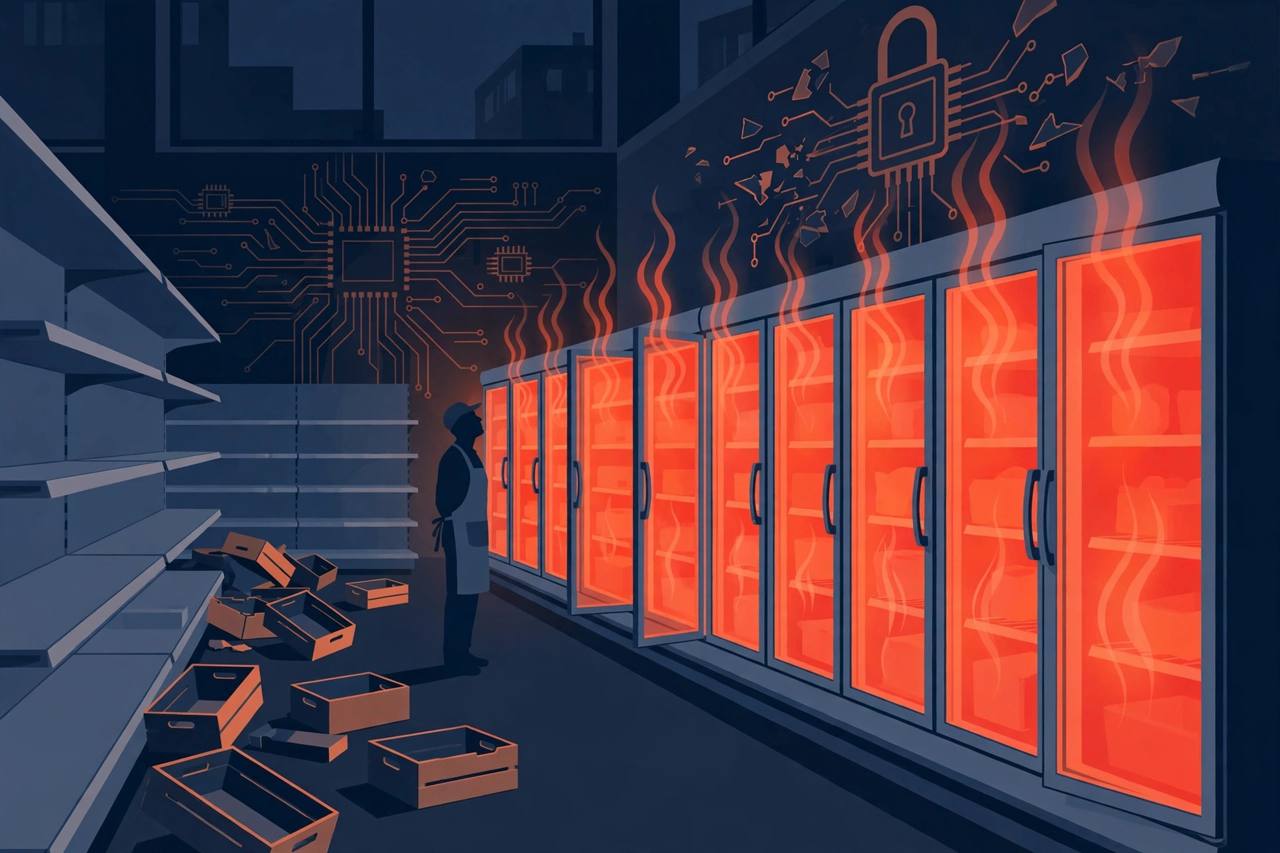
PARIS — About 700 of France's roughly 10,000 supermarkets were affected by a large-scale cyberattack that seized control of connected refrigeration systems, drove fridge temperatures as high as 50 degrees Celsius, spoiled large quantities of food and sparked fires in some stores, Finance Minister Roland Lescure told Parliament on Tuesday.
Source: Reuters
The Paris prosecutor's office said on Tuesday that its cybercrime unit is investigating the attack, including the full extent of the damage from spoiled food and possible fires. Prosecutors have called the attack “large-scale”, and French authorities have not identified who carried it out. No arrests have been announced.
Source: Reuters
How the attack worked
Investigators traced the breach to a weakness in refrigeration management software made by Danfoss, a company based in Denmark, according to an official in Prime Minister Sebastien Lecornu's office. The systems concerned were running outdated firmware, Danfoss acknowledged. Attackers forced the connected fridges into heating and defrost cycles overnight; at stores run by Les Mousquetaires, the group behind Intermarche, fridges stayed at about 50 degrees Celsius for six hours, and every affected product was thrown out.
Source: NewsPoint
The chains hit read like a map of French grocery retail. Carrefour put its affected supermarkets at 80, and Cooperative U chief Dominique Schelcher said 80 of his group's 2,000 stores were affected. Intermarche reported 300 stores affected — more than 12 per cent of its French network — while its parent group Les Mousquetaires has also been quoted at roughly 150 outlets, and Monoprix reported that 5 per cent of its network was affected. Casino Group and potentially Leclerc were also believed to have been hit, according to retail analysts at IGD.
Source: IGD Retail Analysis
Les Mousquetaires said every affected product was thrown out so shoppers faced no health hazard, and Minister Lescure told Parliament there was no risk to France's food supplies — even as he acknowledged the attack “touches the heart of our food security.”
“A wake-up call for everyone”
“It was a wake-up call for everyone,” Lescure said. Schelcher called targeting the equipment that keeps fresh produce safe “an attack on the French food supply chain” that was “unprecedented, extremely serious, and unacceptable”. Les Mousquetaires president Thierry Cotillard said the attack sent all the group's refrigerated display cases to 50 degrees: “It's safe to say it's a disaster. This has never been seen before, and it has never been seen on this scale.”
Source: Reuters
Prime Minister Lecornu has directed ANSSI, France's national cybersecurity agency, to lead the technical inquiry, and Paris is working with other European governments because the problem may extend beyond French borders — IGD said chains in Belgium, Germany, Poland, Portugal and Spain were potentially affected. In the Netherlands, the grocer Ahold Delhaize separately disclosed a “security issue” that shut several of its websites in Europe and the United States; no link between the two incidents has been confirmed.
Source: NewsPoint
Danfoss said it knew of incidents in France involving a small number of its refrigeration management systems, that the units concerned were running outdated firmware, and that customers had long been advised to install current firmware and replace legacy systems with newer models.
Source: NewsPoint
What is solid
- Finance Minister Roland Lescure told Parliament about 700 of France's ~10,000 supermarkets were affected
- The Paris prosecutor's cybercrime unit is investigating; fridges reached about 50°C and food was destroyed
- ANSSI, the national cybersecurity agency, has been directed to lead the technical inquiry
What is only claimed
- Who carried out the attack — French authorities have not identified any attacker and no arrests have been announced
- Exact per-chain store counts differ between company statements and analyst reports
Security analysts describe the incident as the first of its kind: not a theft of customer data, but a physical attack on a country's food chain through the connected devices that keep food cold. For shoppers far beyond France — including Punjabi and Indian families across Europe — it is a reminder that the systems behind everyday grocery shelves are now part of critical infrastructure, and that keeping their software updated is a food-security issue, not just an IT task.