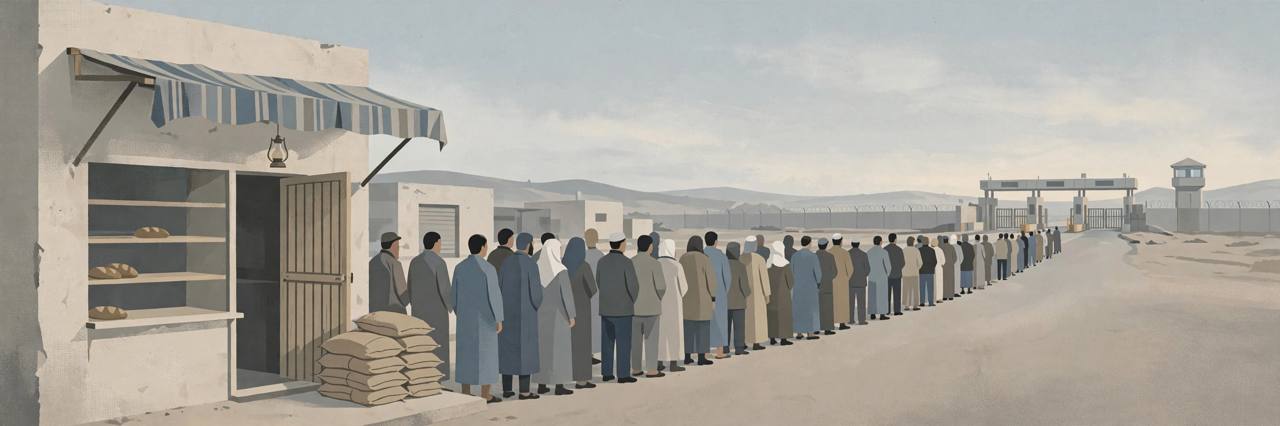
GAZA — Ten out of 17 partially operational bakeries in Gaza have closed their doors because of a shortage of commercial flour, the head of the Bakery Owners Association, Abdel Nasser al-Ajrami, said, in reporting by Middle East Eye relayed by ABNA. Al-Ajrami added that no flour shipments have been allowed to enter the Strip for ten days, that residents are forced to wait long hours in front of bakeries to obtain bread, and that the remaining bakeries could also stop operating in the coming days unless new supplies arrive.
Source: ABNA, citing Middle East Eye and Gaza officials, Oct 24, 2026
Gaza's Ministry of Social Development warned that the continuation of restrictions on flour and bakery operating supplies could lead to an imminent humanitarian disaster affecting hundreds of thousands of Palestinians, ABNA reported. The ministry called for immediate action to end restrictions on food supplies and demanded that the international community bear its humanitarian responsibilities and work to prevent the Strip from sliding back into famine.
Source: ABNA, citing Middle East Eye and Gaza officials, Oct 24, 2026
The bakery closures land on top of a cut in aid. The World Food Programme announced on October 19 that it was reducing food assistance in Gaza by about a third because of a funding shortfall — from about 1.6 million people to 1.1 million, depriving about 500,000 people (yaani 5 lakh) of monthly assistance, with daily hot meals cut from 250,000 to 150,000 — according to the International Commission to Support Palestinian Rights (ICSPR). The UN-backed Integrated Food Security Phase Classification forecast in September that 1.4 million people — yaani 14 lakh — would face high levels of acute food insecurity through December, Conflict Journal reported, and Euro-Med Monitor and other organisations have warned Palestinians are at risk of famine again given high food costs, low deliveries and less humanitarian aid. “People here are living on a day-to-day eating system,” journalist Tamer Nahed in Gaza told Arab News, describing life on one meal a day: “Today they might manage to get food, but tomorrow they won't be able to.”
Source: Conflict Journal, Gaza Notes, Oct 24, 2026
For families, the squeeze is already at the table. It has been months since Huda Abu Leila had to serve only tea and bread to her five daughters for breakfast, Al Jazeera reported, but this week that is what the 30-year-old, who lives with her daughters in a tent in western Gaza City, has had to do. “We were affected immediately. We couldn't find eggs or milk, and we don't have the money to stock up on food,” she said. Israel halted commercial shipments into Gaza on October 14 amid a dispute over a demand for merchants to pay 10,000 shekels per truck — yaani about $3,225 per truck — to bring goods in, Al Jazeera reported; on October 19 Israel announced commercial shipments would gradually resume, and COGAT, the Israeli military body that coordinates access, said merchants had reported that Hamas had withdrawn the demand. The bakery association's account that no commercial flour has entered for ten days sits against that announced resumption.
Source: Al Jazeera reporting, via Daily New Nation
The wider conditions are worsening as winter approaches. About 1.9 million displaced Palestinians — yaani 19 lakh — are living in deteriorating tents and shelters, ABNA reported. Ismail al-Thawabta, director-general of Gaza's Government Media Office, said Israeli authorities had allowed only 33.7 percent of the aid trucks and goods agreed under the ceasefire, leaving an estimated shortfall of 150,000 trucks — a Gaza officials' claim that Israel has not accepted in the reporting available. Nahed Shuheiber, head of the Private Transport Companies Association, said basic food items including potatoes, onions and tomatoes had become extremely scarce in local markets, driving up prices, ABNA reported. Al Jazeera's latest reporting from Gaza, published Saturday, described severe hunger stalking people as bakeries close down and aid agencies struggle to provide basics for lack of funds, with the Euro-Med Human Rights Monitor warning famine is a renewed risk.
Source: ABNA, Oct 24, 2026
What is solid
- Ten of Gaza's 17 partially operational bakeries have closed for lack of commercial flour, and no flour shipments have entered for ten days, according to Bakery Owners Association head Abdel Nasser al-Ajrami (Middle East Eye reporting relayed by ABNA).
- The WFP cut assistance by about a third from October 19 for lack of funding, removing about 500,000 people and cutting hot meals from 250,000 to 150,000 a day (WFP announcement, via ICSPR).
- The IPC forecast in September that 1.4 million people in Gaza would face high levels of acute food insecurity through December (Conflict Journal).
- Israel halted commercial shipments on October 14 amid a dispute over a 10,000-shekel per-truck demand, and announced on October 19 that shipments would gradually resume (Al Jazeera).
What is only claimed
- Why commercial flour is still not reaching bakeries is disputed: Gaza officials and the bakery association blame Israeli restrictions on entry, while COGAT said the October halt relayed a merchants' decision over Hamas's taxation demand and that merchants reported Hamas had withdrawn it (Al Jazeera).
- The Gaza Government Media Office's claim that only 33.7% of agreed aid trucks and goods have been allowed in, with a 150,000-truck shortfall, is a Gaza officials' figure that Israel has not accepted in the reporting available.