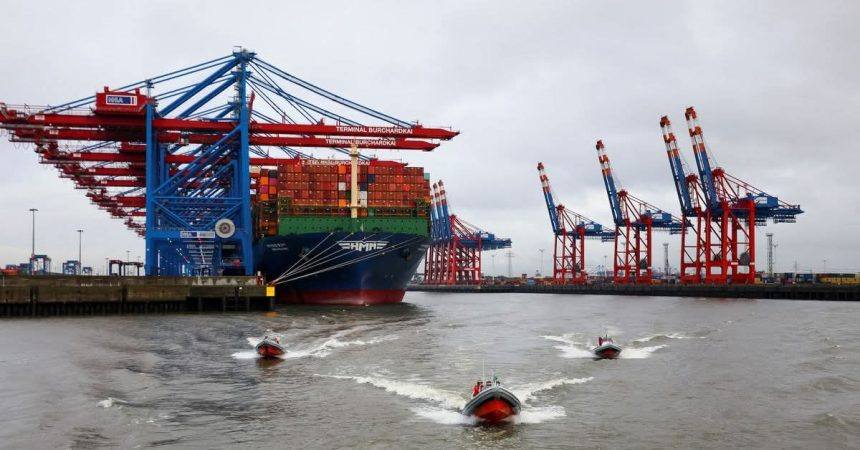
BERLIN — Germany's trade deficit with Asia-Pacific is set to hit a record of nearly €146 billion ($163 billion) in 2026 as falling exports to China outweigh growing sales elsewhere in the region, according to a report by Germany Trade & Invest (GTAI) seen by Reuters.
Source: Reuters
Yaani samjho: €146 billion is about $163 billion — roughly ₹14.5 lakh crore. That is the gap between what Germany buys from Asia-Pacific and what it sells there in a single year.
China's weaker demand hits German exporters
China accounts for around half of Germany's goods trade with Asia-Pacific and has an outsized effect on the overall figures, GTAI said. Chinese companies are expanding domestic production of advanced technology, machinery and electric vehicles, reducing the need for German imports.
German machinery exports to China fell 18% in the first seven months of 2026 from a year earlier, and automotive exports dropped 30% over the same period, according to the report. German car sales in China have nearly halved from a peak of more than 5 million vehicles, GTAI said, as local manufacturers gain ground in electric cars and benefit from control over battery supply chains.
Excluding China, the picture reverses: German exports to the rest of Asia-Pacific would grow by 2.8% in 2026, and the trade deficit would narrow to just under €35 billion, GTAI said.
India gains ground, and Merz pitches a middle-powers alliance
India is becoming a more important market and supplier for German companies, GTAI said: German exports to India have nearly doubled over the past decade, as have imports from India.
The report landed while Chancellor Friedrich Merz was visiting Japan, South Korea and Singapore from Monday to Friday. In Tokyo on Wednesday, Merz urged Japan to back a proposed alliance of “like-minded partners” to defend rules-based trade against tariffs and economic coercion, Reuters reported. China responded that it hoped Germany and the EU would be “objective and rational” and said it was committed to keeping trade and supply chains stable.
Source: Reuters
Europe's largest economy built its model on selling machinery and cars to China. If Chinese firms now make those products at home, German factories lose their biggest growth market — and countries like India and Southeast Asian economies become the new battleground for European exporters.