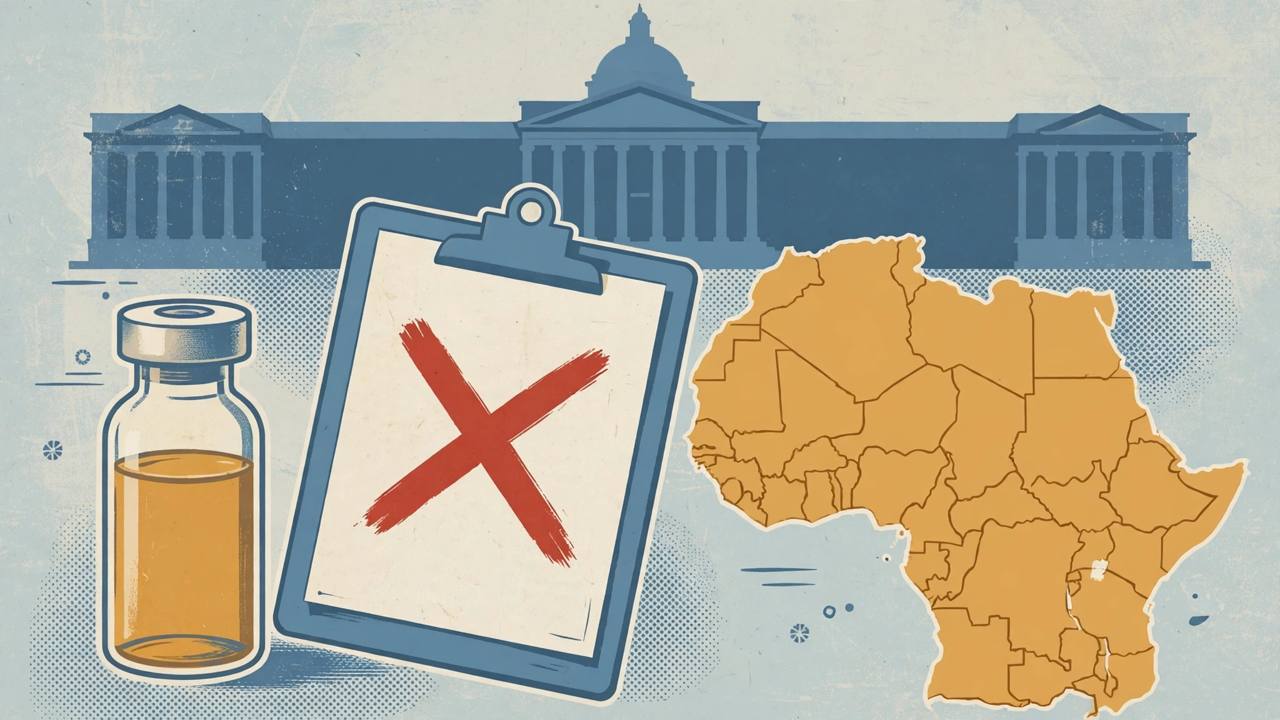
A controversial US-backed hepatitis B vaccine trial in newborn babies in Guinea-Bissau has been halted, its lead researcher confirmed on Wednesday, after the West African country's government denied ever approving it and police seized the study's vaccines. It was “now clear” that the study “will not move forward in Guinea-Bissau”, Frederik Schaltz-Buchholzer, a Danish researcher leading the project, wrote on LinkedIn, adding: “we were not given the necessary governmental approval”, The Guardian reported.
The study was to be funded with $1.6 million from the US Centers for Disease Control and Prevention (CDC), along with another $1.6 million from private partners including the Bill Ackman-backed Pershing Square Foundation and the Bluebell Foundation, The Guardian reported — yaani, $3.2 million in total is about 32 lakh dollars (3.2 million dollars) that was to pay for the trial.
The proposed trial would have enrolled about 14,000 newborns, with half not receiving the hepatitis B birth dose at birth so researchers could study wider effects of vaccination timing, according to reports of the study design. Vaccine experts sharply criticised it as unethical because the birth dose is known to be safe and to save lives, and hepatitis B commonly passes from mother to child during birth and can cause liver failure and cancer. “The solution is clear here: take the money and vaccinate as many kids as you can,” said Paul Offit, a vaccines expert at the Children's Hospital of Philadelphia, The Guardian reported.
Guinea-Bissau's health minister, Quinhin Nantote, had already denied that the project would move forward. “This is not even remotely true,” Nantote told The Guardian in Portuguese last week, referring to claims the trial had been approved. On Monday, judicial police searched the offices of the Bandim Health Project in the capital, Bissau, and seized the researchers' batch of hepatitis B vaccines; the police said the seizure was an investigative step and not a finding that the vaccines themselves were unsafe or ineffective, according to Guinea-Bissau reporting carried by Africa Briefing and The Guardian.
The Danish researchers, led by Schaltz-Buchholzer with Christine Stabell Benn and Peter Aaby, had hypothesised that live vaccines such as BCG may have wider mortality benefits and that giving another vaccine alongside could dampen that effect, The Guardian reported. The World Health Organization has said every newborn should receive the hepatitis B birth dose, and Guinea-Bissau currently plans to offer the universal birth dose in 2028. The CDC did not respond to reporters on Wednesday, according to MS NOW reporting carried in US coverage of the halt.
What is solid
- Lead researcher Frederik Schaltz-Buchholzer confirmed on Wednesday the trial will not move forward in Guinea-Bissau because the team was not given the necessary governmental approval, The Guardian reported.
- Guinea-Bissau Health Minister Quinhin Nantote denied the government approved the trial, The Guardian and Reuters reporting said.
- Judicial police seized the study's hepatitis B vaccines from the Bandim Health Project on Monday, and police said the seizure was investigative, not a finding on the vaccines' safety or effectiveness.
What is only claimed
- The researchers' hypothesis that vaccine timing has wider mortality effects remains their stated scientific claim; vaccine experts including Paul Offit criticised the proposed design as unethical, and WHO says every newborn should receive the birth dose.