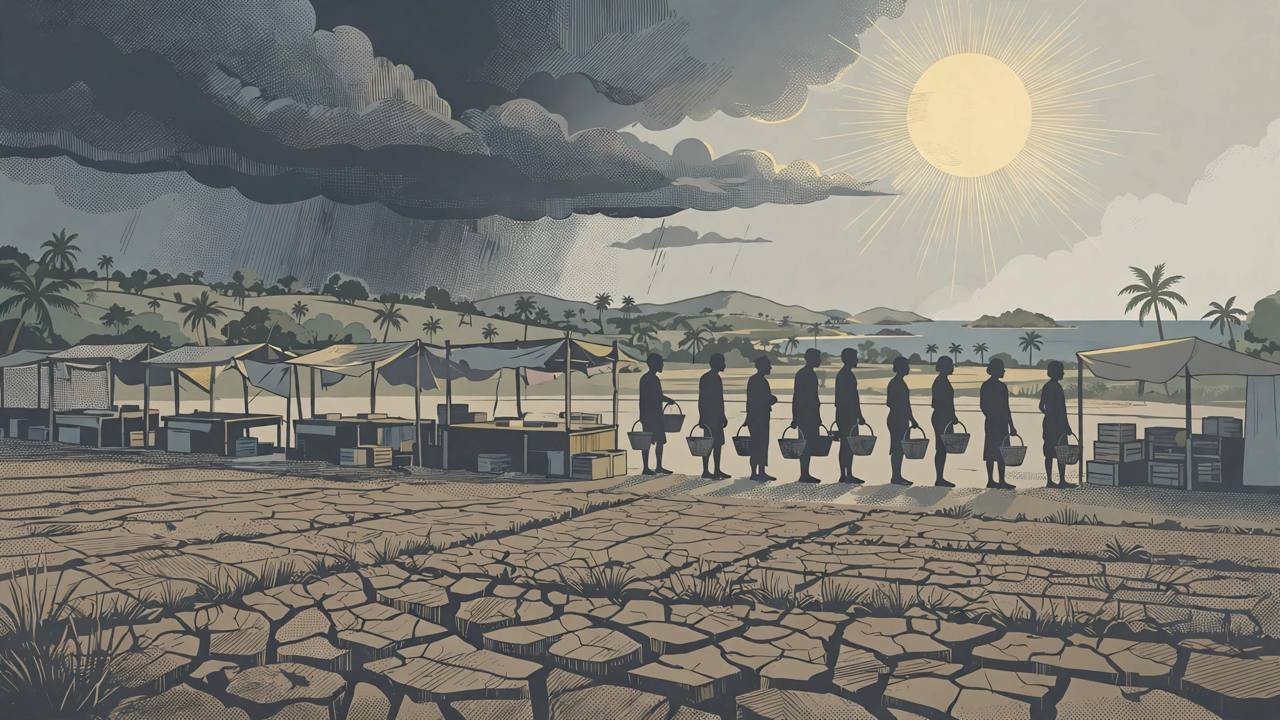
PORT-AU-PRINCE — Acute hunger in Haiti is on track to reach record levels, the UN World Food Programme (WFP) said on Wednesday, as a new analysis showed the country's fragile food-security gains unravelling under violence, economic instability, poor harvests, displacement and the growing impact of El Niño.
Source: World Food Programme
According to the latest analysis from the Integrated Food Security Phase Classification (IPC), 6.35 million people are likely to be acutely food insecure from March through June 2027 — an increase of more than half a million people compared to the same period in 2026. Almost two million of them will likely face Emergency (IPC Phase 4) levels of hunger, meaning severe food shortages that can force families into extreme measures to meet basic food needs, WFP said.
Source: World Food Programme
The Associated Press, reporting on the same report released on Wednesday, said nearly six million people in Haiti are already experiencing severe hunger, with almost two million facing emergency conditions, in a Caribbean country of nearly 12 million people — blaming a surge in gang violence and displacement, high food and fuel prices and an extreme El Niño.
Source: Associated Press via Ottumwa Courier
Displaced families 'arriving with nothing'
"Our teams are witnessing increasing levels of desperation as violence continues to displace families," said Lauren Landis, WFP Country Director in Haiti. "Many have been displaced multiple times and are arriving with nothing but the clothes on their backs." More than 1.5 million Haitians have been forced to flee their homes; people in areas controlled by armed groups and those in displacement sites are particularly vulnerable, unable to work or grow their own food and living in overcrowded, unhygienic conditions, WFP said.
The UN Food and Agriculture Organization's emergencies director Rein Paulsen made the same point on Wednesday: violence is cutting people's access to markets, land and farm inputs, while a very strong El Niño is bringing much drier conditions and higher temperatures, drying soil and delaying planting.
Source: FAO via UNifeed
Rural areas sliding from Crisis to Emergency
Hunger is also projected to deepen outside the cities: several rural areas are expected to deteriorate from Crisis (IPC Phase 3) to Emergency (IPC Phase 4) between March and June 2027 compared with the same period in 2026. El Niño-driven droughts and floods are already reducing harvests, and armed groups are constraining the supply chains that move farm produce to local markets, WFP said.
So far in 2026, WFP says it has worked with Haiti's government to support 2.6 million people with emergency food and cash transfers, school meals, social protection and malnutrition prevention for babies and young children. It urgently requires US$78 million — yaani 7.8 crore US dollars — to sustain those operations through March, and Landis urged longer-term investment alongside emergency aid so communities can withstand shocks like El Niño.