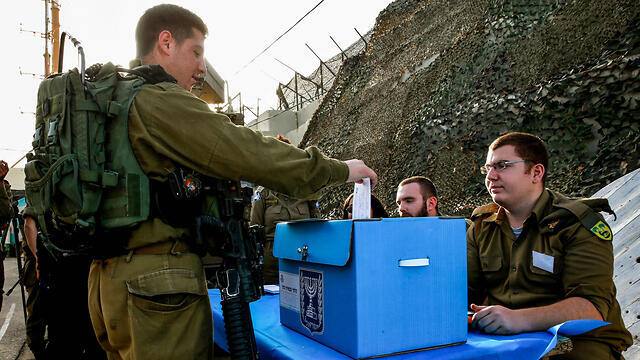
JERUSALEM — Early voting for Israel's 26th Knesset began on Wednesday at military polling stations on Israel Defense Forces bases and outposts across all operational arenas, including the Gaza Strip, Lebanon and Syria, according to the IDF.
More than 850 polling stations, many of them mobile, have been deployed — up from about 700 in the previous election — reflecting the growth in force size and the scale of reserve duty, Israeli media reported. For the first time, soldiers serving in operations beyond Israel's borders can vote from their positions. "Our mission is to enable all IDF service members to exercise their democratic right to vote by secret ballot, including during operational activities and combat beyond the border. The IDF is an apolitical people's army that will do everything necessary to ensure that the elections are held as scheduled," said IDF Elections Officer Col. Vered Ben-Yehuda.
Hundreds of election officers and about 3,000 soldiers trained as polling committee members will run the stations, each managed by a four-member committee. Regular-duty soldiers and active-duty reservists may vote at either a military or a civilian polling station, with a double-envelope system used to verify eligibility and prevent double voting, an Israeli military official told JNS. Military voting will continue until polling closes on Election Day, October 27, subject to operational requirements.
Israel allows early voting only for soldiers and diplomats. About 4,800 diplomats and their families began voting at missions abroad on October 15, and overseas turnout among eligible voters at diplomatic missions was reported at nearly 87 per cent. The IDF also said it was bolstering defences to prevent interference with the election.
Israelis will elect the 120 members of the Knesset on October 27 in the country's first national election since the Hamas-led attack of October 7, 2023, and the multi-front war that followed — the sixth election since 2019. Opinion surveys cited in Israeli media suggest a closely divided electorate, with neither the pro-Netanyahu bloc nor the opposition bloc assured of the 61 seats needed to form a government.
Sources: JNS, October 21, 2026; The Jerusalem Post; JFeed and Matzav reporting on the IDF election operation.