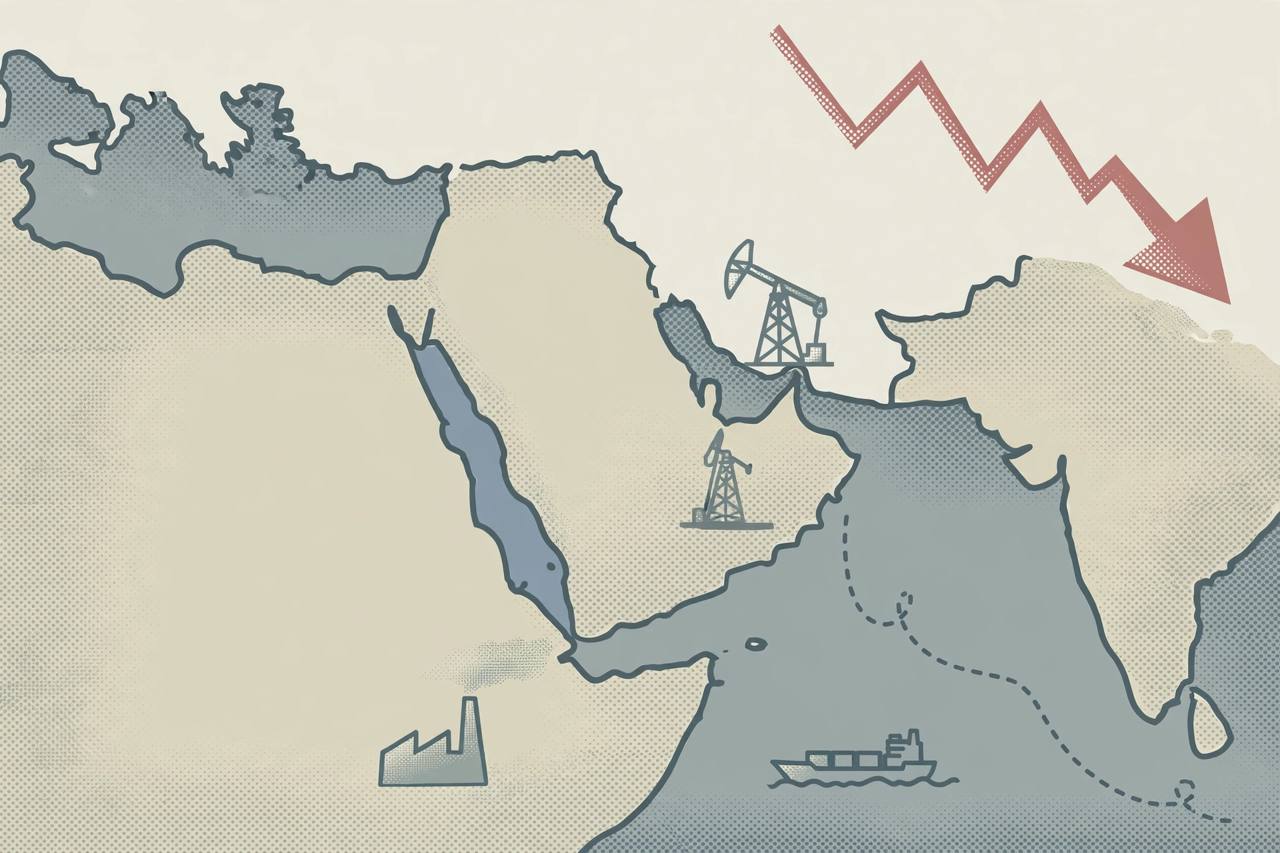
The International Monetary Fund (IMF) on Thursday forecast that economic output in the Middle East, North Africa and Pakistan will contract by 1.3% in 2026 because of the US-Israeli-led war against Iran, followed by a rebound to 6.6% growth in 2027, Reuters reported from Dubai, where the Fund released its regional outlook. The forecast is a sharp reversal from 3.3% growth in 2025 — a swing of 4.6 percentage points in one year.
The IMF said the war's impact on energy production, shipping, tourism, trade and confidence had been substantial but uneven: oil-exporting economies directly hit by disruptions to energy production and shipping were hurt harder, while oil importers proved more resilient, Reuters reported.
The Fund's baseline assumes the conflict abates in early 2027 and trade gradually normalises during that year, but it warned the outlook remains clouded by “exceptionally high uncertainty”, and that output in 2027 would generally stay below pre-war projections even as growth rebounds. “The main risks derive from further disruption to energy production and trade routes that could drive energy prices higher,” the IMF said in a statement outlining its key messages, Reuters reported.
Oil importers had proven more resilient, the IMF said, with domestic demand supported by remittances and tourism flows, favourable financial conditions, and prompt policy responses that safeguard consumers from higher commodity prices. External financial conditions could also tighten if investors reassess AI-driven productivity gains and interest rates rise further amid concerns about inflation and fiscal positions, the Fund warned.
The fuller regional outlook released on Thursday follows the Fund's warning a week earlier at the IMF-World Bank annual meetings in Bangkok, where Jihad Azour, director of the IMF's Middle East and Central Asia Department, said buffers that had contained the energy shock were finite, inventories were lower and spare capacity tighter, MENA Today and Africa Eye reported. For the lakhs of Punjabi and Indian workers in the Gulf, the forecast matters directly: it is the Fund's formal measure of how the war is shrinking the economies that employ them and send remittances home.
What is solid
- The IMF forecast a 1.3% contraction in 2026 for the Middle East, North Africa and Pakistan, followed by 6.6% growth in 2027, in its regional outlook released in Dubai on Thursday, Reuters reported.
- The region grew 3.3% in 2025, according to the IMF figures reported by Reuters and Africa Eye.
- The IMF said oil-exporting economies hit by energy and shipping disruptions were hurt harder, while oil importers proved more resilient.
What is only claimed
- The 2027 rebound to 6.6% is a forecast that assumes the conflict abates in early 2027 and trade gradually normalises; the IMF itself said the outlook is clouded by exceptionally high uncertainty and that further energy disruption could worsen it.