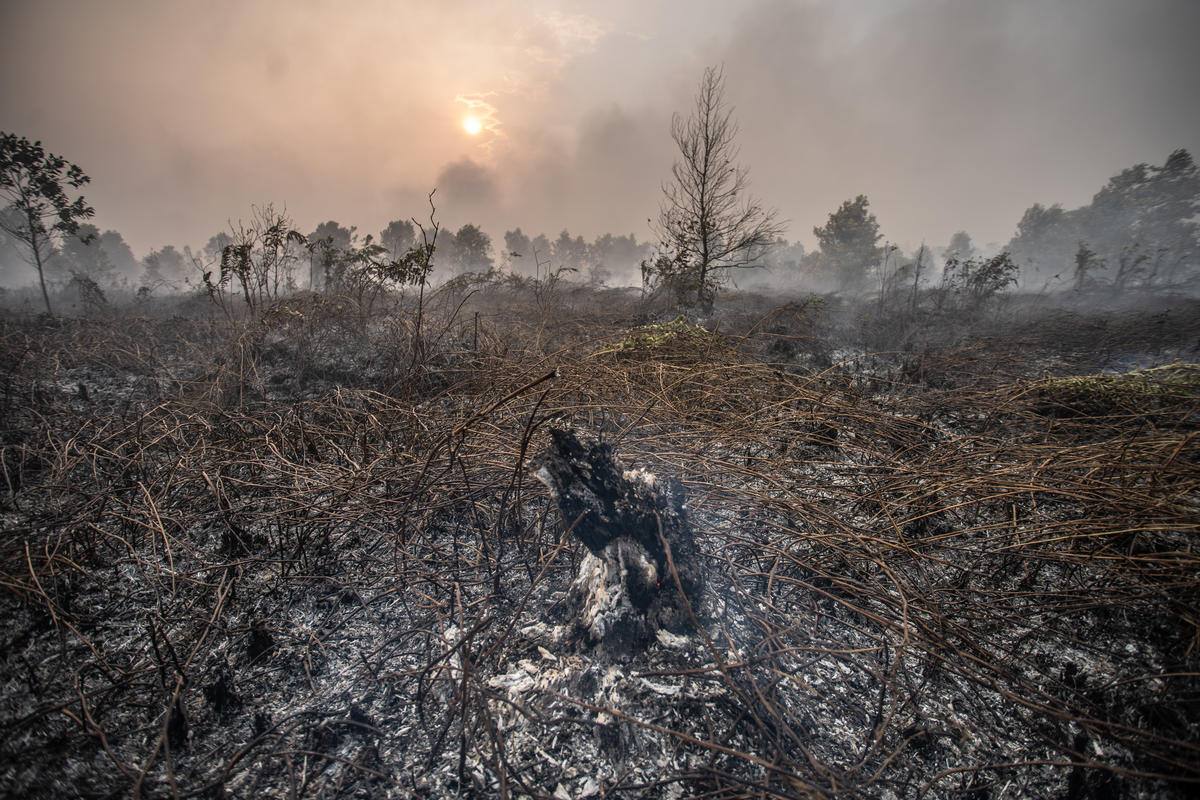
Toxic haze from months of fires in Indonesia has blanketed large parts of Southeast Asia, making hundreds of thousands of people sick, the BBC reported from Palangka Raya, the capital of Central Kalimantan province on the island of Borneo, where smouldering peatland lines the roads and residents say the air turns yellow with smoke from morning to night.
Indonesia's health ministry has recorded more than 283,000 acute respiratory infections across seven provinces, about double the count in early September, NPR reported on Tuesday, citing the ministry's figures. The air quality index in Palangka Raya has risen above 300, a level classed as hazardous, and smoke has at times turned Singapore and Kuala Lumpur into some of the world's most polluted cities, NPR said. The BBC reported that in Indonesia alone tens of thousands of people had fallen ill in an earlier count, more than 2,600 domestic flights had been cancelled and schools in neighbouring Malaysia had been closed.
Yaani: the economic cost of this year's smog is expected to exceed that of the 2015 haze crisis, which cost the region roughly $20 billion — yaani about 2,000 crore dollars in losses — Nanyang Technological University professor Euston Quah told the BBC.
Authorities say the fires are human-caused and have been fuelled by an unusually strong Super El Niño, which has deepened drought and delayed heavy rain. President Prabowo Subianto has ordered the deployment of additional firefighters and said authorities had brought the burning area down sharply, but his own disaster agency and forestry ministry said that figure covered only the areas where firefighters were working, not everything that is burning, NPR reported. Officials say more than 60,000 personnel have been deployed, along with aerial water drops and weather-modification operations, but firefighters say peat fires are exceptionally hard to stop because flames continue underground long after the surface fire goes out.
The crisis is also turning political. Student protests were held in Jakarta and other cities on Tuesday as President Prabowo's administration marked its second year in office, with activists demanding that the government declare a national emergency to strengthen the response, the BBC reported. In Palangka Raya, an Indigenous activist, Emmanuela Shinta, described the smoke-choked city in a social media video as a 'gas chamber' with 'nowhere to hide, nowhere to escape', NPR reported.
Sources: BBC News reporting from Central Kalimantan; NPR (Oct 20, 2026); Indonesia's health ministry figures reported by NPR.