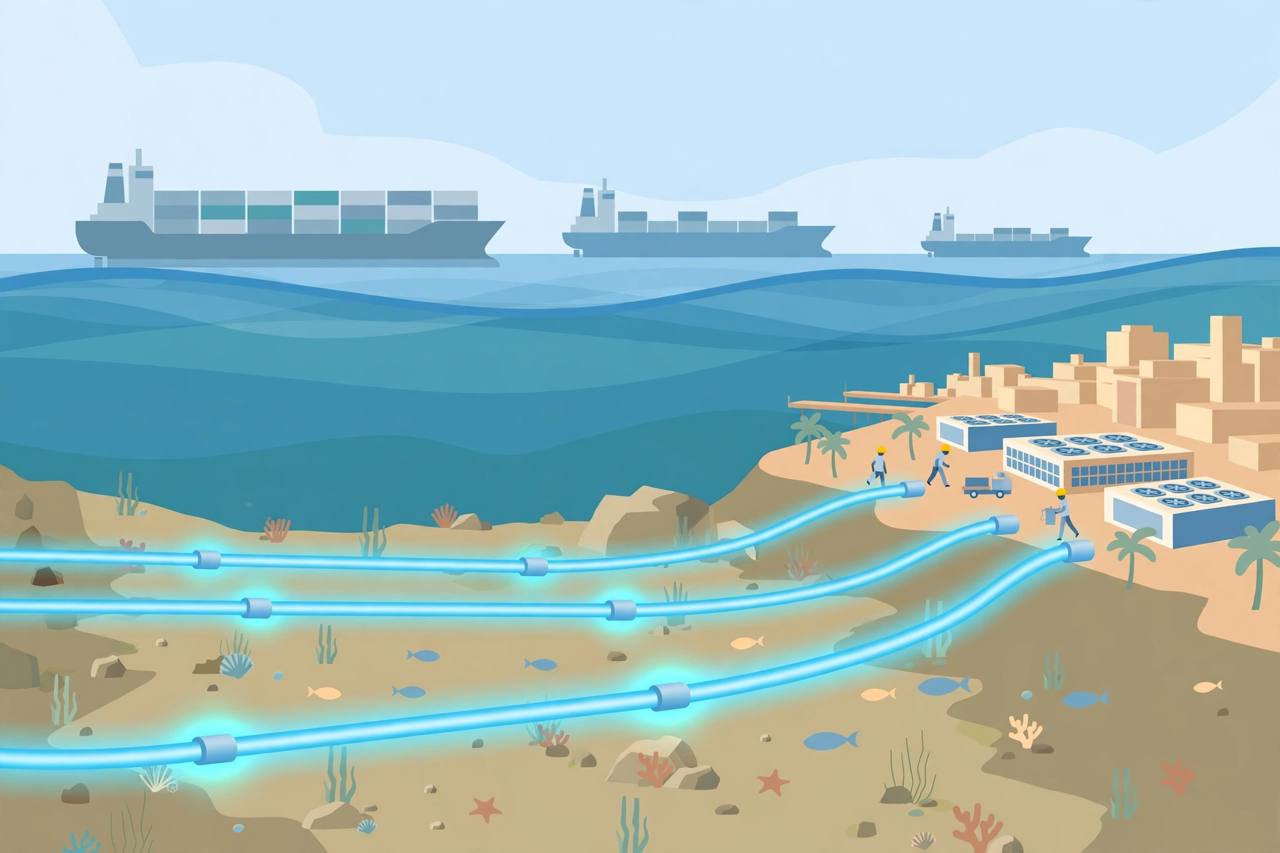
Iran has drawn up detailed plans to target undersea communications cables in the Gulf if the United States and Israel attack Iran again, two senior Iranian security officials told Reuters on October 23. The officials, speaking on condition of anonymity, gave few details and did not say how or where exactly Tehran would carry out such attacks.
Source: Reuters via WNCY, Oct 23, 2026
One official said Iran would aim to prevent repairs after any attacks to prolong disruptions to communications, including internet connections. "If Iran is attacked, there will be no more red lines … from undersea cables to military bases, including covert ones," the official said, warning Washington not to "play with fire" and saying Iran had full access to the undersea cables and could easily destroy them — Tehran's stated threat, reported here as the official stated it.
Source: Reuters via WNCY, Oct 23, 2026
The warning followed on-record remarks on Wednesday by Yadollah Javani, deputy head of political affairs for Iran's Revolutionary Guards (IRGC), who said Iran could target seven major internet cables beneath the Strait of Hormuz if Iranian infrastructure came under attack, Reuters reported. A separate summary of the Reuters report noted that top security official Mohsen Rezaei had also warned that US-linked digital infrastructure across the Gulf, including data centres and AI facilities, could be targeted.
Source: Reuters via DailyGraph, Oct 24, 2026
Undersea cables carry around 99 per cent of global internet traffic, according to the International Telecommunication Union, a UN agency. But the global impact of attacks in the Strait of Hormuz could be limited, because less than 1 per cent of international bandwidth passes through the strait, Alan Mauldin, research director at telecommunications research firm TeleGeography, told Reuters. The strait separates Iran and Oman and links the Gulf to the Gulf of Oman and the Arabian Sea.
Source: Reuters via WNCY, Oct 23, 2026
Multiple cable cuts could still slow internet services in the Gulf and disrupt financial transactions, e-commerce and cloud computing, depending on how quickly operators could reroute traffic, analysts cited by Reuters said. Repairs could be difficult during a war, with higher insurance costs and delays in obtaining permission to enter territorial waters potentially slowing the work — a direct concern for Gulf states where lakhs of Indian and Punjabi workers rely on internet and banking links to stay in touch with and send money home.
Source: Reuters via DailyGraph, Oct 24, 2026
The US State Department and Iran's Foreign Ministry did not respond to Reuters requests for comment on the security officials' remarks, and there was no immediate comment from Gulf states, Reuters reported. Reuters also reported background that Iran had struck two Amazon Web Services facilities in the UAE in March and damaged infrastructure near one of its facilities in Bahrain.
Source: Reuters via WNCY, Oct 23, 2026