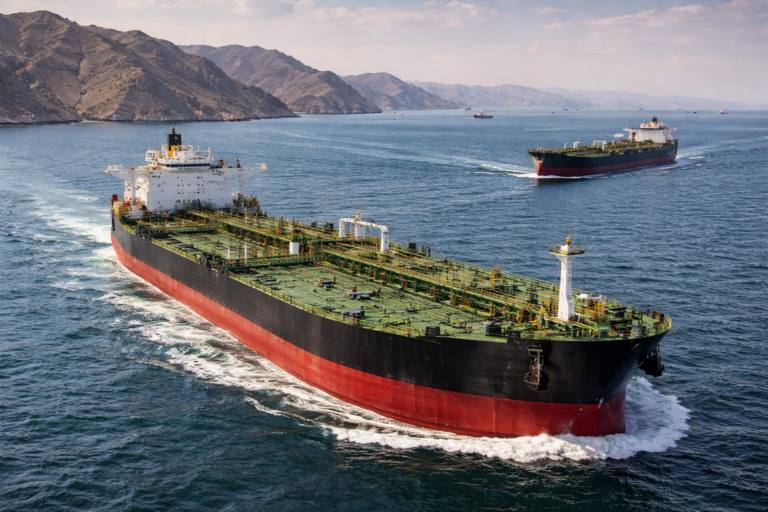
Iranian attacks on shipping in and near the Strait of Hormuz are striking more ships and doing more severe damage than earlier in the conflict, Bloomberg reported on Wednesday, bringing fresh risks to energy flows from the Gulf.
At least 23 incidents involving ships attacked in or near the strait were logged in the first two weeks of October, with at least five reporting impacts to their engine rooms, according to data from naval groups in the region and alerts from security consultants cited by Bloomberg. Direct hits on engine rooms can cause fires and leave ships without power or propulsion, taking vessels out of service for months and leading to costly repairs, Bloomberg said.
UK Maritime Trade Operations (UKMTO) figures reported separately also put the October count at 23 attacks since the start of the month, nearly double the usual rate, CBS News reported, adding that UKMTO said it was struggling to report the true number accurately because most ships no longer report incidents. Shipping and maritime security officials told Bloomberg, speaking on condition of anonymity, that they were seeing increased engine-room damage and a larger volume of incidents in general, but that it was hard to say whether Iran was deliberately targeting ship engines.
"What we're seeing is an increase in the frequency of attacks, and therefore, more damage in engine rooms and disabling fire," Phillip Belcher, marine director at Intertanko, the world's main trade group for the tanker industry, told Bloomberg.
Despite the attacks, Middle Eastern producers have shown a willingness to keep supplying oil — preliminary data from trade intelligence company Kpler put the seven-day average of Middle East oil exports fractionally above pre-war levels, Bloomberg reported. But the intensifying strikes threaten to worsen one of the biggest constraints in the global oil market: the number of available ships. The pattern also recalls the 1980s Tanker War, when Iraq and Iran targeted tankers' engine rooms to disable them, Bloomberg noted.
For Punjabi and Indian workers in the Gulf and for families who depend on Gulf remittances and flights, continued attacks around Hormuz matter directly: they push up oil and shipping costs and keep pressure on energy prices worldwide. Reuters reported separately on Wednesday that Brent crude rose 85 cents, or 0.78%, to $109.64 a barrel on Middle East supply concerns — yaani about $110 a barrel, the level traders watch for fuel-price pressure in India and Canada alike.
Sources: Bloomberg via RigZone and gCaptain (Oct 21, 2026); CBS News via UKMTO reporting on Hormuz attacks; Reuters on oil prices (Oct 21, 2026).