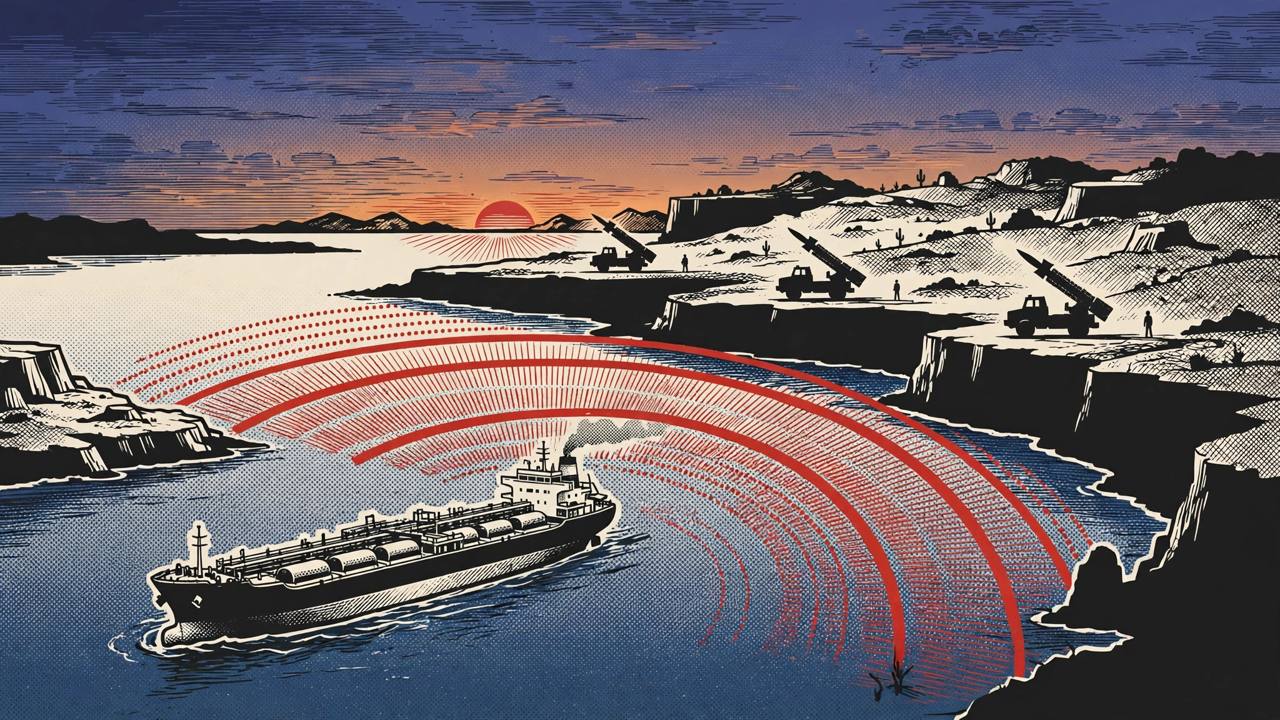
Iran's Islamic Revolutionary Guard Corps (IRGC) announced on Wednesday a shift to what it called an offensive and asymmetrical doctrine, its spokesman Hossein Mohebi said, in remarks reported by Al Jazeera on Thursday. “Our defence doctrine was previously defensive; we used to say that if a country attacks us, we will respond. Now we say that if a country attacks us, we will both respond and launch an offensive,” Mohebi said.
Source: Al Jazeera explainer, 22 Oct 2026
Al Jazeera reported that the IRGC warning said renewed US attacks could prompt Tehran to invade neighbouring countries and hit bases used in US operations. That is the IRGC's stated warning, reported as such — no such invasion has taken place, and Awaaz Punjab does not present the threat as an action that has happened.
Mohebi also claimed, without giving figures, that Iran's missile stockpile had increased one-and-a-half times since the 12-day war between Iran and Israel in June 2025, with improved range, destructive power and accuracy, and he said Iranian forces were preparing to unveil what he called the “father of all bombs”. Those are IRGC claims made by its spokesman; they have not been independently verified.
Source: Shafaqna Pakistan (reporting Mohebi via Student News Network / Geo News)
Why analysts say Tehran changed its message
Negar Mortazavi, a senior fellow at the Center for International Policy, told Al Jazeera that Tehran was drawing lessons from the wars of 2025 and 2026 and wanted a new equation: “Any future attack on Iran will come at a much higher cost for the aggressors.” She said Iran, unable to match US conventional strength, was relying more on missiles, drones and its leverage over the Strait of Hormuz. Political analyst Rami Khouri told Al Jazeera the doctrine was also meant to make the consequences of attacks extend to the US, Israel and regional countries supporting their operations.
The announcement came in a week when Washington ordered non-emergency US diplomats and families to leave Saudi Arabia after Houthi attacks on an airport and an oil field there, and when Brent crude climbed above $110 a barrel — yaani more than one hundred and ten dollars for each barrel — amid attacks on shipping around the Strait of Hormuz, the waterway through which a large share of the world's oil passes. That context matters for Punjab and India directly: Gulf stability affects oil prices, flights and the safety and remittances of lakhs of Indian and Punjabi workers in the region.
What is solid
- IRGC spokesman Hossein Mohebi publicly announced the doctrine shift on Wednesday, using the quoted wording.
- The statement was reported on Thursday by Al Jazeera and other outlets carrying the same Mohebi remarks.
- US diplomats were ordered to leave Saudi Arabia this week after Houthi attacks — a separate, already-reported development.
What is only claimed
- Mohebi's claims about a 1.5-times larger missile stockpile and a new “father of all bombs” weapon are IRGC claims with no independent verification.
- Whether the doctrine means pre-emptive strikes, or only a larger response after an attack on Iran, is disputed in how different outlets summarised Mohebi's remarks — his quoted wording ties the offensive to a country attacking Iran first.
Diplomatic efforts to end the nearly eight-month conflict remain stalled, according to Al Jazeera's reporting, and media reports cited there said the US and Israel were considering possible strikes in the coming weeks. Those reports do not by themselves confirm that an attack is imminent, and Awaaz Punjab will report any actual strike only when it is confirmed by independent sources.