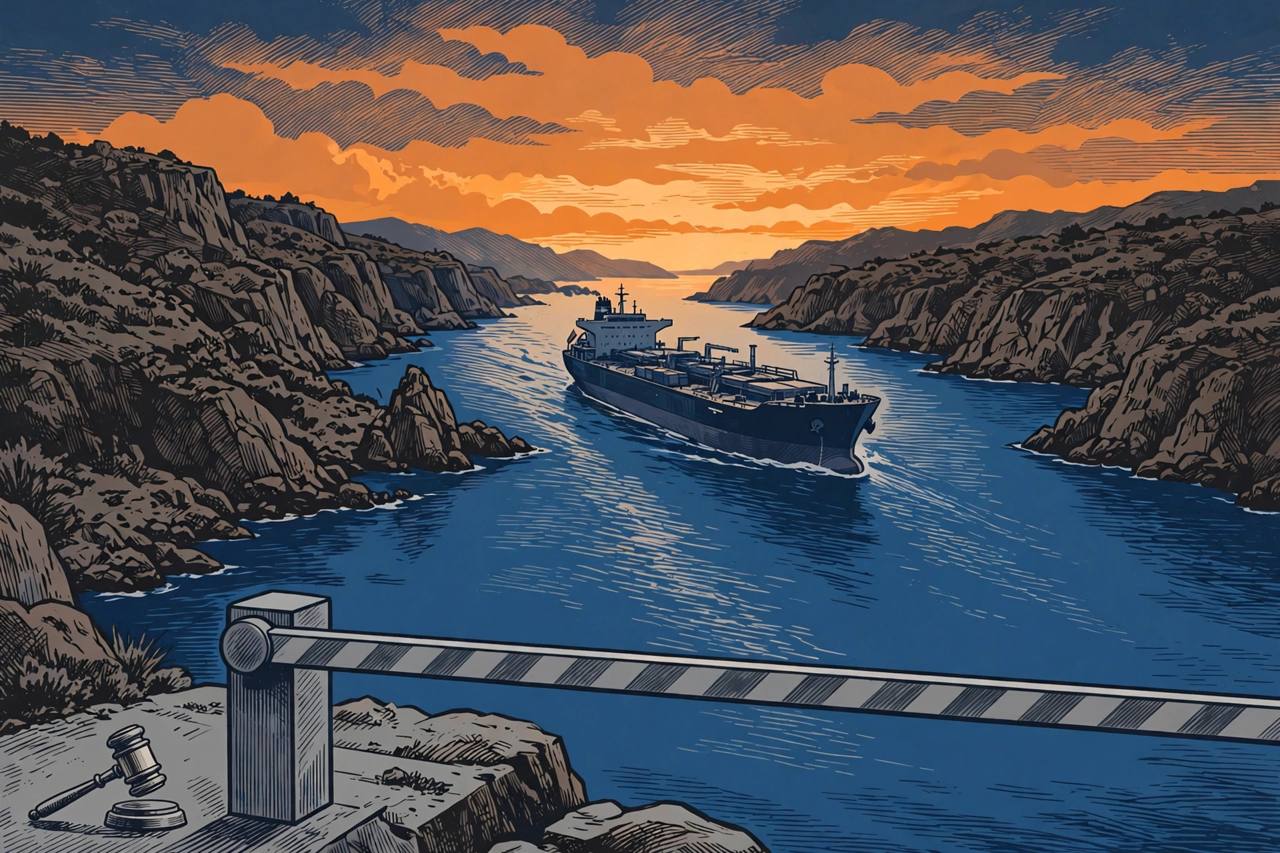
Iran's Persian Gulf Strait Authority said on Tuesday that all vessels belonging to South Korean shipping company Sinokor will face “legal action” starting on November 1, in Tehran's latest move to tighten its grip on the Strait of Hormuz.
Source: Reuters
The authority, a body set up by Tehran to manage passage requests in the strait, said on X that Sinokor vessels had committed the highest number of crossing violations in the strait over the past three months, and that “appropriate actions” had been taken against at least seven of them. Sinokor did not immediately comment on the authority's statement.
Ships owned by Sinokor were previously included on a list issued by Iran in August of 45 tankers that Tehran said had broken its rules for crossing the Strait of Hormuz.
Why the strait matters
Tehran has sought to tighten its control of the strategic waterway since US and Israeli airstrikes on Iran on February 28, restricting transit to gain leverage over Washington while disrupting oil flows from Arab Gulf producers, especially to customers in Asia. The strait carried around a fifth of the world's energy supplies before the conflict erupted.
In response to Iranian attacks on shipping, the United States has also imposed a naval blockade against ships linked to the Islamic Republic in the strait. While the blockade has all but choked off Iranian exports, Gulf producers have adapted by relying on so-called dark transits — switching off tankers' tracking systems to evade detection — to protect the oil flows that underpin their economies.
The warning comes as October has become the worst month for attacks on commercial shipping in and around the strait since the war began, and as Saudi Arabia, Turkey and Pakistan hold talks with Iranian officials in Tehran aimed at easing tensions in the Middle East. For India and the Punjabi diaspora, the strait is a direct concern: Gulf energy flows through Hormuz drive fuel prices at home, and lakhs of Indian and Punjabi workers live and work across the Gulf states.