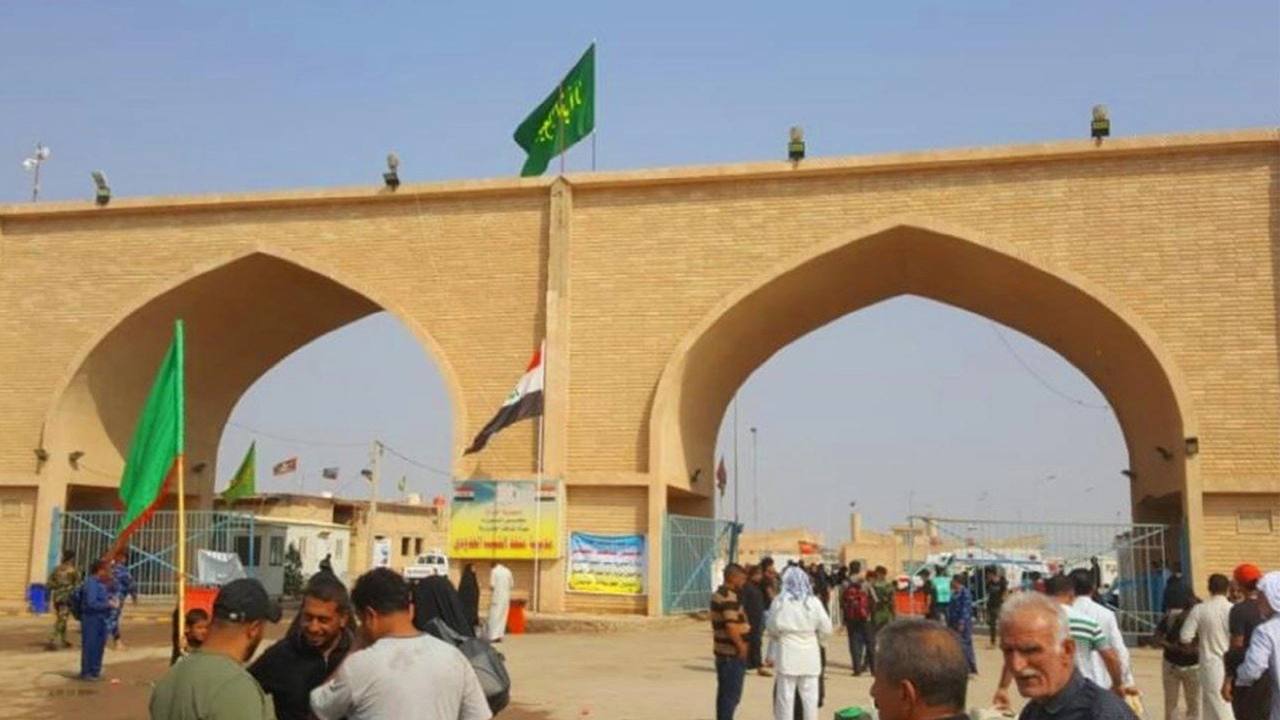
BAGHDAD - The row over Iraq's closed Al-Sheeb border crossing with Iran turned into an open standoff between Baghdad and the southern province of Maysan on Sunday and into Monday, as the provincial council set the federal government a deadline of Thursday, October 29, to reopen the crossing - and Prime Minister Ali Al-Zaidi responded by ordering an investigation into the council's chairman. Maysan Provincial Council Chairman Mustafa Duair had warned on Sunday that residents would resort to 'civil disobedience' and close major roads connecting the province to the rest of Iraq unless the crossing was reopened by Thursday, Rudaw reported; Shafaq News reported he threatened that the province would cut itself off from the rest of Iraq if the demand was not met.
Source: Rudaw, Oct 25
Early on Monday, the prime minister's office said Al-Zaidi had ordered an investigation into Duair over the threat, saying the decision underscored the need to uphold the law and follow constitutional and administrative procedures, and that the relevant authorities would determine whether Duair's statements carried legal liability, Shafaq News reported.
Source: Shafaq News, Oct 26
What is solid
- Baghdad ordered Al-Sheeb closed on October 20, effective the next morning until further notice, citing unspecified technical issues (Shafaq News, citing a provincial council source)
- Duair set an October 29 deadline and threatened civil disobedience and road closures (Rudaw; Shafaq News); PM Al-Zaidi then ordered an investigation into Duair (prime minister's office via Shafaq News)
- Dozens of protesters blocked the Bazargan road used by oil companies on Sunday, and parliament formed a committee to investigate the closure (Shafaq News)
What is only claimed
- Why the crossing was closed is disputed: Baghdad cites unspecified technical issues, while Iran's embassy rejected as 'false allegations' an Iraqi PM adviser's claim that drugs and counterfeit currency were behind it, and Tehran says it received no advance notice (Shafaq News)
Protests on the oil road, and prices climbing
The pressure was not only verbal. Dozens of protesters blocked the Bazargan road, a major route used by oil companies in Maysan, on Sunday to demand the crossing's reopening, chanting slogans against the closure as security forces deployed heavily around the site, a Shafaq News correspondent reported. Fruit and vegetable prices have risen sharply in local markets since the closure, the agency said, prompting residents to demand the resumption of cross-border trade.
Source: Shafaq News, Oct 25
Maysan Governor Habib Dhahir Al-Fartousi also urged the prime minister on Sunday to reopen the crossing urgently, warning that its closure had driven up prices, disrupted trade and affected residents seeking medical treatment. Reopening it under existing legal, security and health regulations would revive trade, ease living costs, increase public revenues and create jobs, he said.
Source: Shafaq News, Oct 25
Parliament opens its own inquiry
Iraq's parliament has formed a committee to investigate the closure, lawmaker Saqr Al-Mohammadawi of the Security and Defense Committee told Shafaq News on Sunday. The committee, made up of Maysan lawmakers and members of the parliamentary committee responsible for border crossings, is expected to submit its findings within 72 hours. Maysan lawmaker Mohammed Al-Fartousi called the crossing an economic lifeline for the province, saying its closure had pushed up food prices and stopped some patients travelling for medical treatment, and that provincial lawmakers had not been informed of the decision in advance. He warned the economic consequences could extend beyond Maysan.
Source: Shafaq News, Oct 25
The closure itself dates to October 20, when the federal government ordered Al-Sheeb shut effective the following morning and until further notice, citing unspecified technical issues, according to a Maysan Provincial Council source cited by Shafaq News. Iran's Interior Ministry criticised the decision, saying Tehran had received no advance notification from Baghdad. On Saturday, Iran's embassy in Iraq rejected as 'false allegations' claims by prime ministerial adviser Abdul Amir Taiban that the crossing had been closed over drug trafficking and counterfeit currency. What Baghdad decides before Thursday - reopen the crossing, or hold the line against a province threatening to cut itself off - will be the next test of the standoff.
Source: Shafaq News, Oct 25-26