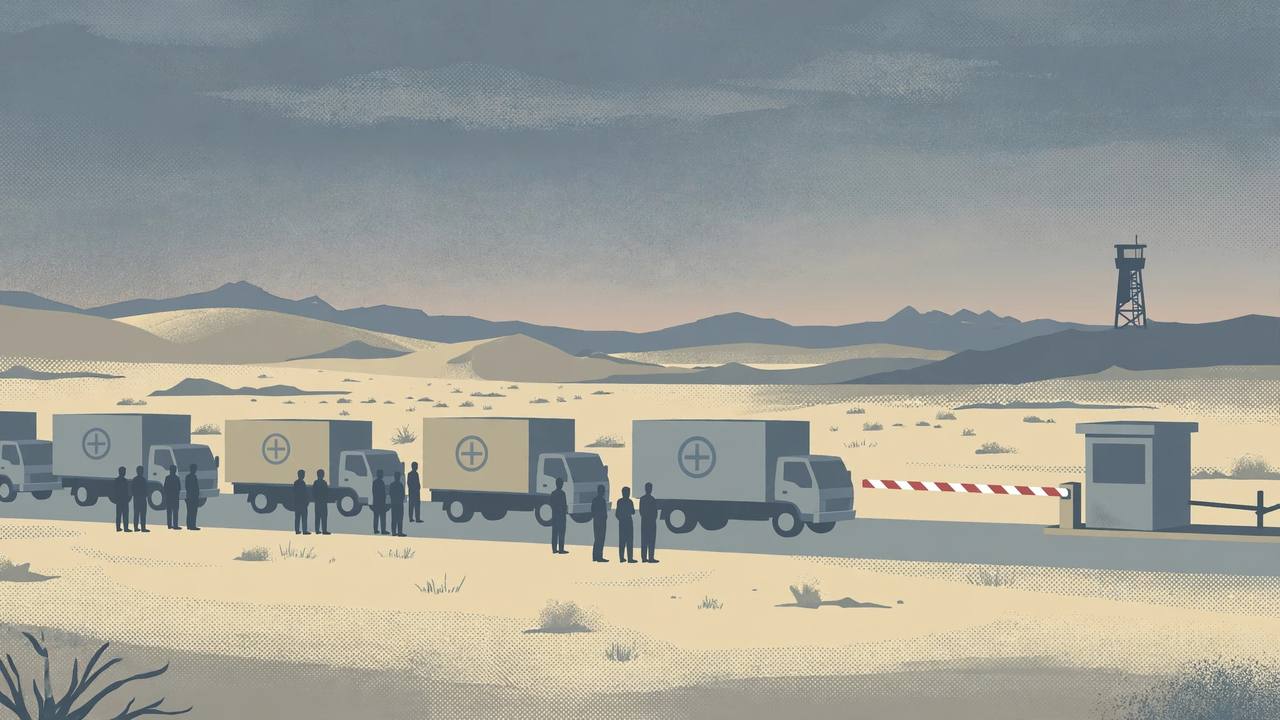
GAZA — Israel has ordered a complete and comprehensive closure of the Rafah crossing between Gaza and Egypt, blocking humanitarian aid, commercial shipments, food, fuel and cooking gas from entering the Gaza Strip through the Egyptian route, a senior Palestinian source involved in the negotiations told Drop Site News. Israeli authorities informed the United Nations and the Egyptian committee of the decision on Monday evening, November 2, the source said.
Source: Drop Site News
On Tuesday, November 3, Israeli authorities turned travellers back at the crossing and said the entry of goods and trucks was suspended, according to the Palestinian Crossings and Borders Authority. The authority said travellers were sent back without any prior announcement of a closure or of changes to the approved operating procedures, Quds News Network reported.
Source: Quds News Network
Israel cited alleged smuggling and “interference by government bodies in the Gaza Strip” as its reasons for the closure, the senior Palestinian source said. No evidence for either claim was presented in the reports, and the reports carried no public Israeli statement beyond the reasons relayed by the source. Awaaz Punjab is reporting the closure as stated by the Palestinian source and the Crossings and Borders Authority, with Israel's stated reasons labelled as its claims.
Source: Quds News Network
What the Egyptian route carries
The Egyptian route through Rafah handles approximately 50 to 60 trucks a day, accounting for “nearly half of the daily supplies entering the Gaza Strip”, the source said, adding that “fuel and gas come entirely through this route”. The source warned that the shutdown could have direct repercussions on the humanitarian situation and market stability, driving up prices for fuel, cooking gas, food and other essential goods.
Even before the closure, aid entry was running far below the ceasefire terms. Gaza's Government Media Office said in a statement on Monday that only 77,657 aid trucks had been allowed into Gaza out of an agreed 232,800 since the ceasefire took effect — 33.3 percent of the requirement — and that in October alone 3,777 trucks entered, a 20.3 percent compliance rate, with fuel deliveries at just 15.9 percent of the agreed volume, according to the Qatar News Agency's reporting of the statement. The office said travel through Rafah had reached only 14,821 people out of a planned 40,000, and it called on mediators and the international community to compel Israel to open the crossings and allow aid in without restrictions.
Source: Qatar News Agency via Jazira Newswire
Winter closing in on a population in tents
The closure comes as Palestinians across Gaza face the onset of winter in makeshift tents and heavily damaged homes, with worsening food insecurity compounded by cuts to World Food Programme assistance. The Palestinian Ministry of Health has said Israeli attacks have killed at least 1,593 Palestinians and wounded 5,748 since the United States-brokered ceasefire took effect in October 2025 — figures reported by Al Jazeera and attributed to the ministry.
Source: Quds News Network
Food aid to Gaza was already being cut back before the Rafah order — read the earlier report on the World Food Programme reductions and what they mean for families in the enclave. WFP Gaza aid cuts report
On the Egyptian side of the border, aid was still being dispatched as the closure was announced. The Egyptian Red Crescent sent its 307th ‘Zad Al-Ezza From Egypt to Gaza’ convoy on Monday, November 2, carrying more than 1,582 tons of flour, food parcels, medicines, medical equipment and fuel for bakeries and hospitals, according to Egypt's State Information Service. The organisation says the initiative has delivered more than 3,667 tons of aid and that total Egyptian aid to Gaza has exceeded one million tons.
Source: Egypt Gazette / State Information Service Egypt
No reopening date has been announced. The decision was relayed to the UN and the Egyptian committee on Monday evening, so any reversal would likely come through the same mediation channels that run the ceasefire. Until Rafah reopens, Gaza's fuel and cooking gas — which the Palestinian source says come entirely through this route — have no Egyptian entry point, and the 50 to 60 trucks a day the route carried must either be rerouted or stopped.
What is solid
- Israel ordered a complete closure of the Rafah crossing on Monday evening, according to a senior Palestinian source involved in the negotiations, who said the UN and the Egyptian committee were informed
- Travellers were turned back at the crossing on Tuesday and goods entry was suspended, according to the Palestinian Crossings and Borders Authority
- The Egyptian route carries about 50 to 60 trucks a day and, according to the source, all of Gaza's fuel and cooking gas
What is only claimed
- Israel's cited reasons — alleged smuggling and interference by Gaza government bodies — are claims relayed by the Palestinian source; no evidence was presented in the reports
- The truck-entry and traveller percentages come from Gaza's Government Media Office and have not been independently verified