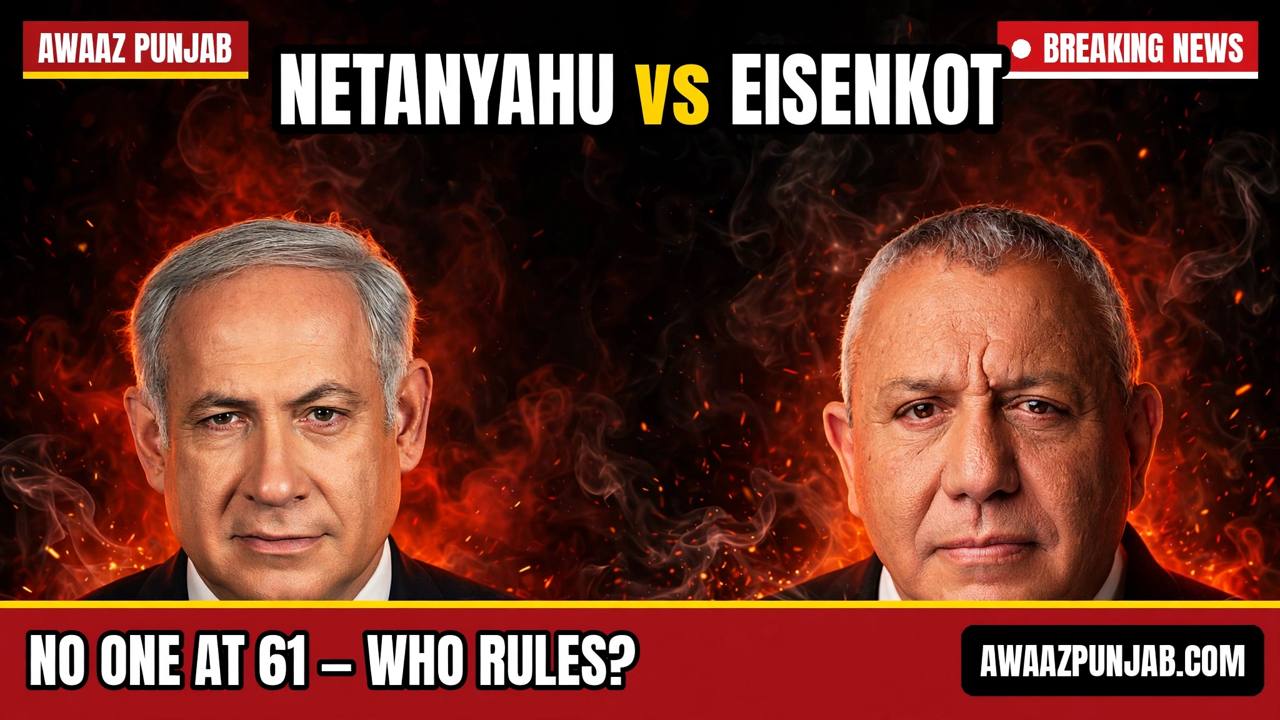
JERUSALEM - Exit polls released as voting ended in Israel on Tuesday pointed to a deadlocked election, with Prime Minister Benjamin Netanyahu's Likud emerging as the largest single party but his right-wing bloc projected at only about 50 seats in the 120-member Knesset - 11 short of the 61 needed to form a government.
Source: Euronews
The rival camp led by former military chief Gadi Eisenkot was projected slightly ahead as a bloc, at 52 to 53 seats, according to the exit polls reported by Israel's main television channels and summarised by the Jerusalem Post. That still leaves Eisenkot short of a majority on his own numbers.
Source: The Jerusalem Post
Channel 13's exit poll put Likud alone at 25 seats, the largest party tally, even as its wider bloc stalled. The sharpest shift was the projected strength of the Arab-led parties, put at 18 seats by Channel 12 and 17 by Channel 13 - a total that could hold the balance in coalition talks, since both the Joint List and Ra'am oppose Netanyahu.
Source: Euronews
Turnout was reported at over 74 percent by Israel's Central Elections Committee, the highest in decades, in the country's first election since the Hamas-led attacks of 7 October 2023. The vote has been widely framed as a referendum on Netanyahu, Israel's longest-serving prime minister, who campaigned on his wartime leadership and an endorsement from US President Donald Trump.
Source: Euronews
No clear path to 61
If the projections hold, Netanyahu's bloc would have fallen from the 64 seats his coalition won in 2022 to about 50. Eisenkot's camp, to govern, would likely need a minority government with outside support from Arab parties, a unity arrangement, or further elections - each of them politically difficult. Under Israel's system, President Isaac Herzog will consult party leaders after the official results and give the lawmaker judged most likely to assemble 61 votes the first chance to form a government, and Netanyahu could remain in office in a caretaker role while talks run.
Source: ENM News
Exit polls have missed before in Israel. The final count is expected by 30 October and official results on 4 November, and small parties near the 3.25 percent threshold can still swing the final arithmetic.
Both leaders can be expected to claim momentum from the same numbers - Netanyahu leads the largest party, Eisenkot leads the larger bloc - but on Tuesday night neither man had a clear road to a governing majority.