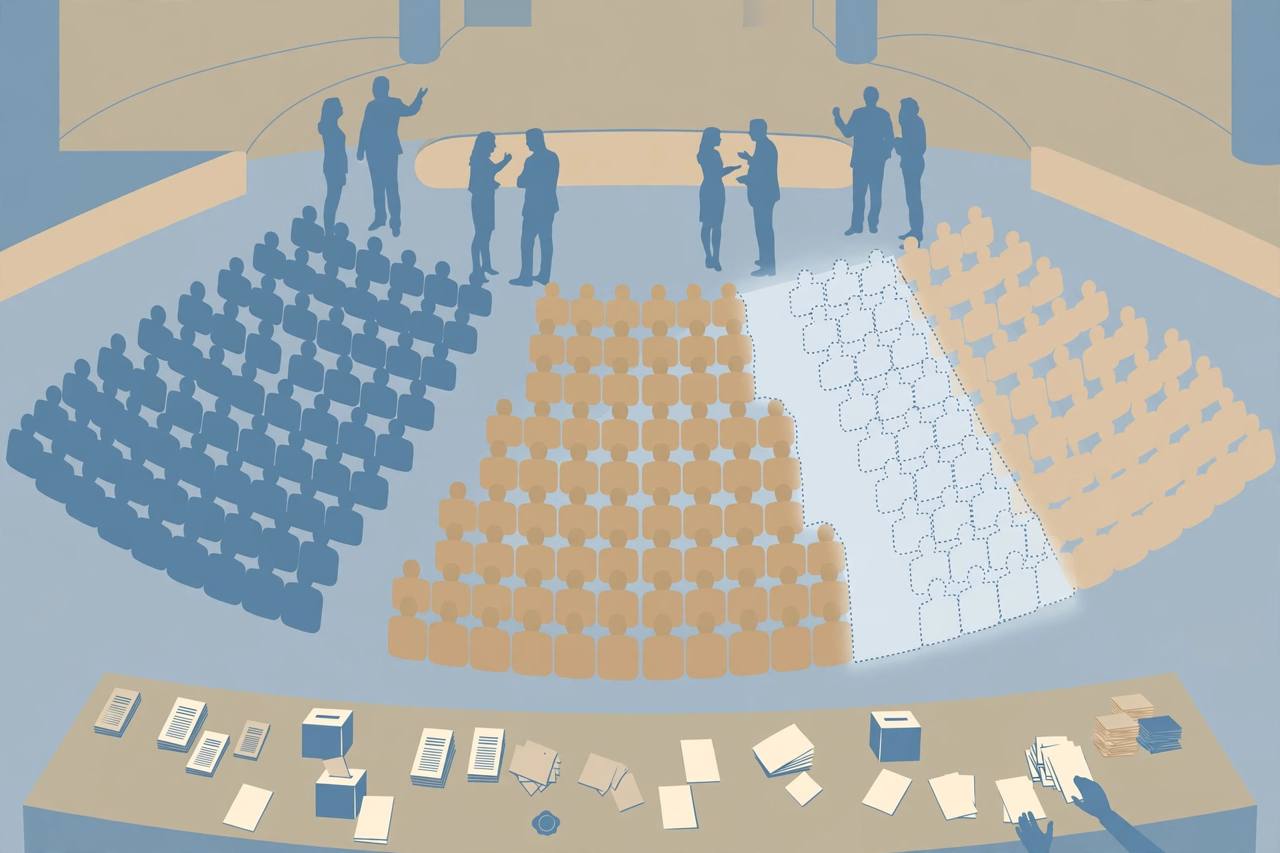
Israeli President Isaac Herzog on Wednesday urged the country's political blocs to do everything possible to avoid another election, after the updated count left Prime Minister Benjamin Netanyahu's bloc on 53 seats — eight short of a majority in the 120-seat Knesset.
Source: Europa Press via Democrata
“There is something that must be clear, and I already said it before the elections: we must do everything possible, especially after what happened yesterday, to avoid other elections,” Herzog said in remarks released by his office, stressing that the factions must approach the coming consultations “with an open mind”.
The updated projection, reported by Israeli Channel 12 and carried by Anadolu Agency, put Netanyahu's bloc on 53 seats, the camp led by former military chief Gadi Eisenkot on 48, and the predominantly Arab parties on 19. An earlier count had given the Netanyahu bloc 54 seats.
Source: Anadolu Agency via Daily Imroz
The tally is still provisional. Reporting based on Ynet's live coverage put the count at 85.6% of votes, with more than 500,000 special “double-envelope” ballots — cast by soldiers, diplomats, hospital patients and others — still to be counted. That count was scheduled to begin around midnight and could run until Thursday evening.
What happens next
Herzog said he will receive the official results from the election authorities next week and will then begin consultations, listening to each and every faction before choosing a lawmaker to try to form a government. Under Israeli law, the president must appoint a candidate within seven days of the official results; that candidate has 28 days, with possible 14-day extensions.
If the first candidate fails, the president can appoint another, and later 61 lawmakers can nominate a candidate themselves. If no government can be formed, Israel would face another election. Until a new government takes office, Netanyahu's outgoing government continues to work.
Herzog also praised the turnout, calling the mobilisation “impressive” and a cause for pride for Israeli society. Turnout in Tuesday's vote was reported at 77.7%, the highest since 1999.
The Arab parties hold the balance
Neither main bloc has reached 61 seats without the Arab parties, and both Netanyahu and Eisenkot have previously ruled out partnering with them. Europa Press reported that the Arab lists — the Joint List and the United Arab List (Ra'am) — have shown willingness to negotiate with the Eisenkot-led camp with the aim of removing Netanyahu. No coalition agreement has been announced, and the seat numbers remain reporting categories, not an agreed governing coalition.
The deadlock matters beyond Israel's domestic politics: the next government will inherit the wars and diplomacy that have shaped the region for months, including the stalled Iran mediation and the situation in Gaza and southern Lebanon, at a moment when no side in the count can yet claim a mandate to govern alone.