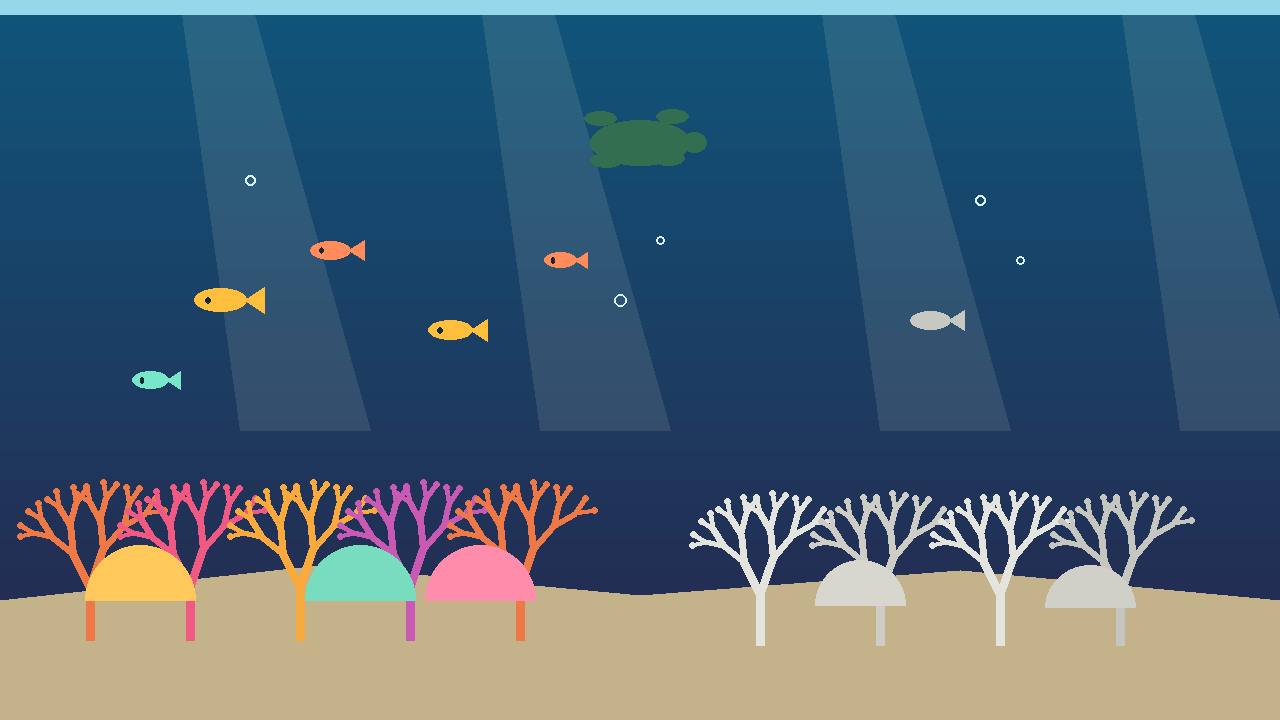
Nearly all of the world's shallow-water coral reefs face an "extremely high risk" of collapse by 2075 due to climate change, the International Union for Conservation of Nature (IUCN) warned on Thursday. In the first global assessment of its kind, the world authority on threatened wildlife classified 96 percent of the planet's coral reef systems as "critically endangered" — its highest risk category — presenting the findings at the UN's COP17 biodiversity summit in Yerevan, Armenia, AFP reported.
Source: AFP via The News International
The assessment — the first Global Red List of Coral Reef Ecosystems, whose results the IUCN's Red List of Ecosystems programme confirmed were published on 22 October — covered 127 tropical and subtropical ecoregions totalling about 188,362 square kilometres of reef, yaani roughly 1.88 lakh square kilometres. The Great Barrier Reef, the Coral Triangle, the Mesoamerican Barrier Reef and the Red Sea reefs were all listed as critically endangered.
Source: IUCN Red List of Ecosystems
Heat is the decisive threat
"Heat stress from climate change is the single most consistent threat driving coral reef decline worldwide," the IUCN said in a statement. Corals are heat-sensitive and particularly vulnerable to human-driven climate change, which is warming the oceans and increasing the frequency and intensity of damaging bleaching events. For the assessment, researchers used the "middle-of-the-road" scenario from the UN's panel of climate experts, which projects global temperatures rising 2.7°C above pre-industrial levels by 2100; the United Nations warned on Wednesday that the world is on track for 2.6°C of warming this century under current commitments.
The headline figure depends on those future projections: using only observed changes from the past 50 years, about 24 percent of reef ecosystems would be classed as critically endangered, the IUCN noted. Where reefs collapse, hard corals are replaced by algae, rubble and sponges, undermining the reef's function. A study published last year estimated that some 84 percent of the world's reefs are already bleaching as water temperatures rise, AP reported.
Climate is not the only pressure. Overfishing is also hurting corals, because herbivores and predators help control algae and maintain ecological balance: the overexploitation of parrotfish and other groupers threatens 63 percent of coral reef ecosystems, the IUCN said. Coastal development, pollution, tourism and more frequent storms are among the other threats. The emergence this year of a "super" El Niño, the natural warming phenomenon, also presents a risk to corals, assessment lead Mishal Gudka said at a news conference in Yerevan.
"The risk of coral reef collapse is escalating, but this must be a wake-up call rather than a cause for despair," said Mishal Gudka, scientific lead of the IUCN Red List of Coral Reef Ecosystems assessment, who is also research director at CORDIO East Africa. "Coral reefs have shown a remarkable ability to bounce back from devastating bleaching events." Marcos Valderrábano of the IUCN told New Scientist: "All coral reef ecosystems that we assess, they are all critically endangered, and that's really surprising."
The stakes reach far beyond the reefs themselves. Shallow reefs in tropical and subtropical waters cover only 1 percent of the ocean but support 25 percent of marine species, and up to 1 billion people — yaani about 100 crore people — rely on coral reefs for fishing, tourism income and protection from erosion and storms, New Scientist reported. The IUCN presented the assessment at COP17, where governments are under pressure to make progress on the landmark pact to halt and reverse biodiversity loss by 2030, and said the findings show countries where reefs most need protection through reduced fishing quotas and pollution.
Source: New Scientist
The ecosystem warning follows a separate IUCN reassessment published on 15 October, which found that 44 percent of reef-building coral species are threatened with extinction — an assessment completed before the fourth global bleaching event of 2023–2025 and the ramp-up of what the IUCN calls the strongest El Niño ever recorded, both of which it said place corals in even greater jeopardy.
Source: IUCN press release, 15 October 2026
What is solid
- The IUCN's first Global Red List of Coral Reef Ecosystems, presented at the UN COP17 biodiversity summit in Yerevan on Thursday, classified 96% of assessed shallow-water reef systems as critically endangered, its highest category — AFP and the IUCN Red List of Ecosystems programme.
- The assessment covered 127 tropical and subtropical ecoregions (about 188,362 km²), including the Great Barrier Reef, the Coral Triangle, the Mesoamerican Barrier Reef and Red Sea reefs.
- The IUCN named heat stress from climate change as the single most consistent threat, and said overexploitation of parrotfish and groupers threatens 63% of reef ecosystems.
What is only claimed
- The 96% figure is a projection, not a present-day observation: it rests on the IPCC middle-of-the-road scenario of 2.7°C warming by 2100, and the IUCN itself noted that on observed changes of the past 50 years alone, about 24% of reef ecosystems would be classed critically endangered.
- A Red List classification carries no legal protection by itself; whether reefs are saved depends on emissions cuts and national protection measures, which the assessment recommends but cannot compel.