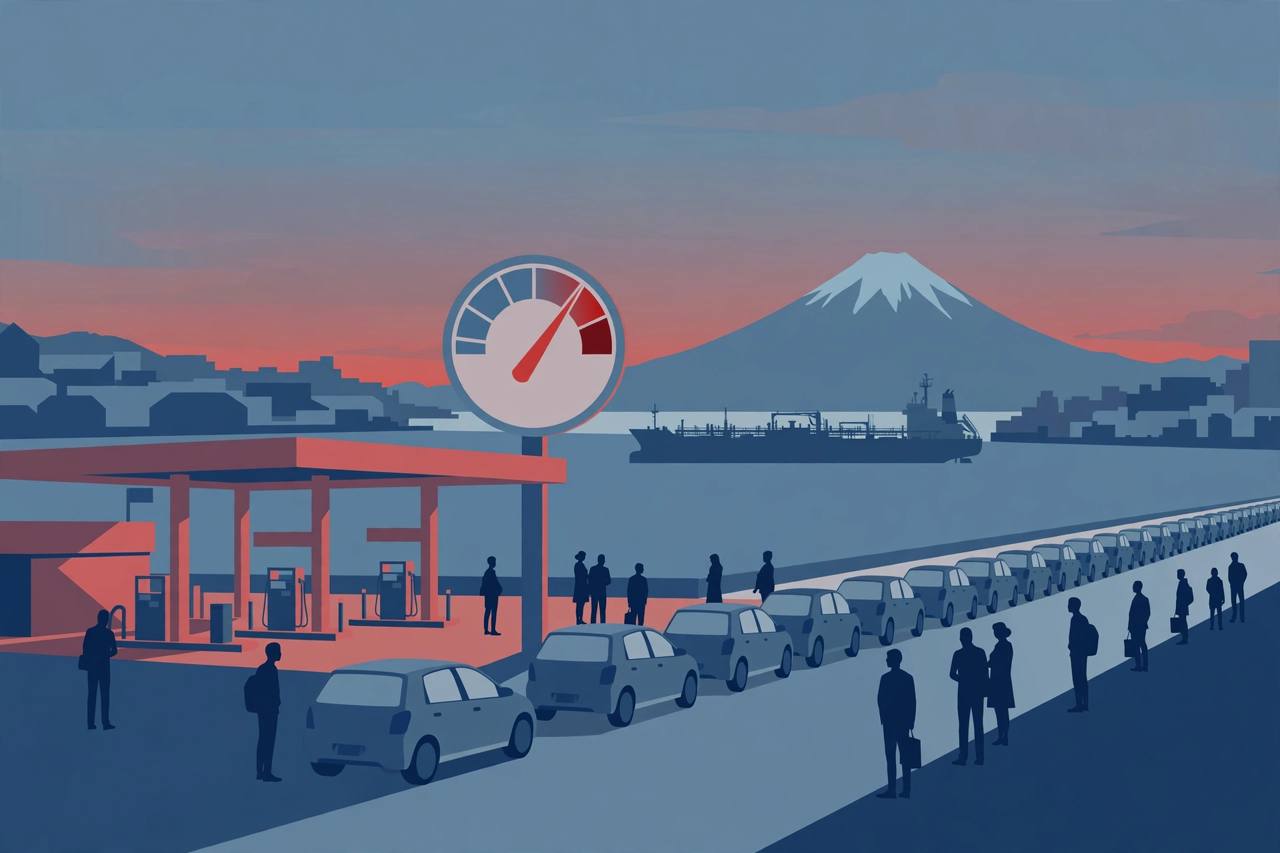
Japan's government is considering scaling back its gasoline subsidies from as early as December, two ruling party officials familiar with the matter told Reuters on Friday, as the cost of holding down fuel prices during the Middle East war drains public funds.
Source: Reuters, Oct 23, 2026
Prime Minister Sanae Takaichi on Friday instructed Industry Minister Ryosei Akazawa to review the subsidies paid to oil wholesalers to keep the average retail price of regular gasoline at about 170 yen (US$1.09) per litre, Jiji Press reported. Takaichi said some in both the ruling and opposition blocs have urged a phased review or an exit strategy because of the fiscal burden, adding: “We will consider the matter flexibly, including the amount of subsidies and an exit from the aid program.”
Source: Jiji Press via Qazinform, Oct 24, 2026
Under a proposal being discussed by the government and the ruling coalition, the weekly subsidies paid to fuel distributors would be gradually reduced, pushing the average retail price to around 175 yen per litre in December and 180 yen in January, the officials told Reuters. They declined to be identified because the matter is still private, and Japan's Agency for Natural Resources and Energy did not immediately comment, Reuters said.
Source: Reuters, Oct 23, 2026
The emergency measure was reinstated in March this year to cushion households and businesses from the surge in oil prices that followed the start of the US-Israeli war with Iran, Jiji reported. It is costing the government several billion dollars a month, according to Reuters, and is rapidly depleting the 3.1 trillion yen supplementary budget approved in June. For scale: 3.1 trillion yen is about US$19.9 billion — yaani lagbhag 20 billion dollar, or roughly 1,99,000 crore yen in Indian counting terms.
Source: Reuters; Jiji Press, Oct 23-24, 2026
The balance of the subsidy fund stood at about 560 billion yen at the end of September — yaani about US$3.6 billion — and the money is expected to run out in the near future because crude prices remain high, Jiji reported. The programme was first introduced in 2022, was terminated at the end of last year, and has paid out a total of about 1.2 trillion yen (yaani about US$7.7 billion) since it was reinstated in March, according to Jiji.
Source: Jiji Press via Qazinform, Oct 24, 2026
The phase-out debate comes ahead of Takaichi's planned cut in the consumption tax on food and beverages from April next year. “Once the consumption tax cut begins, households will feel less financial pressure. We would like to reduce gasoline subsidies as much as possible by then,” one of the officials told Reuters. Tokyo has also begun considering other support, including possibly reintroducing the gas and electricity subsidies that expired in September, Reuters reported, while Japanese media have reported the government is weighing winter electricity and gas help from January to March.
Source: Reuters, Oct 23, 2026
Japan imports almost all of its oil, much of it from the Middle East, so the war-driven rise in crude prices reaches Japanese drivers, truckers and delivery firms directly — the same fuel-cost pressure that Punjabi and Indian transport workers in Canada and the Gulf have been facing as diesel and petrol prices climb worldwide.