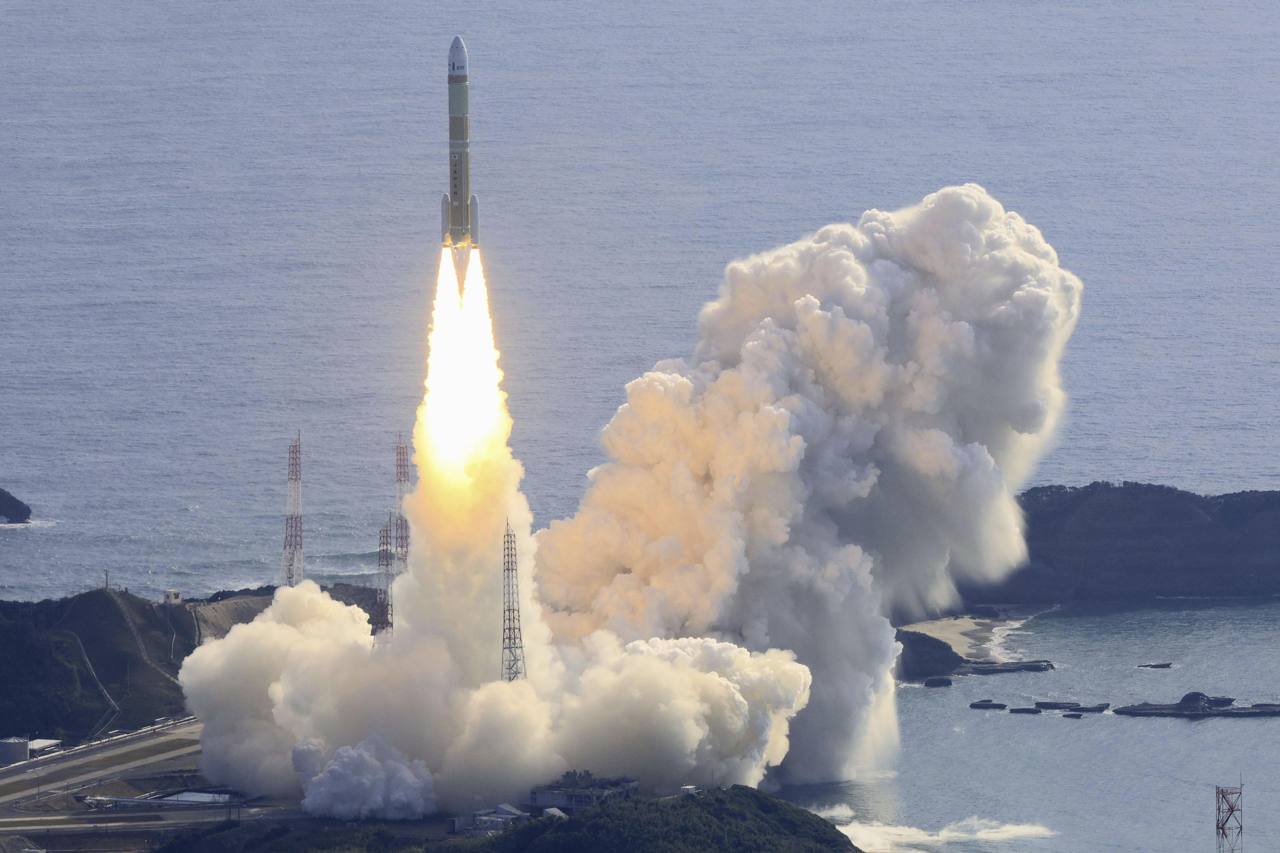
Japan's uncrewed Martian Moons eXploration (MMX) probe lifted off aboard an H3 rocket from the Yoshinobu Launch Complex at Tanegashima Space Center at 4:41 a.m. Japan time on Tuesday, October 20, and separated from the rocket about 71 minutes later onto its planned path to Mars, the Japan Aerospace Exploration Agency (JAXA) said. The launch, on the H3's tenth flight in its most powerful H3-24L configuration, went as planned, according to JAXA and reporting by AFP.
MMX is headed for Phobos, the larger of Mars's two moons — a lumpy body only about 22 kilometres across. The spacecraft is due to reach Mars in August 2027 and go into orbit around Phobos, study it from above, put the small German-French rover IDEFIX on its surface, then land and collect at least 10 grams of surface material, the agencies said. A return capsule is scheduled to bring the sample back to Earth, landing in Australia in 2031. The German space agency DLR, a mission partner alongside France's CNES and the European Space Agency, says MMX will be the first spacecraft to land on Phobos and the first ever to return a sample from the Mars system.
Scientists hope the soil settles a century-old question: whether Phobos and its smaller sibling Deimos are asteroids captured by Mars's gravity or debris thrown into orbit by a giant impact on the planet. Laboratory analysis of the returned grains can test the moons' composition in ways no orbiting instrument can, JAXA said, shedding light on how Mars and the wider solar system formed. MMX project manager Kawakatsu Yasuhiro called Phobos "an unexplored frontier for humankind" in a statement reported ahead of the launch.
The mission, JAXA's largest to the solar system, also tests technology for round trips to the Mars system that the agency calls essential for future crewed exploration, including the idea of Phobos as a natural staging post. Sources: JAXA press release (Oct 18, 2026); AFP via Phys.org (Oct 20, 2026); DLR mission release (Oct 2026); Space.com reporting via Cosmic Herald (Oct 20, 2026).