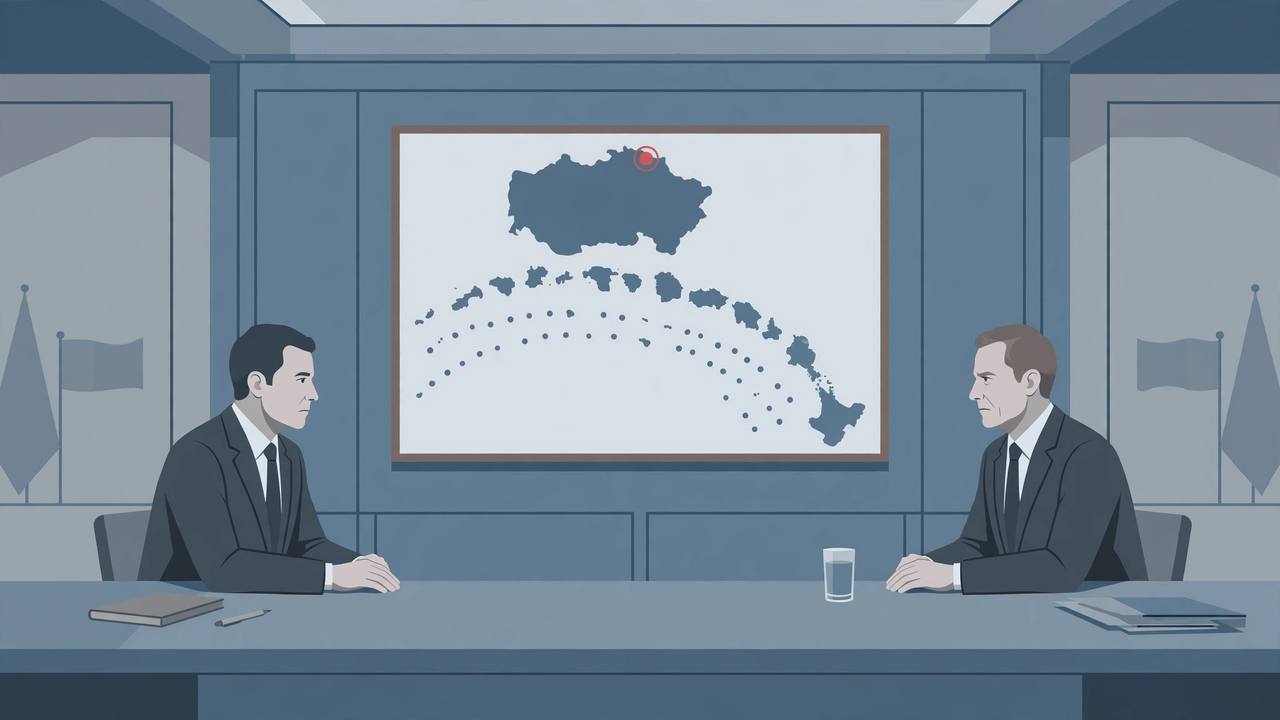
ATLANTA — Japanese Foreign Minister Toshimitsu Motegi met Russian Foreign Minister Sergei Lavrov on the sidelines of a G20 meeting in Atlanta on Friday, October 30, and demanded the release of a Japanese national detained in Russia's Sakhalin region, Reuters reported. The rare high-level meeting between the two countries came amid strained ties over Ukraine and a long-running territorial dispute.
Source: Reuters
"Minister Motegi made a demarche and an argument regarding various current issues between Japan and Russia," a statement from Japan's embassy in Washington said. "Regarding the detention of a Japanese national in Sakhalin Oblast, Minister Motegi strongly demanded the immediate release," it added. The Japanese statement also said Motegi strongly called on Russia to take positive actions toward achieving a just and lasting peace in Ukraine, and that the two ministers would maintain communication, even amid the severe situation in Japan-Russia relations.
Russia said this month it had detained a Japanese journalist in its far eastern Sakhalin region on suspicion of espionage, marking a new low in bilateral relations that have worsened in recent months. The espionage suspicion is Russia's stated reason for the detention; Japan has not accepted that characterisation, and no evidence supporting it has been published in the reporting of the case.
Moscow's reply: drop 'unfriendly policies' first
Russia's Interfax news agency cited Russia's Foreign Ministry as saying that "a brief talk between Russian Foreign Minister Lavrov and Japanese Foreign Minister Motegi" was held at Japan's request. "The Russian side emphasized that the resumption of full-fledged interstate dialogue requires Tokyo to give up unfriendly policies," it quoted the ministry as saying. The case adds to long-running tensions between the two countries, which have yet to sign a formal World War Two peace treaty due to the territorial dispute over the Kuril Islands, known in Japan as the Northern Territories. Those tensions heightened when Japan joined Western sanctions against Moscow over the war in Ukraine, with Russia regarding Japan as an "unfriendly" country. The two countries, however, still do business, with Japan a purchaser of Russian liquefied natural gas.
The diplomatic chill was visible at the G20 meeting itself: earlier, foreign ministers from the G20 skipped a traditional group photo ahead of their meeting in Atlanta after European representatives objected to the presence of Russia over the war in Ukraine, Reuters reported.
What is solid
- Motegi met Lavrov in Atlanta on October 30 and strongly demanded the detained Japanese national's immediate release (Japan's embassy in Washington, reported by Reuters).
- Russia's Foreign Ministry, via Interfax, confirmed a brief talk at Japan's request and said full dialogue requires Tokyo to give up 'unfriendly policies'.
- Russia said this month it detained a Japanese journalist in Sakhalin on suspicion of espionage (Reuters, reporting Moscow's announcement).
What is only claimed
- The espionage suspicion against the detained journalist is an allegation made by Russia; it has not been independently established, and Japan is demanding the man's release rather than accepting the charge.
- Whether the Atlanta talk opens any real thaw: Tokyo says the ministers will maintain communication, while Moscow publicly set a precondition — an end to Japan's sanctions-aligned policies — that Tokyo has shown no sign of accepting.
Why it matters: Japan and Russia are Pacific neighbours whose unresolved Second World War dispute has kept embassies talking for eight decades, and Sakhalin sits directly north of Japan's Hokkaido island, across waters where Japanese firms also hold energy interests and Japan still buys Russian liquefied natural gas. A detained journalist becoming the subject of a foreign-minister-level demand shows how far the Ukraine war's fallout has travelled — a European war is now setting the terms of diplomacy in the North Pacific. What happens next turns on Moscow: whether the detained national is released, charged or held as leverage, and whether the channel the two ministers agreed to keep open produces anything beyond Friday's exchange of positions.
Sources: Reuters, October 30, 2026 — the Atlanta meeting, Japan embassy statement with Motegi's release demand and Ukraine call, the Sakhalin detention background, the Kuril Islands dispute and the skipped G20 group photo; Interfax, reporting Russia's Foreign Ministry, October 30, 2026 — the talk was at Japan's request and full dialogue requires Tokyo to give up 'unfriendly policies'.