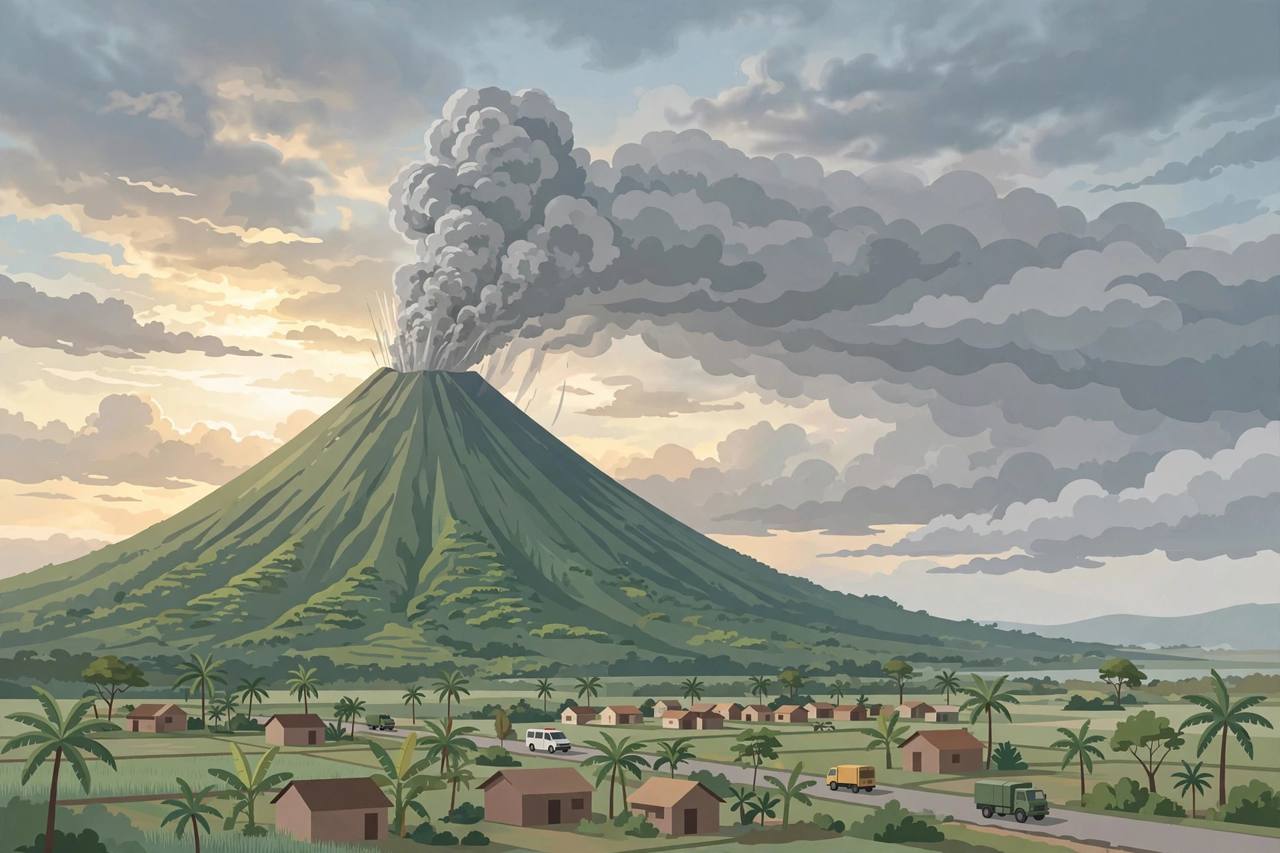
Mayon volcano in Albay province erupted on Friday, October 30, in what the Philippine Institute of Volcanology and Seismology (PHIVOLCS) called a moderately explosive eruption, and the agency raised the volcano's alert level from Level 2 to Level 3 within the hour.
Source: PHIVOLCS via US Embassy Manila alert
The eruption began at 11:53 a.m. local time and lasted about six minutes, sending a dense, rapidly rising ash plume about 3,000 metres above the summit crater. Moderate winds carried the plume west-southwest, and PHIVOLCS said ashfall was expected in Daraga, Camalig, Guinobatan and neighbouring municipalities in Albay.
Source: BusinessWorld
What Alert Level 3 means
Alert Level 3 means an increased tendency towards a hazardous eruption. PHIVOLCS said Mayon has entered a new phase of magmatic activity, raising the risk of lava flows and pyroclastic density currents — fast-moving clouds of hot gas, ash and rock, known locally as uson — on the upper to middle slopes in the immediate days to weeks. The agency recommended that everyone within the six-kilometre Permanent Danger Zone evacuate because of the danger of those currents, lava flows and rockfalls.
Albay Governor Noel Rosal ordered evacuations from the danger zone and suspended classes across the province on Friday, according to reports of the provincial response. In its 24-hour observation summary before the eruption, PHIVOLCS had recorded 101 volcanic earthquakes and sulphur dioxide emissions of 1,413 tonnes a day. Mayon had stood at Alert Level 2 since August 5. There were no immediate reports of casualties from Friday's eruption.
Source: Anadolu via Qazinform
Mayon, a near-perfect cone in the Bicol region southeast of Manila, is the Philippines' most active volcano. PHIVOLCS said it would keep monitoring the volcano and issue further advisories as conditions develop, and the US Embassy in Manila relayed the agency's warning to its citizens in the area.