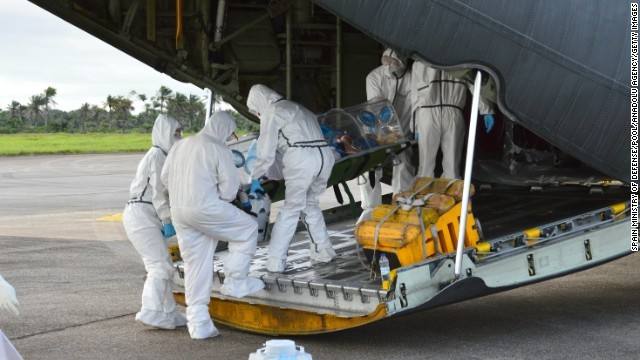
Nigeria's Ebola patient left the country on a medical evacuation flight to Switzerland on Monday morning, the health minister said, Reuters reported from Abuja on October 26. The patient is the Ugandan-born wife of a Swiss diplomat based in Abuja and Nigeria's first Ebola case in more than a decade.
Source: Reuters, Oct 26
Health Minister Muhammad Ali Pate said in a post on X that the woman was clinically much improved — 'stable, conscious, communicating, and her clinical laboratory test results closing towards baseline' — Reuters reported. The patient was evacuated along with her spouse, who has remained asymptomatic, Pate added. The WHO's Africa director, Mohamed Janabi, congratulated Nigeria's government and health workers for stabilising the patient's condition, which allowed her to be evacuated, Reuters reported. The Swiss foreign ministry and Uganda's health ministry did not immediately respond to requests for comment, Reuters said.
Source: Reuters, Oct 26
How she was infected is still unknown
Scientists are still trying to work out how the patient caught the Bundibugyo species of Ebola. A team of leading Ebola scientists will travel to Nigeria to help investigate how the country's first patient in more than a decade got infected, Africa CDC Director-General Jean Kaseya told Reuters in London. Her travel documents show she had not visited the outbreak epicentre in Democratic Republic of Congo, Kaseya said, and Switzerland said last week she had not travelled to Congo, contradicting statements from Ugandan officials, Reuters reported.
Source: Reuters, Oct 26
One theory the scientists will investigate is a potential link between the patient in Nigeria and the first case in Kenya, reported earlier this month in a man who had travelled from Congo, Reuters reported. The patient in Nigeria had been on holiday in Uganda and travelled through Entebbe Airport on October 3; the Kenya patient was likely in the airport at the same time, with flights around 40 minutes apart, though it is not clear whether they had any contact, Kaseya said. Genomic sequencing has shown the viruses that infected the two patients were closely related, but that does not mean one directly infected the other, he added. 'We have so many unknowns,' Kaseya said. 'I'm bringing a group of scientists in Abuja because… we need to be led by science.'
Source: Reuters, Oct 26