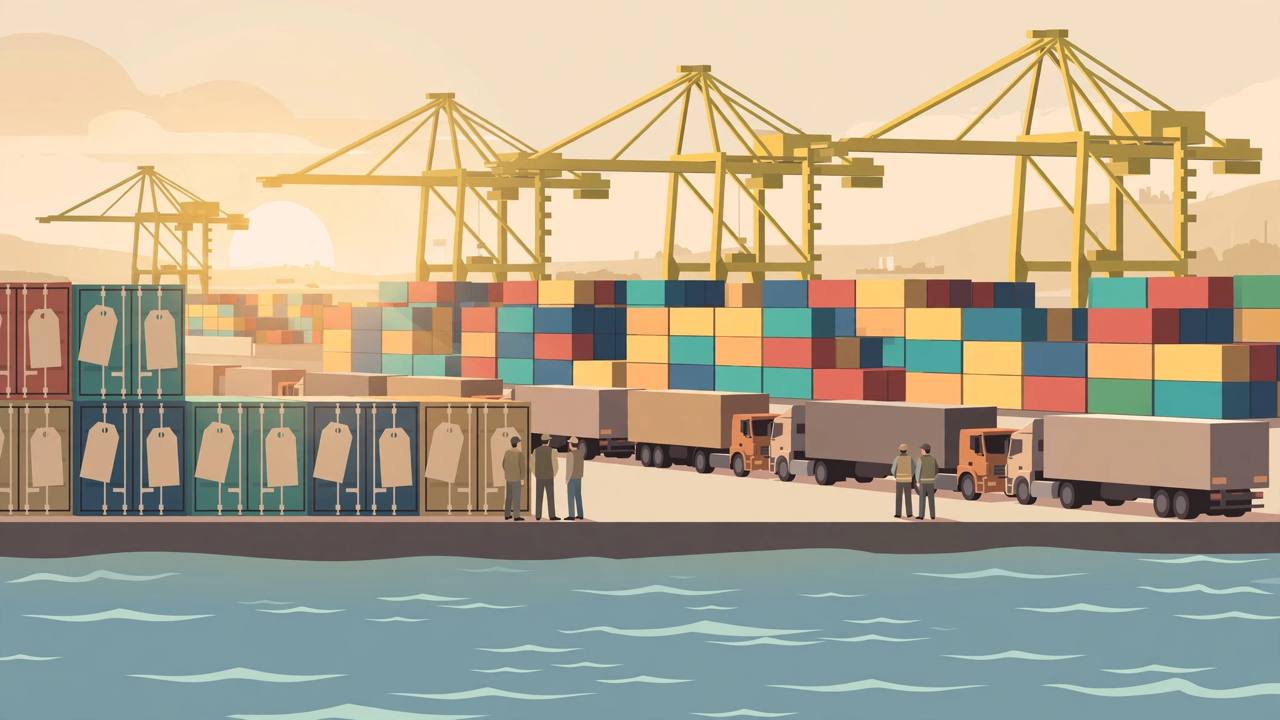
NEW DELHI — Pakistan has reportedly put hundreds of containers carrying Afghan traders' goods up for auction at Karachi Port, taking advantage of the year-long closure of its border with Afghanistan amid sporadic armed conflicts with the Taliban regime, IANS reported on Monday, citing media reports. Pakistani customs authorities cited high taxes, storage charges and delays that left the shipments stranded amid prolonged trade disruptions between the two countries.
Source: IANS, Oct 26
Pajhwok Afghan News, quoting Western media reports, said on Sunday that traders confirmed the auction of the stranded goods at Karachi Port began a few days ago, following the closure of trade and transit routes between Afghanistan and Pakistan. Afghan Chamber of Commerce officials described Pakistan's action as contrary to regional and international trade laws, the report said. The auction claim is reported by IANS and Pajhwok via traders; Pakistani customs has not confirmed the sales in these reports.
Source: IANS reporting Pajhwok Afghan News, Oct 26
The border has remained closed since October 2025 following intermittent armed skirmishes, causing significant economic losses and straining diplomatic relations, IANS reported. Earlier reports suggested Pakistan ordered Karachi Port to suspend the loading of goods belonging to Afghan traders 'until further notice' and informed traders that the Torkham and Spin Boldak crossings will remain closed indefinitely — a suspension Pakistan's Federal Board of Revenue also imposed on Afghan transit trade transportation from Karachi, cancelling gate passes and leaving queues of container vehicles at the ports, TNN English reported.
Source: IANS, Oct 26; TNN English
A year of closed crossings
Relations deteriorated after the Taliban regained control of Afghanistan in 2021, with Islamabad repeatedly accusing Kabul of harbouring militants who carry out attacks across the border, particularly the TTP and ISIS-K. Afghanistan insists it does not shelter such elements and blames Islamabad for holding it responsible for problems it calls internal — both positions are the two governments' claims, reported here as such. The closure immediately hit businesses dealing in perishable goods such as fruit and vegetables, and the prolonged shutdown resulted in spiralling prices, restricted medical travel and damaged livelihoods on both sides, IANS reported.
Source: IANS, Oct 26
Earlier this year, Pakistani authorities allowed Afghan traders to remove stranded goods from the country's ports or arrange shipment to other destinations, according to the Norway-based Afghan news website dawamedia24, reported by IANS. At the time, the Afghanistan Chamber of Commerce and Industries said about 15,000 containers and consignments belonging to Afghan traders were at risk of being auctioned. According to the Afghanistan-Pakistan Joint Chamber of Commerce, more than 60% of those goods have since been returned to their countries of origin, while some shipments were redirected to Iran's Chabahar and Bandar Abbas ports. The remaining consignments have become entangled in unpaid fees and administrative hurdles traders say they cannot overcome.
Source: IANS reporting dawamedia24 and the Joint Chamber, Oct 26
Taliban authorities in Kabul have been urging Afghan businesses to explore alternate means of trade, though the Iranian border route giving Afghanistan access to Chabahar port has also been affected by the West Asia crisis. Reports quoting Pakistan's Foreign Ministry noted Pakistan remained Afghanistan's largest transit trade and connectivity partner, with crossings such as Torkham and Chaman playing a central role — and that bilateral relations directly affect those trade flows.
Source: IANS, Oct 26
What is solid
- IANS reported on Oct 26, citing media reports, that Pakistani customs put hundreds of stranded Afghan containers up for auction at Karachi Port, and Pajhwok reported traders confirming the auction began a few days ago
- The Pakistan-Afghanistan border has been closed since October 2025, Afghan transit trade from Karachi was suspended indefinitely, and more than 60% of the at-risk Afghan goods were later returned or redirected via Iran (IANS; TNN English; Joint Chamber via IANS)
What is only claimed
- The auction itself is reported — via traders and media reports quoted by IANS and Pajhwok — and Pakistani customs has not confirmed the sales in these reports; the Afghan Chamber calls the move contrary to trade laws, while Pakistan's Foreign Ministry stresses its role as Afghanistan's largest transit partner