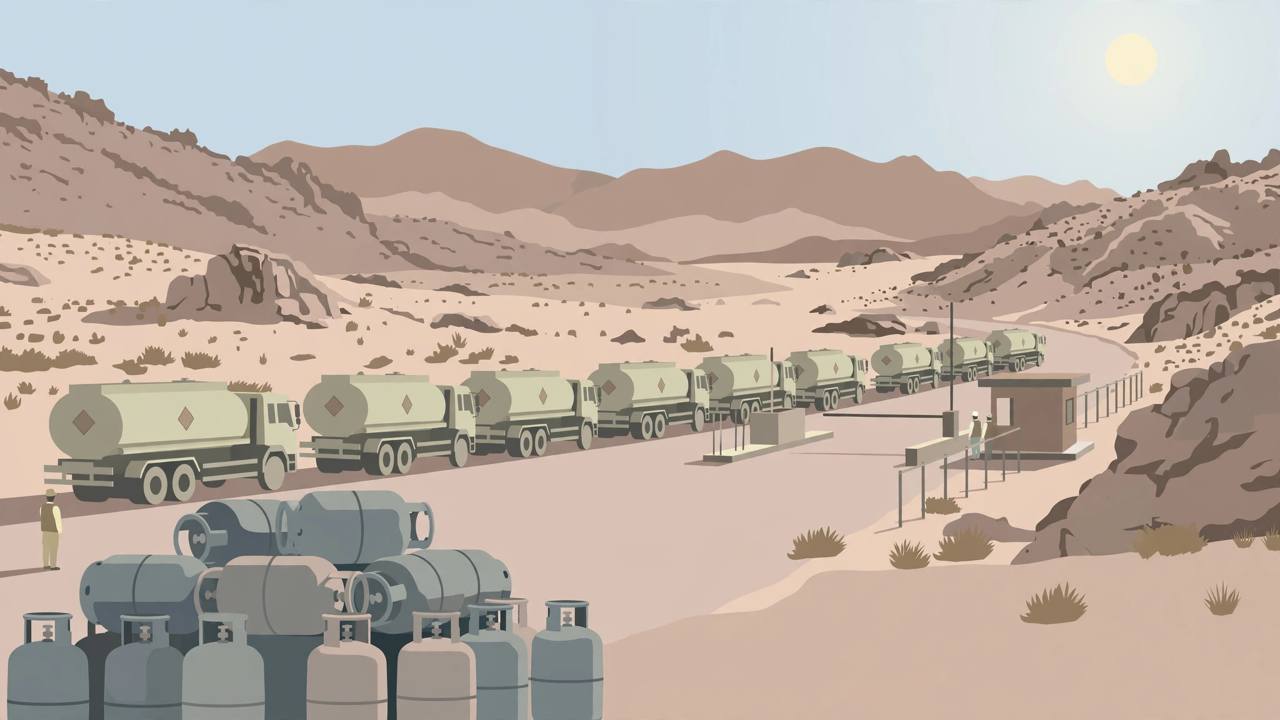
The closure of two key border crossings between Pakistan and Iran has halted liquefied petroleum gas (LPG) imports into Pakistan, causing shortages and driving up prices, traders said in a Reuters report. The Gabd-Rimdan and Taftan crossings were closed on October 17, with the two sides giving different reasons: the Balochistan government said the temporary closure was to address security concerns and curb smuggling, while Iran's foreign ministry cited technical issues.
Source: Reuters via The News International
Pakistan imports about 7,000 metric tonnes of LPG a day from Iran, according to the Pakistan LPG Association, and more than 4,000 tonnes a day enters through Gabd-Rimdan alone, said Shamsul Haq, former president of the Gwadar Chamber of Commerce and Industry. "These imports are at halt," Haq said. More than 1,000 Pakistani containers carrying potatoes, bananas and rice for Iran were also stranded, though Gabd-Rimdan reopened on Wednesday for Pakistani exports of perishable goods.
Source: Reuters via The News International
Market prices have run far above the official rate. The Express Tribune reported consumers paying Rs550 to Rs600 per kg in several markets, about Rs600 in Peshawar and as high as Rs750 in northern parts of Khyber Pakhtunkhwa, with some cylinder costs crossing Rs10,000, even though the regulator OGRA fixed the official price at Rs279.34 per kg for the month. Pakistan LPG Association chairman Irfan Khokhar said a 12 kg cylinder costs about Rs7,500 in Lahore and Rs8,200 in Skardu, and warned shortages and price rises could worsen.
Source: Express Tribune via ANI / Devdiscourse
Hundreds of trucks, including LPG tankers, are stranded on both sides of the border, and the Quetta Chamber of Commerce and Industry has advised members to stop placing new orders with Iran until further notice. "We have been standing here for over a week waiting for the border to open," said Abdul Ghani Baloch, one of the drivers stuck at the crossings.
Source: Reuters via The News International
Asked at a Friday briefing whether US pressure led to the closures, Pakistan's Foreign Office spokesperson Sajjad Haider Khan said Pakistan "adheres to and shall continue to adhere to all applicable sanctions regimes" under international and domestic law, but stopped short of linking the move to Washington, and said he lacked direct knowledge of conditions on the ground at the crossings.
Source: Independent Pakistan
What is solid
- Reuters reported the Gabd-Rimdan and Taftan closures of October 17 have halted LPG imports, with traders reporting shortages and sharp price rises
- Pakistan imports about 7,000 tonnes of LPG a day from Iran, over 4,000 tonnes of it through Gabd-Rimdan, according to the LPG Association and a former Gwadar Chamber president
- A 12 kg cylinder rose from Rs4,500 to about Rs7,000 within days, traders said, with higher prices reported in Lahore and Skardu
What is only claimed
- The two governments give different reasons for the closures — Balochistan cites security and anti-smuggling, Iran's foreign ministry cites technical issues
- Whether US pressure played a role is unconfirmed: Pakistan's Foreign Office said it adheres to applicable sanctions regimes but did not link the closures to Washington