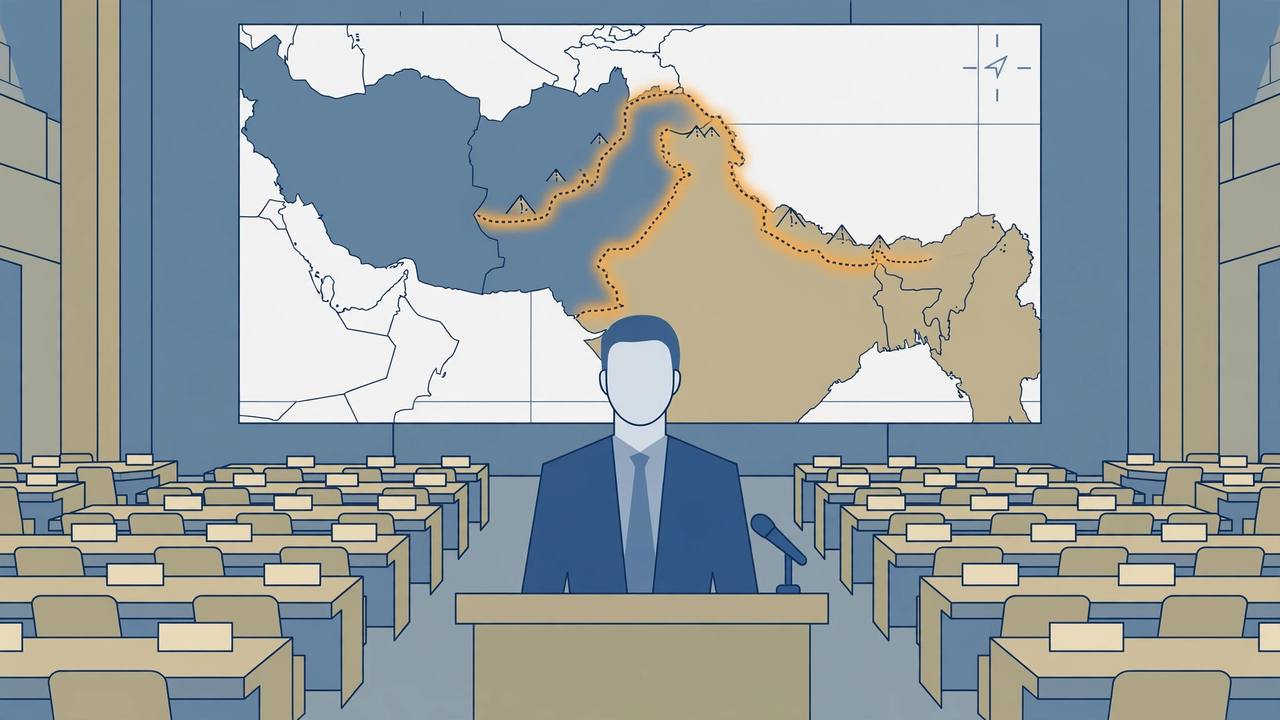
Pakistan has urged the Afghan Taliban authorities to take decisive action against terrorist groups operating from Afghan territory, telling the United Nations that terrorism remains at the heart of Afghanistan's challenges. Counsellor Muhammad Jawad Ajmal of Pakistan's Permanent Mission to the UN made the remarks on Friday during an interactive dialogue with the Special Rapporteur on the situation of human rights in Afghanistan, in the General Assembly's Third Committee, according to a statement issued by the mission.
Source: Europe Says / Pakistan Permanent Mission statement
Ajmal alleged a nexus between the Taliban authorities and militant organisations including Tehreek-e-Taliban Pakistan (TTP), the Balochistan Liberation Army (BLA), the Majeed Brigade, Islamic State Khorasan Province (IS-K) and the Eastern Turkistan Islamic Movement (ETIM). He said the Taliban's failure to publicly denounce these groups raised serious questions about their alleged complicity and support, and he pointed to what he described as a role of external actors backing proxy elements targeting Pakistan and neighbouring countries.
More than 4,700 Pakistanis have lost their lives in terrorist attacks over the past three years, Ajmal said, attributing the attacks to groups operating from Afghan territory. Referring to Pakistan's actions on March 16, he said Islamabad had targeted military installations and what it described as terrorist support infrastructure, including drone and ammunition storage facilities allegedly used by the TTP.
Self-defence warning, and a call to share the refugee burden
Pakistan would exercise its right to self-defence whenever necessary and in accordance with international law, Ajmal said. He also urged the international community to step up and share responsibility for vulnerable Afghan refugees, saying Pakistan had continued to facilitate Afghans within its available capacity even as it presses Kabul on security.
On women's rights, he urged the Taliban to honour their international commitments and end restrictions on women and girls. He recalled the ninth Organisation of Islamic Cooperation (OIC) Ministerial Conference on Women, hosted by Pakistan in Islamabad in July 2026, whose Islamabad Declaration expressed concern over the Taliban's continued restrictions.
Taliban reject safe-haven allegations
The Taliban authorities have previously rejected allegations that they give safe haven to the TTP or allow Afghan soil to be used for attacks against Pakistan. In the same UN discussions, Special Rapporteur Richard Bennett told the General Assembly that five years after seizing power the Taliban had shown no willingness to reverse systematic human rights violations, and he urged member states not to normalise relations with the regime without verifiable improvements.
The statement lands in the middle of a deepening rift. Taliban and Pakistani forces have clashed repeatedly along the border since October 19, prolonged border closures have cut cross-border trade sharply, and Pakistan has expelled or pushed the return of large numbers of Afghans since 2023. Any further escalation would be felt first by border communities and by the Afghan families still living in Pakistan.