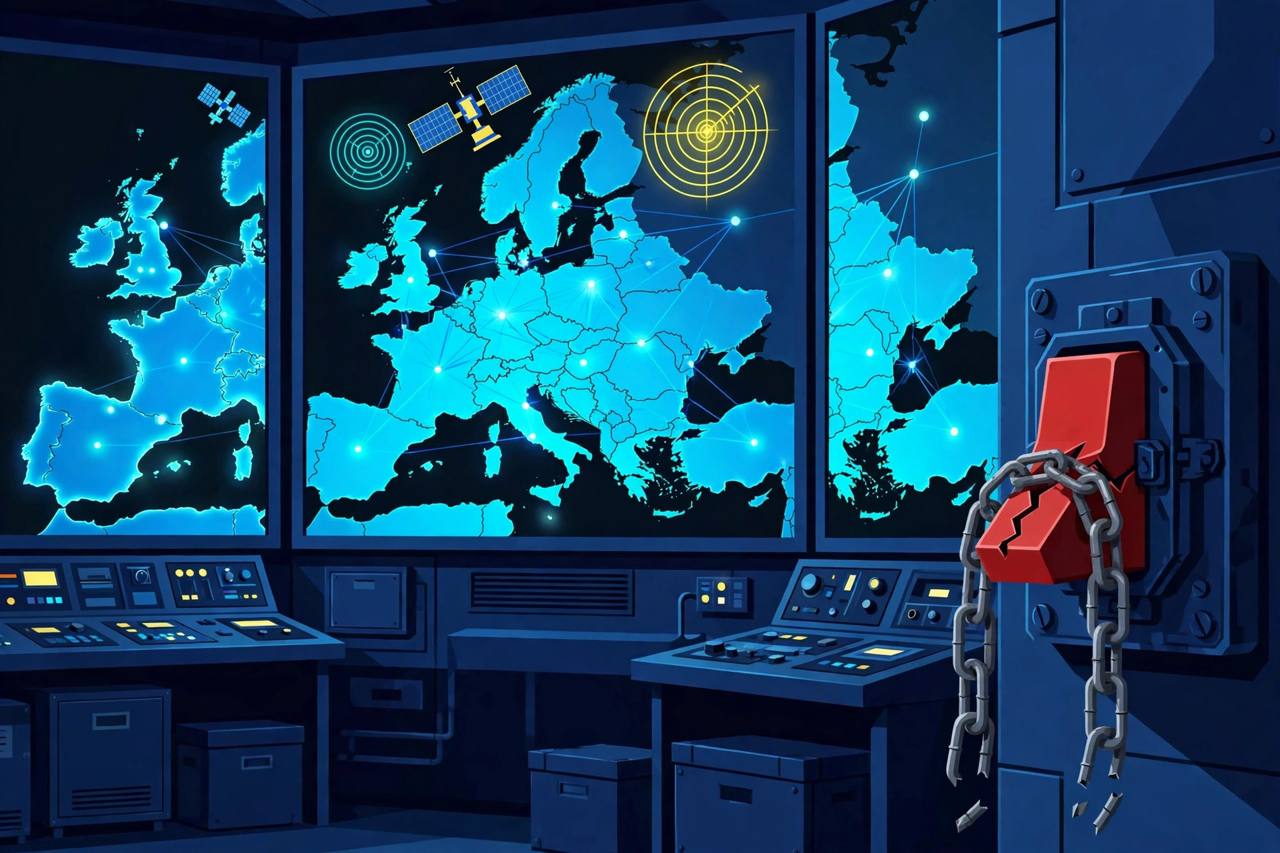
US software company Palantir has sought to reassure Europeans that its military AI system used by NATO has no “kill switch”, after disruptions to Ukraine's Starlink services heightened concerns about reliance on US technology firms, Reuters reported from Brussels on Thursday.
Source: Reuters
Ukraine reported last week that its use of the military-grade satellite service Starshield, which uses SpaceX's Starlink constellation, had been restricted so that terminals stopped working on fast-moving platforms, hampering tasks such as using interceptor drones against Russian attacks, Reuters said. US and Ukrainian officials and SpaceX chief Elon Musk have offered conflicting explanations for the disruption.
Ukrainian and European officials said they suspected a political motive, because the move came after US President Donald Trump demanded Ukraine stop hitting Russian oil refineries, according to Reuters. Those suspicions prompted fresh concern among European policymakers that the continent is too dependent on US defence technology that could be cut off.
“There are no kill switches”
Louis Mosley, Palantir's executive vice president for the UK and Europe, told Reuters in Brussels that neither the company nor the US could switch off the Maven Smart System AI platform used by NATO's military headquarters and several European armed forces. “What we have seen in the news over the past few days around Starlink is extremely concerning,” he said. “But as concerns Palantir, I can provide categorical reassurance that where customers have bought our software, they are in full operational control of that software. There are no kill switches. There's no ability for Palantir or the US government to reach in and switch it off.”
The Maven system processes vast amounts of data from satellites, radars and other sensors to give military officers a picture of the battlefield and speed up decision-making, Reuters said. NATO bought Maven for its Supreme Headquarters Allied Powers Europe in 2025 and declared the system had achieved “full technical operational capability” in June this year.
Not every European ally is convinced. Some European NATO members such as Germany and France have not adopted Maven for their own armed forces, citing concerns about relying on a US company, Reuters reported, and in April the head of Germany's cyber command ruled out buying Maven, saying it was “inconceivable” for employees of a private company to have access to the country's national military database. An independent investigation by The Nerve this week also documented the spread of Palantir's contracts across Europe and noted that, within the NATO framework, some countries use Maven even without direct contracts with the company.
Source: The Nerve
Mosley said it was “entirely at the discretion of the customer” whether Palantir employees were involved in operating the system, that such employees would be citizens of the country concerned with the required security clearance, and that the system “can absolutely be operated independently of us”, Reuters reported.
What is solid
- Palantir executive Louis Mosley told Reuters neither Palantir nor the US can switch off NATO's Maven Smart System.
- NATO bought Maven for its Supreme Headquarters Allied Powers Europe in 2025 and declared full technical operational capability in June 2026, according to Reuters.
- Germany and France have not adopted Maven for their own armed forces, Reuters reported.
What is only claimed
- Ukrainian and European officials suspect a political motive behind the Starshield restriction; US and Ukrainian officials and Elon Musk have offered conflicting explanations, Reuters reported.