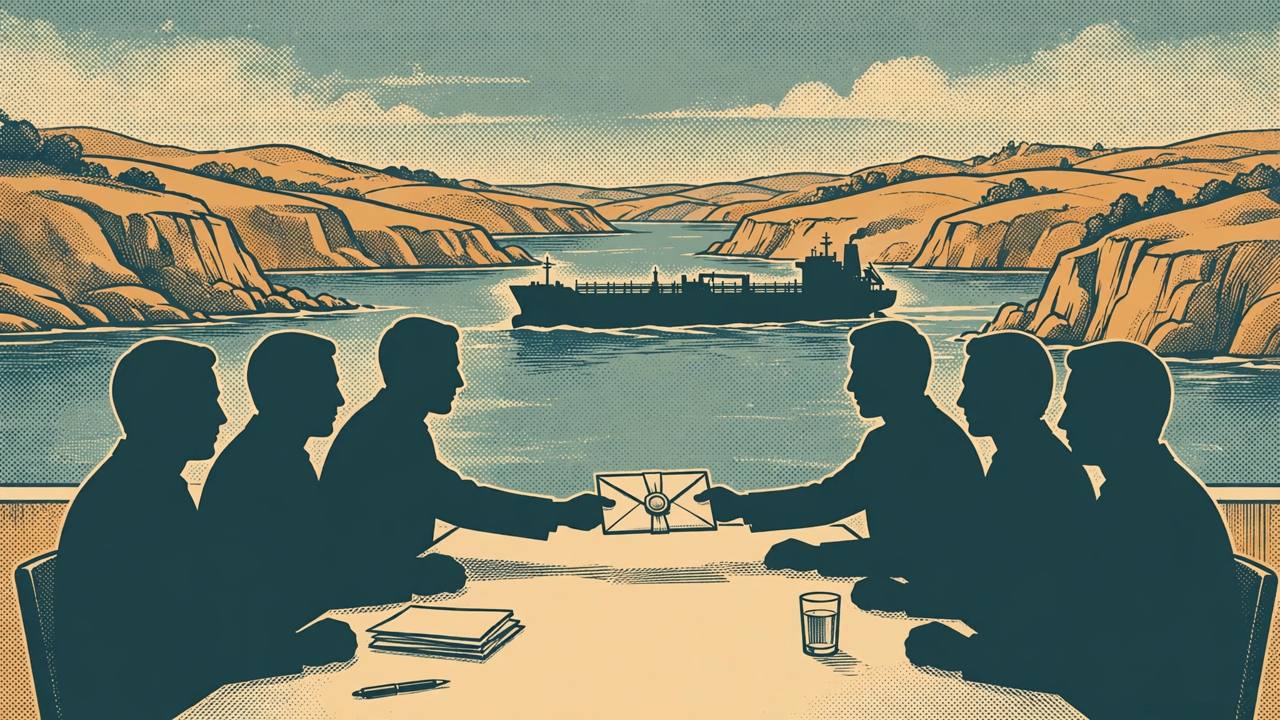
TEHRAN — Iran's President Masoud Pezeshkian said on Monday that Supreme Leader Mojtaba Khamenei has given the government authority to pursue dialogue, disclosing the mandate publicly for the first time as indirect contacts between Tehran and Washington intensified over a plan to reopen the Strait of Hormuz.
Source: AFP via Sweden Herald
"We are trying to resolve the issue through dialogue. The Supreme Leader has handed over some powers in this matter," Pezeshkian told a meeting of provincial governors and the mayors of major cities, according to Iran's state-run IRNA news agency. He added that war benefits no one and that Iran's enemies cannot force it to surrender through war.
Foreign Minister Abbas Araghchi, in a video interview with IRNA on Monday afternoon, described the indirect talks with the United States as "very intense". "Given the sensitivity and seriousness of the current situation, consultations and deliberations are very intense. Qatar and Pakistan have important roles as mediators in these negotiations," Araghchi said.
A new step after the Doha draft
Monday's statements build on the development reported a day earlier, when Iranian negotiators left talks with Qatari mediators in Doha and an official briefed on the process told Reuters a draft proposal for a US deal was being circulated, with a follow-up meeting possible. Foreign Ministry spokesman Esmaeil Baghaei said on Monday that the exchange of messages continues and that "the ball is now in the US court".
Tehran's terms, as stated by its officials, centre on the Strait of Hormuz. Baghaei said the strait cannot be reopened while the US naval blockade remains and Iran's demands are unmet, and Iran's Foreign Ministry has said it is considering a "two-day plan" under which shipping through the strait would resume within two days if the United States agrees to its terms — a shortening of an earlier seven-step plan drawn up in September. No US response to the mandate disclosure had been reported by Monday evening Toronto time.
In Iran's system, major negotiations with Washington cannot proceed without the Supreme Leader's authorisation. Pezeshkian's public disclosure that Khamenei has handed the government "some powers" on dialogue is the clearest signal yet that Tehran's top authority has cleared the talks to move — though neither side has said what concessions, if any, are on the table.
What is solid
- Pezeshkian said the Supreme Leader has given the government authority over dialogue (IRNA, reported by AFP).
- Araghchi called the indirect US contacts "very intense" and named Qatar and Pakistan as mediators (IRNA).
- Iranian negotiators left Doha a day earlier with a draft proposal circulating, an official told Reuters.
What is only claimed
- What the mandate actually authorises — Pezeshkian did not specify its scope, and no independent confirmation of a formal order has been published.
- Whether Washington will accept Tehran's conditions, including an end to the naval blockade, before any Hormuz reopening.
The talks matter far beyond the Gulf. The Strait of Hormuz carries about a fifth of the world's oil shipments, and its closure has kept energy prices high for months — a direct cost for Punjabi and Indian workers in the Gulf, for trucking and transport businesses in Canada, and for households paying more for fuel and freight. Oil prices eased and gold rose in Monday trading as the diplomatic headlines crossed, according to market reports, but traders cautioned that the sequencing dispute — who acts first — remains unresolved.