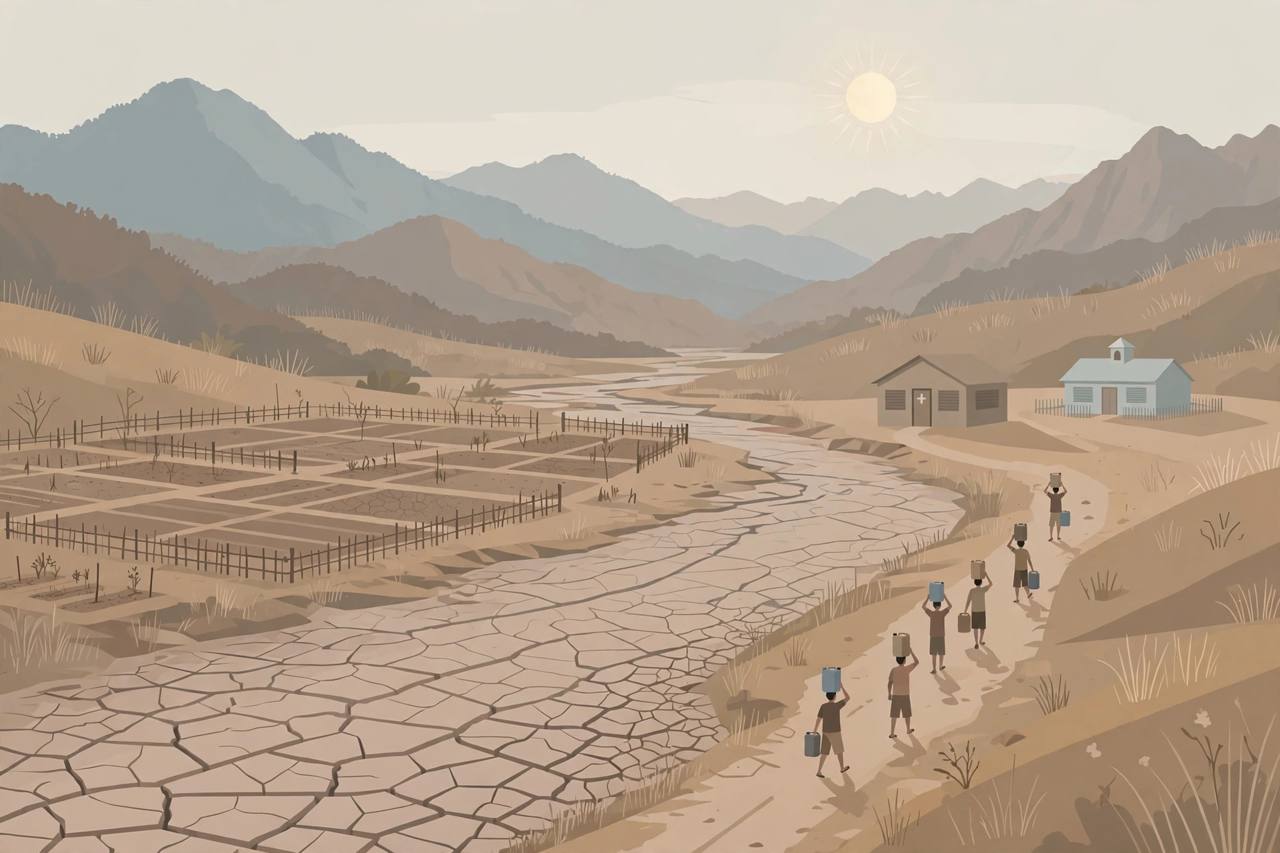
Extreme drought driven by a historic El Niño is affecting as many as 8 million people in Papua New Guinea, causing food and water shortages, electricity blackouts and health clinic closures, the Guardian reported after speaking to residents and community leaders across the country.
Source: The Guardian
An influential coalition that includes churches, trade unions and business groups has called the situation a “national crisis” and said there appears to be “no coordinated plan to protect vulnerable communities from the worsening impacts of El Niño.”
Residents said rivers and creeks have dried up and family food gardens — a vital source of food and income — have shrivelled. Schools and health facilities are being forced to close early because they lack enough water to provide basic services.
Emilly Meren, humanitarian projects manager at CARE International in PNG, said families in rural highland areas were rationing food to one meal a day, and that food insecurity was leading to localised disputes between families. She said women and girls have to travel three to four hours to source water and food and face a heightened risk of harassment on those journeys.
The PNG National Weather Service declared the onset of El Niño in June. Its assistant director, Kasis Inape, said much of the country was already in drought at that point and about 8 million people had been affected. PNG is one of the wettest places in the world, he said, but the El Niño had shifted those warm waters east — “and we're starved of rain.” Because PNG is a rain-fed country, he added, most people are subsistence farmers who depend on rainfall to survive.
Drought declared in all four regions, Pacific forum told
At the 19th Pacific Islands Climate and Oceans Forum (PICOF-19), held in Papua New Guinea and reported by the Pacific Islands News Association (PINA) on October 29, officials said droughts and water shortages have been declared in all four regions of PNG, including the capital, Port Moresby. Schools have been forced to close for lack of water, major rivers drying up have disrupted water transport, and low water levels have hit hydropower, forcing power management across the capital.
Source: Pacific Islands News Association (PINA)
Mining operations have also been affected: the Ok Tedi copper, gold and silver mine in Western Province has had to use fibreglass boats and planes to move fuel and supplies after the Fly River's water level fell, the forum heard. Salesa Nihmei of the Secretariat of the Pacific Regional Environment Programme (SPREP) said this El Niño is “one of the strongest ever recorded,” that its impacts are “unpredictable and unprecedented,” and that the event is likely to persist until May 2027, peaking in December to January.
In Port Moresby, PNG Power has begun planned electricity blackouts after falling dam levels cut hydropower generation, and said disruptions could continue for up to 10 months. Prime Minister James Marape has directed provincial and district authorities to prepare for a prolonged dry season, saying cabinet is looking at tailoring financial provisions so districts and provinces can be assisted to respond to disasters as they happen.
Earlier UN-linked reporting put the scale of the response in figures: an analysis reported by UNICEF said about 1.2 million people were estimated to need direct food relief, and the government had approved a $112 million supplementary budget — yaani about $11.2 crore (112 million US dollars) — after declaring the event in June.
PNG's wet season runs from November to April, but forecasters fear El Niño could shorten it. SPREP warns the impacts seen now “are only going to get worse towards the end of this year and into next year,” with the peak expected in December to January.