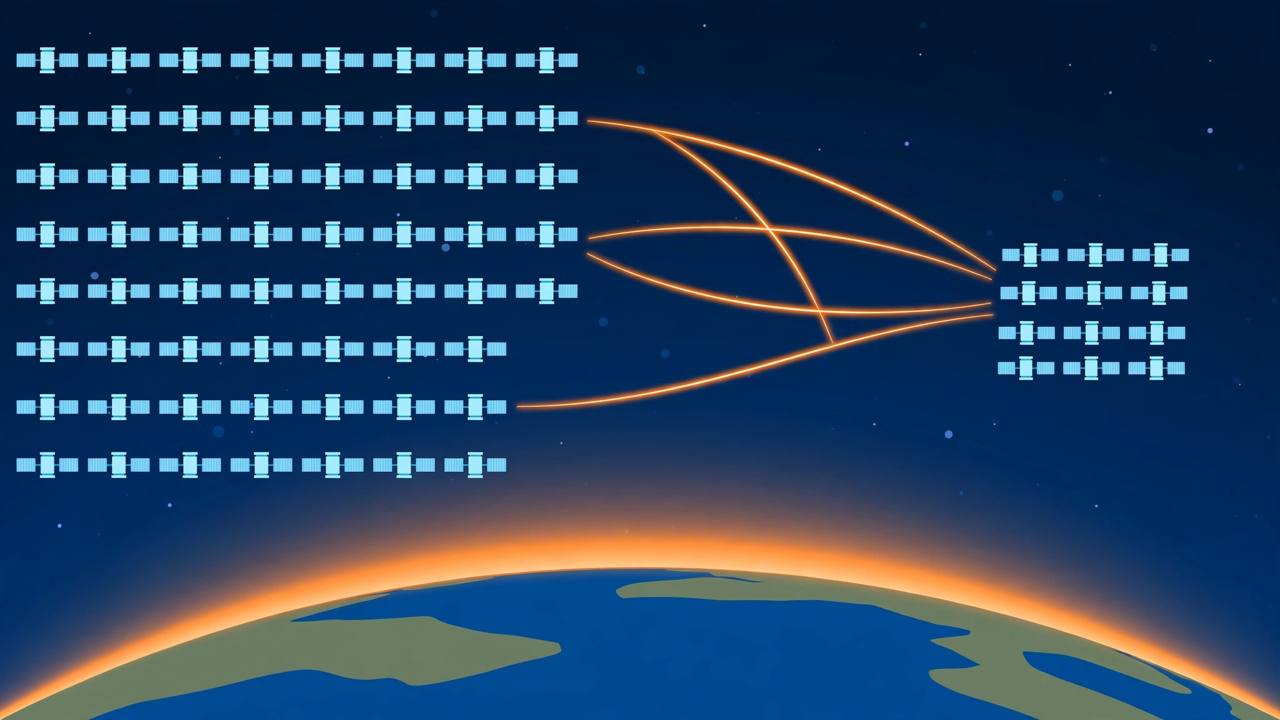
Russian President Vladimir Putin called SpaceX chief executive Elon Musk a "real genius" on Wednesday, October 28, and said Russia maintains close contact with Musk and other American partners to coordinate satellite operations in low Earth orbit, according to translations of his remarks reported by the BBC and CNBC.
Source: BBC and CNBC translations, via Silicon Report
Putin made the remarks while touring an exhibition on the sidelines of the Russia–Africa Summit in Moscow. Asking Digital Development Minister Maksut Shadayev about progress on Russia's own network, he was told Musk already has more than 5,000 low-orbit satellites in operation. "He has more than 5,000 satellites in orbit, and we are just getting started," Putin said, calling Musk "truly a genius".
Source: BigGo Finance
"We are in close contact with our American partners, including Mr Musk," Putin said. In orbit, he said, it is important not to interfere with one another and to follow rules, discipline and order, adding that both sides value that mutual understanding despite political issues.
Rassvet: about 30 satellites against Starlink's thousands
Putin disclosed that Russia currently has roughly 30-plus satellites from its Rassvet ("Dawn") constellation in orbit, and said the next step is to move from quality to quantity. Rassvet is built by Russian space firm Bureau 1440 as a dual military-civilian system, with commercial operation expected in 2027. Putin said in June that the system would be "in no way inferior to Starlink".
The counts come from different sources and should be read that way: the 5,000-plus figure for Musk was the number Shadayev gave Putin at the exhibition, while independent tracking cited in the same reports puts SpaceX's satellites in orbit at close to or above 10,000, and company figures cited by the BBC and CNBC put the operating fleet above 11,000, out of roughly 13,000 launched. SpaceX did not immediately respond to requests for comment on Putin's remarks.
The Russian Embassy in South Africa described Rassvet as Russia's alternative to Starlink and echoed Putin's line that the project marks only the country's first steps in the sector.
Why satellite contact matters in the Ukraine war
Starlink is not just a commercial service: Ukraine's forces have relied heavily on it, and on its government-focused version Starshield, for battlefield communications and drone operations. Earlier this month, in a development Awaaz Punjab reported separately, Ukrainian officials said Starshield restrictions had degraded connectivity for fast-moving terminals, and Musk said Ukraine had breached Starlink's terms by using the civilian service for offensive drone strikes. That earlier dispute is the backdrop, not the news, in Putin's remarks.
What is new is the Russian president stating publicly, and unprompted, that Moscow and Musk's company coordinate directly so their constellations do not interfere — a reminder that even while satellite internet shapes the war in Ukraine, the operators filling the same orbital bands still have to talk to each other to avoid interference and collisions.