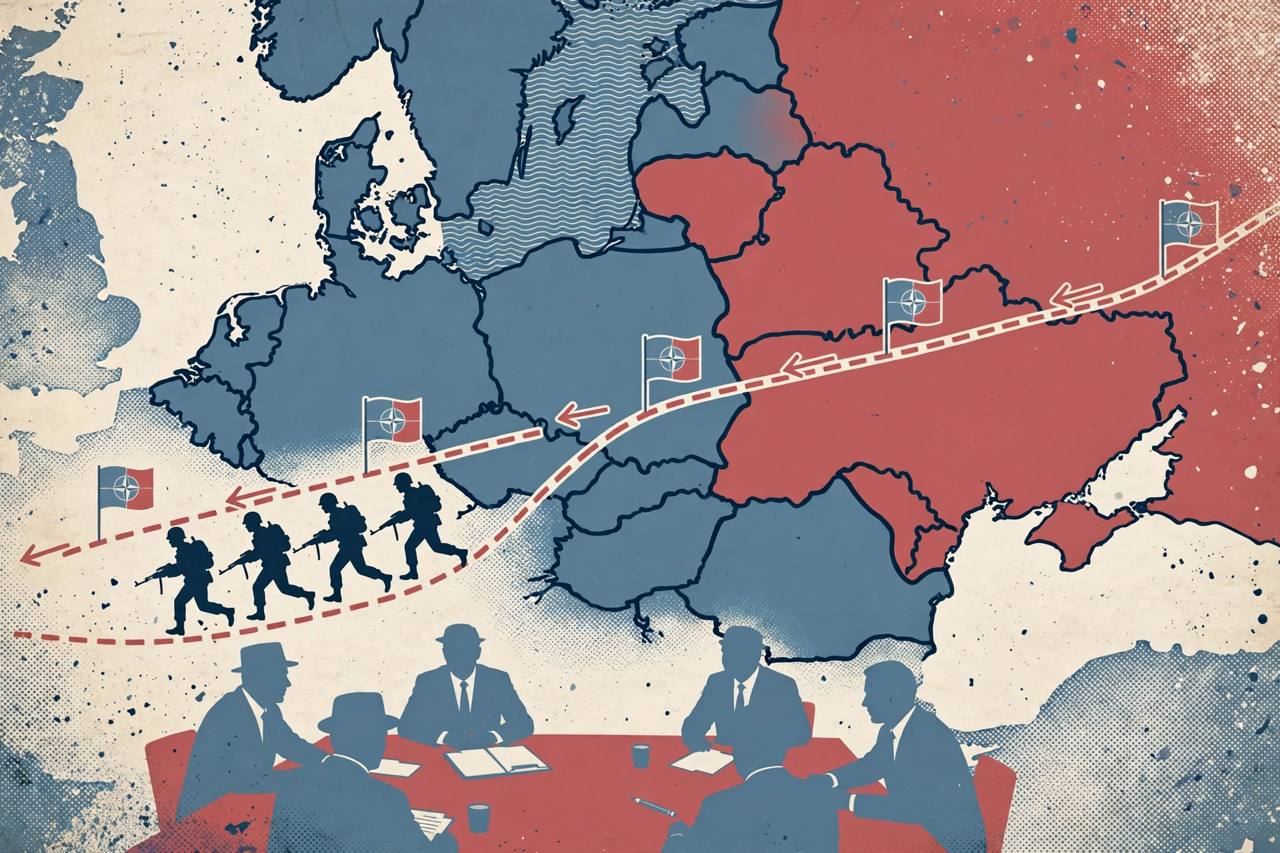
Russia will attempt to use a fresh round of Ukraine peace talks to secure concessions that weaken NATO's defences, The Telegraph reported on October 25, citing diplomatic sources. According to the report, President Vladimir Putin is likely to demand that NATO's military footprint in Europe be reduced to its 1997 level — before Poland joined the alliance in 1999, the Baltic states in 2004 and Finland in 2023. That could mean a withdrawal of allied troops from Poland, Estonia, Latvia, Lithuania and Finland, all of which share a border with Russia.
Source: The Telegraph, via EuropeSays, Oct 25
The reported motive explains Moscow's new openness to European participation. Kremlin foreign policy aide Yuri Ushakov said Europe should be included in negotiations because European governments' support for Ukraine was crucial to reaching an agreement. He acknowledged that Moscow's earlier expectation — that Washington could pressure Kyiv into accepting Russian demands — had not materialised: "Before, it seemed after Anchorage, that the US administration might be able to dictate something and force Kyiv to comply. But so far, this hasn't really worked out," Ushakov said. "That's because it's not enough to talk only to Kyiv; we need to talk to the whole of Europe, which fully supports Kyiv."
Source: The Telegraph, via EuropeSays, Oct 25
Diplomatic sources told The Telegraph that Russia's motive for including European nations was to win concessions over NATO expansion, which Putin has repeatedly called a "root cause" of the war. Ukrainian reporting of the same story, by LIGA.net, adds that Western intelligence agencies say Russia is stepping up hybrid attacks and provocations against European countries that support Ukraine, while NATO says it is preparing to repel any Russian aggression against the alliance — claims each side makes about the other, reported here as attributed claims, not settled fact.
Source: LIGA.net Ukrainian News, via BytesEU, reporting The Telegraph
Europe's answer, and what Kyiv will and will not discuss
The Telegraph reported that European officials remained opposed to Moscow's demands. Senior sources insisted Europe's rejection remains firm — "Our position remains the same as in January 2022," one European official said, referring to the alliance's 2022 reply ruling out withdrawing troops and nuclear weapons from former Soviet states. A troop pullback would not, by itself, end the five countries' NATO membership.
Source: The Telegraph, via Pune Media syndication
The talks themselves are already set: last week Moscow agreed to technical trilateral talks involving Russia, Ukraine and the United States in Abu Dhabi next month, after a lengthy hiatus in US-mediated negotiations, and President Volodymyr Zelenskyy confirmed the meeting in an interview with Ukrainian television. Zelenskyy said Ukraine would seek limited ceasefires covering energy and grain exports and prisoner exchanges, would not discuss limits to its armed forces or enforced post-war neutrality, and regards territory as a red line for leaders only. "Sanctions were imposed for aggression, not for an opportunity to have a chat," he said, adding he did not want to meet Putin "without tools", including sanctions and frozen assets. Ushakov, for his part, told Russian state media he expected no significant progress from the first meeting, calling it a "trial period".
Source: Sky News report, via Q Radio, on Zelenskyy's TSN interview