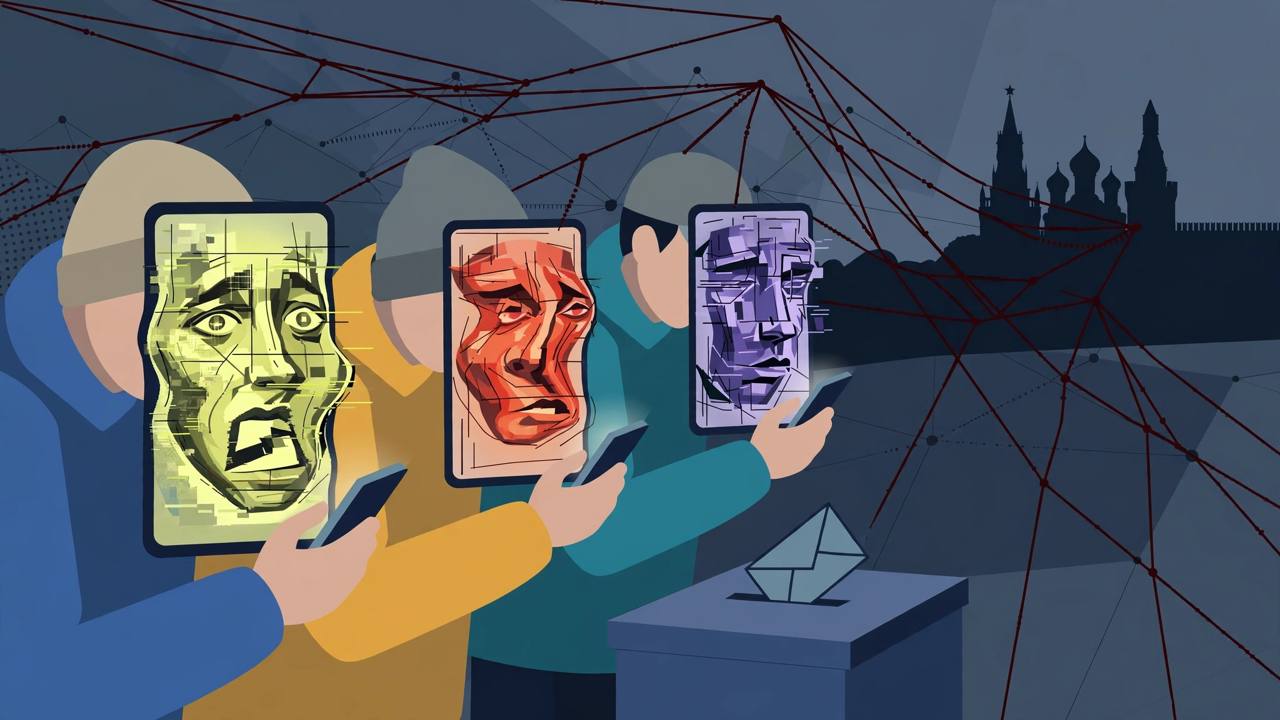
WASHINGTON — Russian operatives are pumping out fabricated claims about Democratic candidates, AI-manipulated videos of celebrities and fake posts impersonating real news outlets in an effort to influence American voters in the final run-up to Election Day, NPR reported on Friday in a story updated on Saturday. Researchers who track online influence operations, and lawmakers briefed by the intelligence community, told NPR that Kremlin-backed groups are renewing tactics used to sow distrust and discord in previous US and foreign elections.
Source: NPR via WHRO, Oct 23-24, 2026
"It's a carnival out there," Rep. Jim Himes of Connecticut, the ranking member of the House intelligence committee, told reporters this week, according to NPR. "They're throwing everything out there to generate a sense of chaos and anarchy." The goal, researchers said, is to exacerbate divisions, erode confidence in democracy and, crucially, undermine US support for Ukraine. "At the end of the day, the main issue for Russia is and has to be Ukraine," said Darren Linvill, co-director of Clemson University's Media Forensics Hub, who has tracked foreign propaganda campaigns for years.
Source: NPR via WHRO, Oct 23-24, 2026
NPR described how one operation attributed by Linvill and other research groups to the network researchers call Storm-1516 put the playbook to work this week against a Democratic US Senate candidate: two fraudulent videos were posted on Tuesday on X by an account created last month with few followers, whose profile said it was based in the US but which X publicly flagged as possibly using a proxy or VPN. The videos were likely created using artificial intelligence, according to the research company Graphika; Linvill said a hallmark of Storm-1516 videos is the use of real actors whose faces are swapped using AI. This story does not repeat the videos' baseless accusation.
Source: NPR via WRUR, Oct 23, 2026
The spread was fast, NPR reported: the post was immediately shared by a network of 15 accounts Linvill flagged as bots, and about 12 hours later one video was shared by three X accounts with large followings that researchers said have previously amplified Storm-1516 narratives, one of which has solicited paid partnerships. One of the two fake videos racked up roughly 857,000 views within 24 hours, according to an analysis by the threat-intelligence company Alethea. By late Wednesday, X had suspended the account that first posted the videos and one large account that reshared the claim, and the two other large accounts had taken their posts down. In the run-up to the 2024 presidential election, Storm-1516 posted fraudulent videos making similar unfounded accusations against Democratic vice-presidential nominee Tim Walz and purporting to show ballots for President Trump being torn up, NPR said.
Source: NPR via WRUR, Oct 23, 2026
What is solid
- NPR reported, citing influence-operation researchers and intelligence-briefed lawmakers, that Kremlin-backed groups are pushing fabricated claims, AI-manipulated videos and impersonated news posts in the final stretch of the US midterms.
- Researchers attributed this week's Senate-candidate videos to the Storm-1516 network; one video reached roughly 857,000 views in 24 hours by Alethea's count before X suspensions and takedowns.
- Researchers quoted by NPR say the operation's central motive is undermining US support for Ukraine.
What is only claimed
- Attribution is a researchers' assessment, not a court finding: NBC News separately reported that three independent disinformation research teams concluded Russian operatives were most likely behind fake videos targeting the Texas Senate race, including Democratic candidate James Talarico, and candidates of both parties who support Ukraine — a 'most likely' judgement based on the teams' analysis, not an official US government assessment of that specific video set. Moscow has not publicly responded to these specific reports.
For voters — including Punjabi and Indian diaspora voters in the United States — the researchers' practical warning is the same one NPR carried: a false claim is seeded on social media or a fake news-style website, spread by state media, bots or paid influencers, and repeated by real people before journalists can check it. The midterm vote is on November 3.