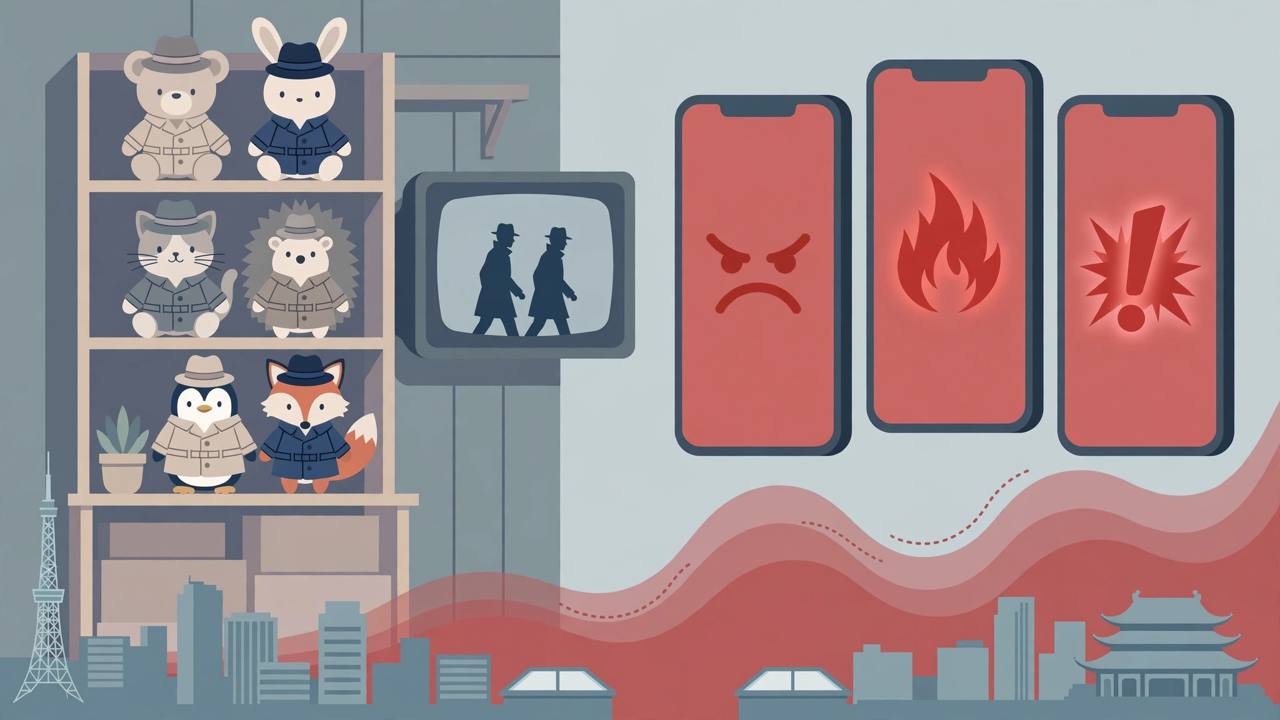
Hello Kitty maker Sanrio has cancelled a collaboration with the Japanese television spy drama VIVANT after a backlash in China, Reuters reported from Tokyo on Thursday, October 29 — the second incident in days to show the tightrope foreign firms and celebrities must walk in the world's second-biggest economy.
Sanrio's Chinese subsidiary announced the decision on Wednesday. "We deeply apologize for the concern this has caused everyone," the subsidiary said in a statement. "Regarding this collaboration, we believe it contains expressions that are inconsistent with the corporate philosophy of the Sanrio Group. We have therefore decided to terminate this collaboration along with all subsequent projects and promotional activities."
VIVANT, produced by Japanese broadcaster TBS and also available on Netflix, centres on Japanese spies and a terrorist organisation called Tent. Its latest season, currently being aired, depicts a fictional Chinese intelligence agency capturing and torturing some of the Japanese spies. Chinese anger over Sanrio's range of soft toys, including Hello Kitty, dressed as spies from the show had simmered for days on social media and came to a head this week when Chinese state media ramped up the condemnation, Reuters reported.
TBS did not have immediate comment on the cancellation. Its president, Masamine Ryuho, said at a regular press conference on Wednesday that the drama is "entirely fictional and has no intention of disparaging any specific country", local media reported.
The cancellation came just after French football star Kylian Mbappe apologised for remarks about late Chinese leader Mao Zedong that saw several Chinese sponsors cut ties with him — a parallel case, reported by the Associated Press and Reuters this week, in which a celebrity's words quickly turned into a commercial penalty in China.
China–Japan ties were already strained
Relations between China and Japan have plunged since Japanese Prime Minister Sanae Takaichi late last year said that a hypothetical Chinese attack on democratically ruled Taiwan could trigger a military response from Tokyo. Since then, China has urged its citizens not to travel to Japan and has throttled exports of rare earths to the country — minerals vital to manufacturing everything from cars to weapons, Reuters reported.
Swathes of Japanese firms, including Sanrio, remain reliant on China for sales. Sanrio booked sales of 9.8 billion yen in China in the first quarter — yaani 980 crore yen, about $62 million (roughly 6.2 crore US dollars) — up almost 25% on the same period a year earlier. Foreign brands have faced public backlash in China before: Dolce & Gabbana cancelled a Shanghai fashion show in 2018 after advertisements showed a Chinese woman struggling to eat pizza and spaghetti with chopsticks, and H&M, Nike and Adidas came under attack in 2021 over comments about labour conditions in Xinjiang.