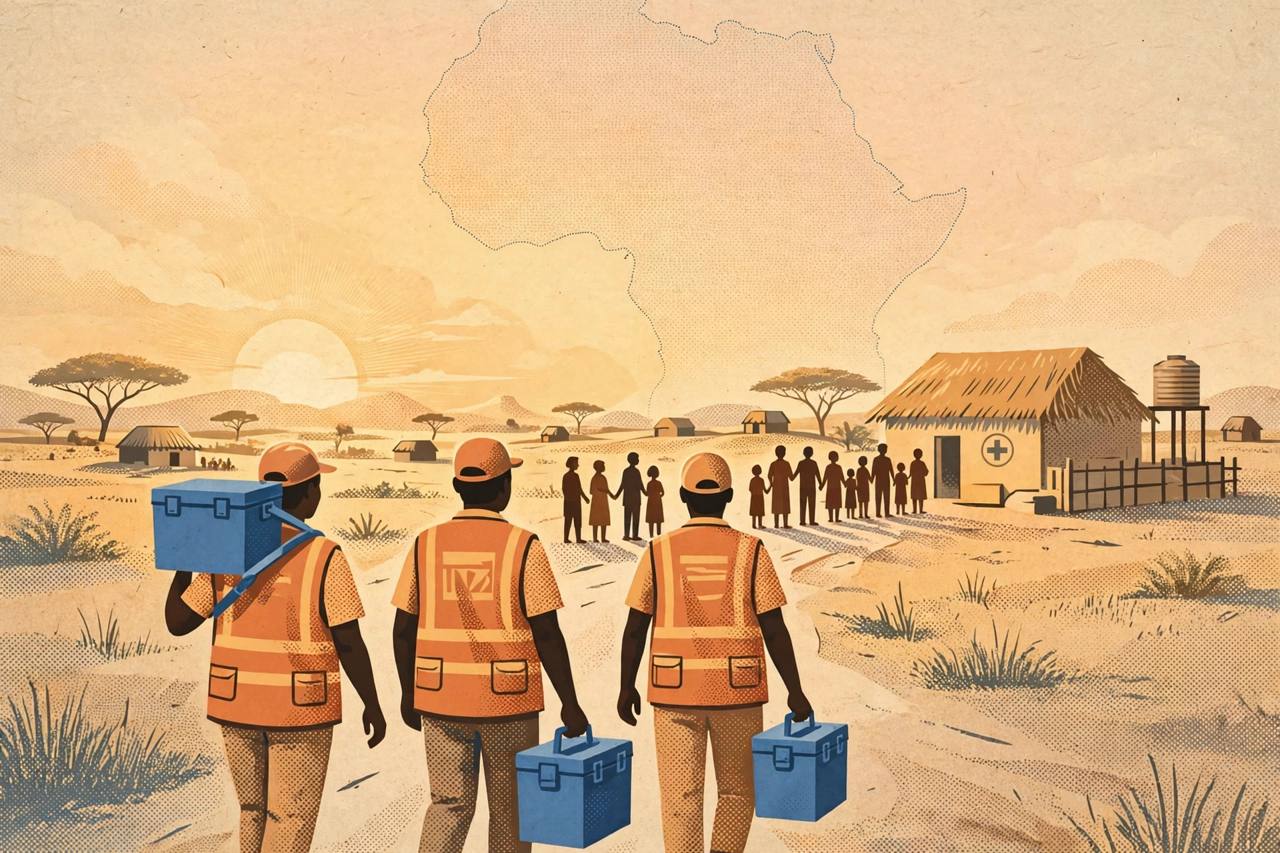
Sudan's Federal Ministry of Health, backed by the World Health Organization (WHO) and UNICEF, is carrying out a nationwide polio vaccination campaign aiming to reach about 11 million children — yaani about 1.1 crore — in October and November, even as the country's war grinds on, UNICEF said in a statement dated October 27 in Khartoum.
Source: UNICEF
The drive uses the novel oral polio vaccine type 2 (nOPV2) and aims to interrupt transmission of a variant poliovirus that began circulating in December 2024. The campaign is meant to boost immunity among children whose access to health services has been limited by the conflict that began in 2023 and the disruption it has caused to the health system. In 2026, Sudan has confirmed poliovirus in six children and in three wastewater samples, the statement said.
Two phases, 186 localities
The first round of the campaign is being run in two phases. The first phase, from October 26 to 29, targets 6 million children in 107 localities across 12 states. A further 5 million children will be targeted in 79 localities across the five Darfur states and West Kordofan during the first week of November.
Federal Health Minister Dr Heitham Mohammed Ibrahim said the mass campaign "aims to boost every child's immunity against poliovirus to protect them from an ongoing outbreak", and he praised health workers and volunteers for reaching households "despite the insecurity and access challenges". WHO and UNICEF said they would support the ministry in implementing the campaign and strengthening the response to the outbreak.
Vaccines roll out as strikes hit the power grid
The vaccination drive is unfolding against a worsening humanitarian backdrop. Briefing reporters on Tuesday, the UN Office for the Coordination of Humanitarian Affairs (OCHA) said it was alarmed by continued drone strikes hitting critical civilian infrastructure: a strike reportedly hit a major electricity transformer station serving Khartoum State on Tuesday, following multiple strikes on power stations in Jazirah, Sennar and Gedaref, with local authorities reporting extensive damage. OCHA reiterated that civilians and civilian infrastructure must be protected under international humanitarian law.
Source: UN UNifeed
OCHA also said the World Food Programme has warned that funding shortages will leave 900,000 women, men and children without food assistance starting next month, and it called for urgent additional funding as conflict, displacement and drought-like conditions linked to El Niño compound the suffering of millions.
Vaccination teams move to the Darfur states and West Kordofan in the first week of November. Whether they can reach every locality depends on security and access — the same strikes and fighting that damaged the power grid are the main obstacle the UN agencies cite.