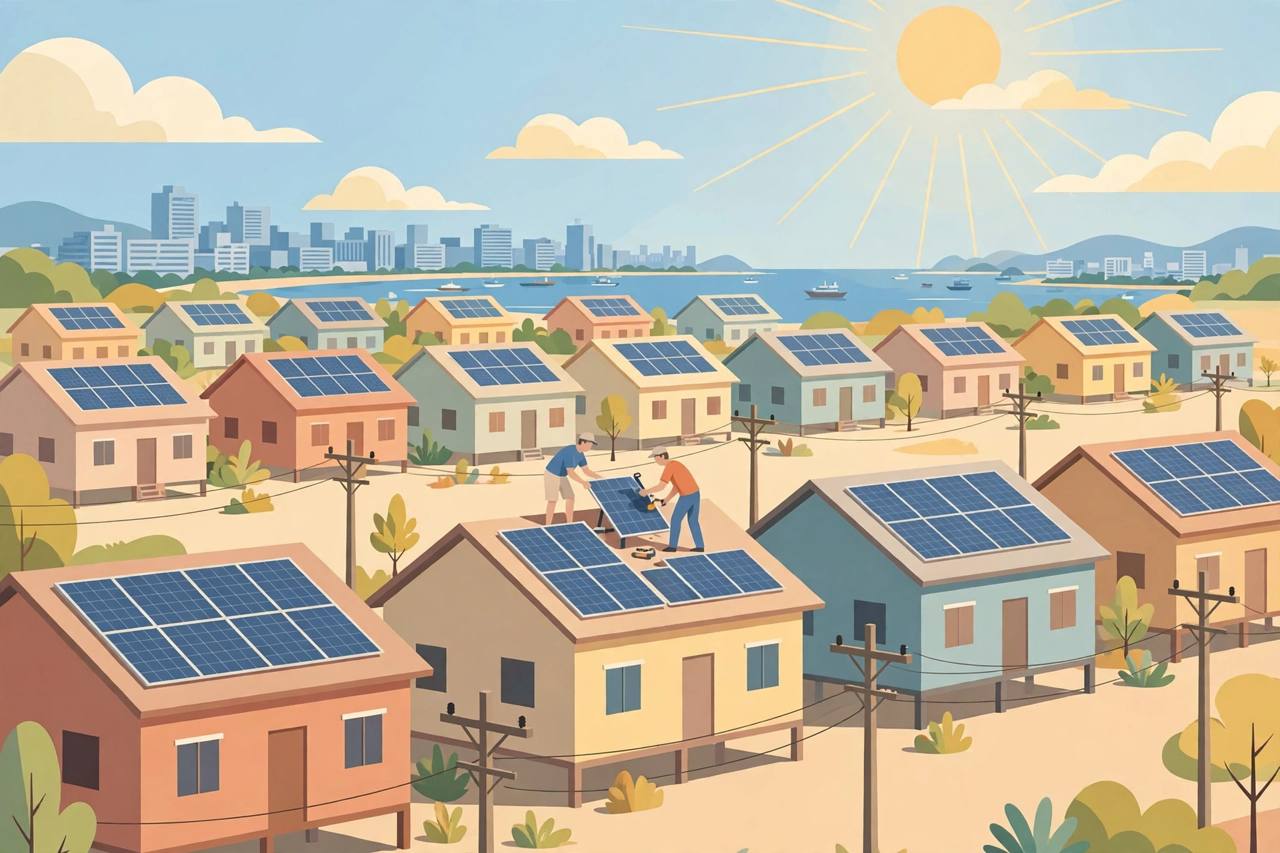
BANGKOK — Thailand's cabinet on Tuesday approved a 50 billion baht rooftop solar programme — yaani about $1.48 billion, or roughly $148 crore in dollar terms — as part of the government's energy transition policy, a finance ministry official said, in a Reuters report carried by TradingView. The government will help one million households — yaani 10 lakh homes — install rooftop solar panels within a year to shield citizens from soaring energy prices, Reuters reported.
Source: Reuters via TradingView, Oct 27, 2026
Each eligible household will receive a subsidy of 50,000 baht toward installation costs, Prime Minister Anutin Charnvirakul said on Tuesday, Bloomberg reported. Registration runs from October 27 to January 31, 2027, or until the programme's funding is fully allocated, and the government estimates the programme could reduce household electricity costs by more than 24.5 billion baht a year — yaani about 2,450 crore baht a year.
Source: Bloomberg Tax, Oct 27, 2026
How the scheme works
The programme, opened by Anutin at Government House on Tuesday under the name People's Solar, is run by the Metropolitan Electricity Authority (MEA) and the Provincial Electricity Authority (PEA), list.solar reported, citing the PEA. Households sign up on the two utilities' websites until January 31, 2027. The grant covers equipment and installation for residential systems of 5 to 10 kilowatts-peak per meter, for a new array or an addition to an existing one, and applicants must be Thai citizens on the residential tariff, named on the meter, claiming once, list.solar reported. Households must apply for grid connection by August 31, 2027, and be connected by September 30, 2027, to receive the grant, it said.
Source: list.solar, Oct 27, 2026
State financial institutions will offer low-interest loans so participating households do not need to pay the full installation cost upfront, AsiaToday reported. Households will use the electricity they generate and sell surplus power back to the grid, and the scheme also covers ground-mounted systems for homes where rooftop installation is not practical, it said. The MEA and PEA will help households register through one-stop service centres, while the Interior Ministry will set the registration process and final conditions, AsiaToday reported.
Source: AsiaToday, Oct 27, 2026
Funded from a 400 billion baht borrowing decree
The subsidies will be funded from the energy transition portion of an emergency decree authorising the Finance Ministry to borrow 400 billion baht, AsiaToday reported. The cabinet approved the decree on May 5, 2026, and the Constitutional Court ruled it constitutional on July 9, it said. The scale is a step change from Thailand's earlier household scheme: by April 1, 2026, only 18,774 homes with about 103 megawatts had joined that scheme, which paid only for surplus power, list.solar reported, citing the Energy Policy and Planning Office. Under the new grant, full uptake would mean 5 to 10 gigawatts of panels, list.solar calculated.
Source: AsiaToday / list.solar, Oct 27, 2026
What is solid
- The cabinet approved a 50 billion baht (about $1.48 billion) programme paying 50,000 baht per household for up to one million households, Reuters and Bloomberg reported.
- Registration opened October 27 and runs to January 31, 2027, or until funding is fully allocated, Bloomberg reported.
What is only claimed
- The saving of more than 24.5 billion baht a year in household electricity costs is a government estimate given by the prime minister, not a measured outcome.
- Whether households actually see the full benefit will depend on uptake, installation capacity and final conditions the Interior Ministry is still to set, AsiaToday reported.
The programme is designed to shield citizens from soaring energy prices driven by the Iran war, the energy minister said last month, AsiaToday reported, adding that it also aims to cut energy costs, reduce reliance on imported fuel and speed up the shift to clean energy. Thailand's heavy dependence on imported fuel has left household bills exposed to swings in global markets, it said — the same oil shock that has kept Brent crude above $100 a barrel for weeks and pushed fuel costs up across Asia.
Source: AsiaToday, Oct 27, 2026
Registration stays open until January 31, 2027, or until the money runs out. Households must be grid-connected by September 30, 2027, to receive the grant, and the Interior Ministry is to publish the final conditions.